New Report Crowns Port MacKenzie Alaska Mineral Export Leader – RedState


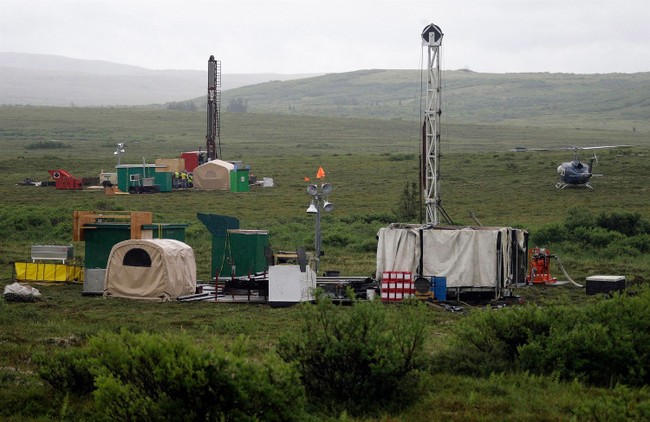
Alaska is, as I like to point out, America’s treasure chest. Grande Terre is full of resources: rare earth metals and other minerals, natural gas, oil and much more.
Of course, the world’s greatest treasure is no good if it doesn’t get to where people can use it. To that end, Alaska is not only experiencing a development renaissance, but also a renewal of the state’s transportation network. Chief among them is a proposal to develop Port MacKenzie, across Cook Inlet from Anchorage, into one of the world’s most productive mineral export ports.
Global mining executives consider Alaska the richest jurisdiction on the planet in terms of mining potential, but among the poorest when it comes to the transportation network needed to realize that potential. A recent study prepared for the Alaska Industrial Development and Export Authority (AIDEA) envisions a transportation network anchored at Port MacKenzie in south-central Alaska as a solution.
“Port MacKenzie is uniquely positioned to support projected statewide mineral export demand,” PND engineers wrote in the “Alaska Mineral Production, Transportation and Port Capacity Study” prepared for AIDEA.
Alaska currently has one main shipping port: Anchorage. But Anchorage is not the ideal location for massive shipments of minerals and metals. Fortunately, an alternative is offered:
Currently, most Alaska businesses and residents rely on the Port of Anchorage as a port and rail hub for maritime freight transportation. Situated on a strip of land between downtown Anchorage and the upper end of Cook Inlet, this port is limited by real estate and logistical constraints.
Just across the creek, about 2.5 miles northwest of the Port of Anchorage, Port Mackenzie offers an alternative with large tracts of undeveloped land for industrial use, a connection to the Alaska Highway System, and a partially developed 32-mile rail extension that would connect the industrial port to the Alaska Railroad.
Port MacKenzie is accessible by road, although these roads could use some improvement. But this seems like the logical location. Road access, establishment of a port; the only problem I see is that much of the ground around there is flat and swampy, which might make construction impossible until a few million tons of rock and fill dirt are brought in.
Learn more: Price surge fuels Alaska’s mining renaissance – Gold hits $4,500 an ounce
The Alaska Pebble Deposit: From Discovery to Critical New Safety Asset
The other issues are getting minerals to the port, and to that end the Trump administration has accelerated construction of Ambler Road, which will run from the Dalton Highway south of Coldfoot (few places were more aptly named) to the Ambler mining district. A possible Susitna West road is also on the agenda, which would involve building a bridge over the Susitna and pointing inland to oil, natural gas and mineral deposits.
Since these roads are subsidized by Washington, for once, a justified expense in the name of national security – they are strategic resources – we can hope that they will also be open to civilian traffic. There is a lot of hunting and fishing in these two regions.
Alaska’s energy and mineral renaissance is only just beginning. If you want to keep this going, make sure you get out and vote this fall.
Editor’s note: President Trump is leading America toward the “Gilded Age” while Democrats are desperately trying to stop him.
Help us continue reporting on President Trump’s successes. Join RedState VIP and use promo code STRUGGLE to benefit from 60% off your membership.


