New Zealand group urges action to combat Campylobacter


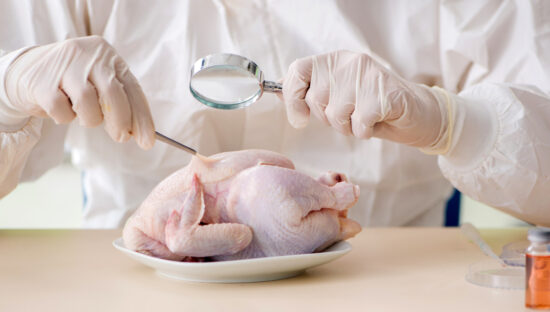
A group in New Zealand called for action to tackle Campylobacter in fresh chicken meat.
The Public Health Communication Center (PHCC) said the government should consider an official investigation into the issue. The PHCC has also said that the responsibility for food security management should go from the Ministry of Primary Industries (MPI) to an independent regulator.
In New Zealand, contaminated fresh chicken meat is the main source of human infection in Campylobacter. An increase from 1980 to 2005 came next to an increase in chicken consumption. Report and hospitalization rates divided in half in 2007 after the introduction of regulatory measures to reduce contamination levels in fresh chicken meat tested in processing factories.
During the 17 years which followed this intervention, the report rate for Campylobacteriose decreased by 30.4%, while the hospitalization rate increased by 69.7%. Scientists have said that the increase in hospitalizations suggests a substantial increase in Campylobacter infections since 2008.
The PHCC said that an epidemiological study could help understand the inconsistency shown by the increase in the hospitalization rate from 2008 to 2023 during the drop in notifications.
From 2008 to 2024, researchers estimated that contaminated chicken meat resulted in 622,000 cases and 85,200 cases notified. They put the number of people hospitalized at 9,100, including 68 deaths. The economic cost was $ 1.4 billion NZ (840 million US dollars).
The co-author, Professor Nick Wilson, said: “It seems remarkable that an epidemic of this scale, an impact (including death and invalidity for some), and the cost has been authorized to continue without control for so long. This negligence is particularly alarming because this epidemic had a single dominant source, and the TAP could have disabled itself quickly if one of the multiple governments had chosen to tighten the existing regulations.”
New Zealand food security response
Vincent Arbuckle, deputy director general of food security in New Zealand, said that there were important limits with the methodology used in the analysis and conclusions were not supported by evidence.
“Between 2006 and 2020, rates reported that food campylobacter infections reduced by half. In 2020, New Zealand food security set the goal of reducing the rate by an additional 20%. This step was reached at the end of 2024, when the rate of food campylobacter infections were acquired in New Zealand at 70,000, “he said.
Arbuckle said the agency maintains an open mind on changes that can reduce Campylobacter infection, but will not consider things that are not based on good evidence.
The PHCC has requested measures to reduce levels of contamination on the chicken at the point of sale, such as more secure limits, supported by microbiological tests. The contaminated chicken could be diverted through safer channels, such as frozen and precious products.
The regulators should force the labeling of fresh chicken meat to highlight the risk of infection and how to minimize it, such as non-lavage of the product and adequate cooking.
The way of contaminated meat with human infection is generally not to eat the chicken itself, unless it is insufficient. The predominant route is likely to go through cross -contamination from raw chicken, including direct handling, contaminated surfaces in kitchens and cross -contamination of other foods prepared in the same contexts.
(To register for a free subscription to Food Safety News,Click here.)


