Sen. Tom Cotton says survivors of first September boat strike ‘were not incapacitated’


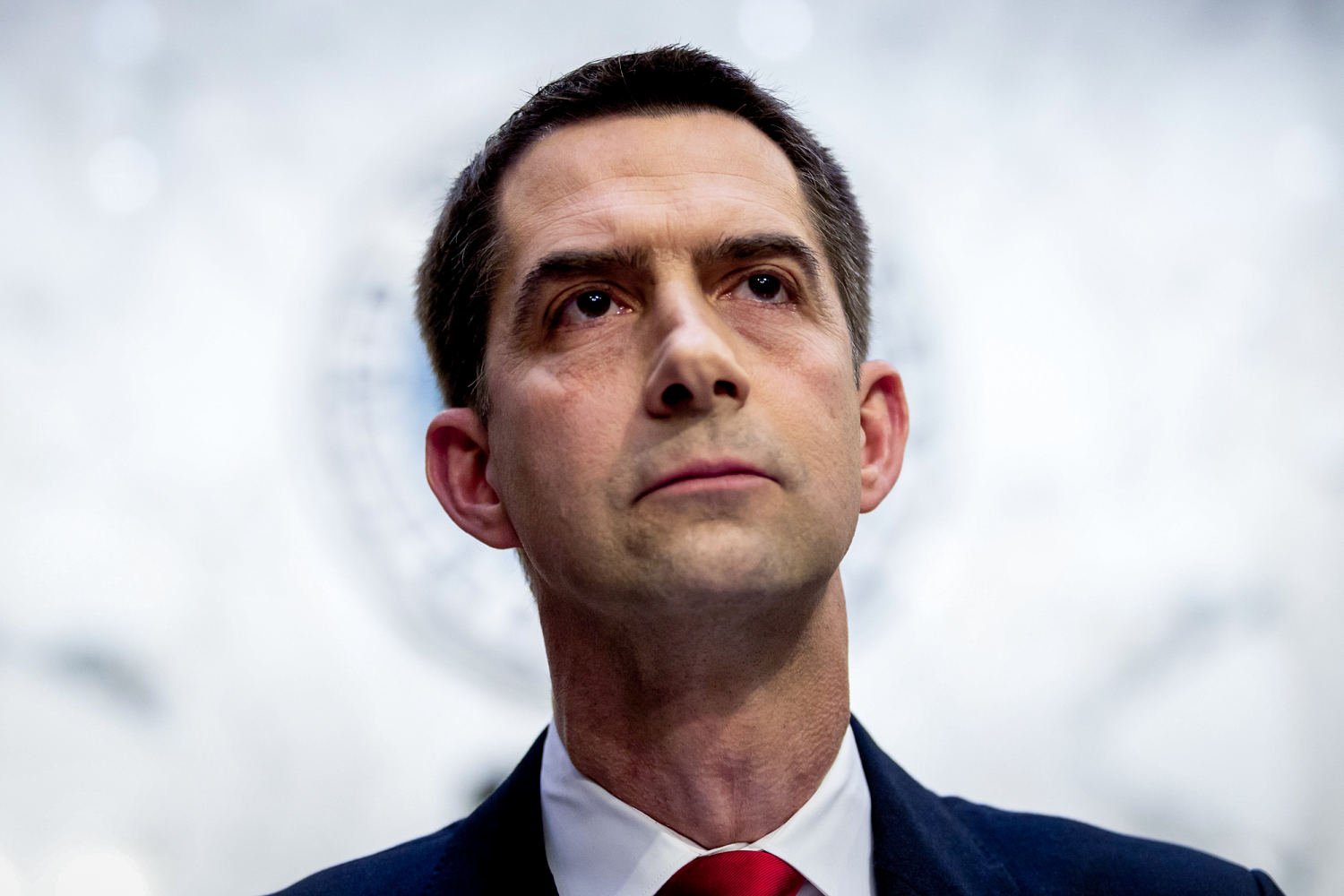
WASHINGTON — Sen. Tom Cotton, R-Ark., defended the Trump administration’s Sept. 2 strike that killed survivors of an initial strike on an alleged drug ship, telling NBC News’ “Meet the Press” that the survivors “were not incapacitated.”
The senator also argued that President Donald Trump was not required to seek congressional approval if he continued boat strikes beyond the window designated by the War Powers Resolution, which controls the president’s ability to use the armed forces without congressional approval.
Cotton, who chairs the Senate Intelligence Committee, was briefed last week by Admiral Frank M. Bradley on the September strikes. Bradley briefed the leaders of the House and Senate Intelligence Committees as well as the leaders of the House and Senate Armed Services Committees.
Asked if there was evidence that the alleged drug boat was headed to the United States before the military struck it twice, killing survivors, Cotton said, “That was not mentioned in my briefing.” »
“But again, there are multiple, very reliable intelligence sources that tell us that this boat was carrying drugs, that everyone on this boat was associated with these designated foreign terrorist organizations that are trying to kill American children,” Cotton said.
Asked if he was comfortable with the United States targeting a boat when he saw no evidence that it was headed toward the United States or that it was not an imminent threat, Cotton said he wanted the strikes to continue.
“Any boat loaded with drugs that is crewed by associates and members of foreign terrorist organizations who are trying to kill American children is, I think, a valid target,” he said. “I’m not only comfortable with it, I want to continue.”
Cotton also said he had “no problem” releasing video of the strikes, while noting that the Defense Department “may have valid concerns about exposing” alleged cartel tactics or U.S. sources or methods. The department has repeatedly released videos of other strikes on suspected drug boats.
NBC News reported that U.S. intelligence showed the boat was heading to the South American nation of Suriname, which was first reported by CNN, and that the drugs were ultimately heading to Europe or Africa.
Cotton said survivors of the first strike, who were killed in the second strike, were not “incapacitated.”
“They were not in the water, surviving only because they were wearing a life jacket or hanging on to a wooden board,” Cotton said. “They were sitting on this boat. They were clearly moving on it.”
Cotton said survivors appeared at one point to try to overturn the capsized boat, “probably to save its cargo and continue their mission,” he added.
NBC News has not independently verified details of the strike.
Asked if they could have tried to overturn the boat to stay afloat, Cotton said, “Maybe they were waving at other planes or drug cartel boats, because they’re in waters that are right next to drug cartel areas.” »
“At one point the guy takes off his T-shirt, maybe he’s trying to get a tan,” Cotton added. “It doesn’t matter what they were trying to do. What matters is that they weren’t in a sinking state, in distress, paddling their dog in the water.”
NBC News reported Saturday that Bradley told lawmakers that Defense Secretary Pete Hegseth ordered the military to kill all 11 people aboard the alleged drug boat in the Sept. 2 strikes because they were on an internal list of legitimate military targets, according to officials familiar with the briefings. Hegseth said Saturday he would have made the same call to strike the alleged drug boat a second time.
NBC News reported last week that Bradley considered survivors of the Sept. 2 first strike to be legitimate military targets based on the rules of operation. An administration official previously told NBC News that Bradley made clear in his briefings to Congress that he acted within the law during the operation and that a uniformed JAG provided guidance throughout the operation.
The strike sparked controversy on Capitol Hill and beyond, and lawmakers opened an investigation into the strike, with critics saying it could have amounted to a war crime.
Sen. Adam Schiff, Democrat of California, said in a separate interview on “Meet the Press” that the strikes on the suspected boats were “illegal” and “a form of extrajudicial execution.”
He urged the administration to release video of the Sept. 2 strikes, saying, “If the Pentagon and our Secretary of Defense are so proud of what they’re doing, let the American people see this video.” »
“Let the American people see two people standing on a capsized boat or sitting on a capsized boat deliberately killed, and decide for themselves whether they are proud of what the country is doing,” Schiff said.
“I can’t imagine people being proud of it,” the California senator said, saying the United States should instead prosecute people who import drugs into the country. “We shouldn’t just kill people at sea who don’t even come to this country. »
The military said it had carried out nearly two dozen strikes against suspected drug-trafficking boats in recent months, killing at least 86 people. The Trump administration has provided no evidence for its claims regarding the boats or individuals killed during the operations.
Asked if he thought Trump needed to seek congressional approval to continue the strikes, Cotton said “no.”
The War Powers Resolution of 1973 states that a president must end the use of military force after 60 days if he has not first informed Congress.
“There are literally hundreds, if not thousands, of examples of presidents using the military to protect America, dating back to the earliest days of our republic,” Cotton said.


