NTSB blames ‘deep’ systemic failures for DCA midair collision : NPR

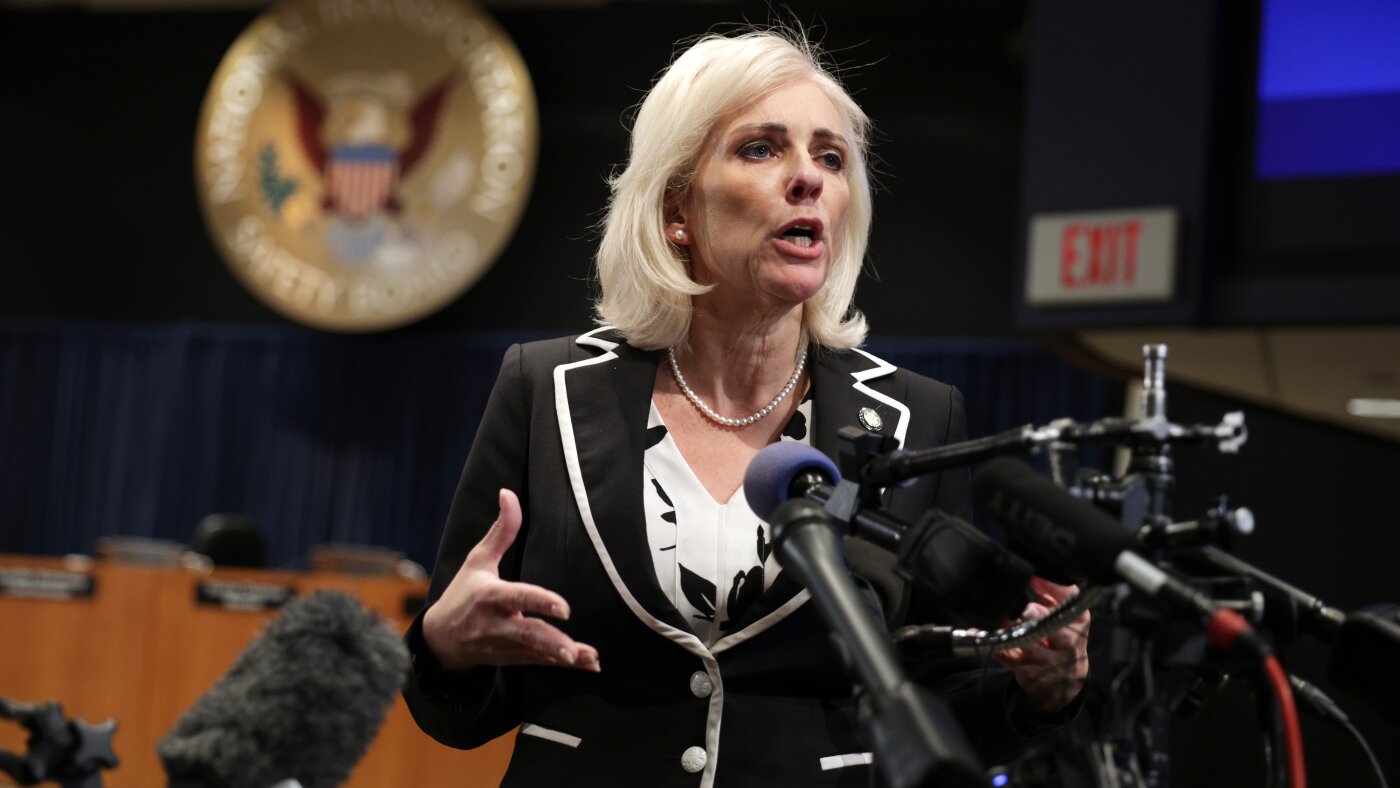

National Transportation Safety Board Chair Jennifer Homendy briefs reporters Tuesday in Washington, DC. The NTSB has released the results of its investigation into the January 2025 mid-air collision between an American Airlines regional jet and a U.S. Army Black Hawk helicopter near Ronald Reagan Washington National Airport. The collision killed all 67 people on board the two planes.
Alex Wong/Getty Images
hide caption
toggle caption
Alex Wong/Getty Images
WASHINGTON — After a one year investigationThe National Transportation Safety Board blamed multiple system-wide failures for the problem. mid-air collision an Army Black Hawk helicopter and an American Airlines regional jet that killed 67 people.

“Deep, underlying systemic failures – flaws in the system – helped create the conditions that led to this devastating tragedy,” NTSB Chair Jennifer Homendy said in her report. opening remarks.
Investigators willing their discoveries during a meeting at NTSB headquarters, compiling a long list of factors that likely contributed to the The deadliest air disaster in the United States in decades.
The council has not identified a single cause for the collision on January 29, 2025. Instead, investigators placed blame on multiple overlapping issues, including the location of a helicopter route in some of the nation’s most congested airspaces, as well as critical equipment failures and human errors.
Investigators identified instrument failure in the Army helicopter, which probably made the pilots believe they were flying 100 feet lower than they actually were. The NTSB report also described a chaotic situation in the air traffic control tower and incomplete communications between the local controller and helicopter pilots.
But the NTSB chair reserved her harshest criticism for regulators at the Federal Aviation Administration.

A crane removes plane wreckage from the Potomac River, where American Airlines Flight 5342 collided with a U.S. Army helicopter, near Ronald Reagan Washington National Airport, February 3, 2025. The collision killed 67 people and was the deadliest U.S. air accident since 2001.
Roberto Schmidt/AFP via Getty Images
hide caption
toggle caption
Roberto Schmidt/AFP via Getty Images
“It’s one failure after another,” Homendy told reporters during a break. The FAA has collected reports of more than 80 cases of serious serious accidents in recent years between helicopters and airliners, Homendy says, but the NTSB was primarily responsible. first to attract attention to these conflicts.
“The data was there. The data was in its own systems,” Homendy said.
The FAA was also supposed to evaluate helicopter routes annually to ensure they remain safe, according to Homendy, but she said the agency has produced no evidence that it has done so recently.
Investigators say air traffic controllers at the local tower at Ronald Reagan Washington National Airport had repeatedly raised concerns with the FAA about the lack of adequate separation between helicopter traffic along the Potomac River and the approach to Runway 33, where American Airlines Flight 5342 was attempting to land. But the FAA has not acted on these concerns, according to the NTSB.
“That means, at best, 75 feet of distance between a helicopter and a civilian aircraft. Nowhere in the airspace is that acceptable,” Homendy said. “This shouldn’t have existed.”
NTSB investigators say a single controller was managing local air and helicopter traffic the night of the collision. That controller should have issued a safety alert moments before the helicopter and regional plane approached, the NTSB said. The committee also concluded that the supervisor on duty should have separated helicopter and landing responsibilities after the controller complained about being overwhelmed earlier in the shift.

But investigators say problems with air traffic control at the airport began long before the actions of this single controller.
The NTSB investigation found that DCA air traffic controllers relied heavily on “visual separation,” relying on helicopter pilots to see approaching planes landing at the airport and avoid them.
The night of the collision, the Army’s Black Hawk helicopter was conducting a training mission using night vision goggles. The air traffic controller on duty asked the helicopter pilots to move behind the approaching American Airlines plane. The helicopter’s instructor pilot reported seeing the aircraft and requested “visual separation,” which the controller approved.
But the NTSB analysis concluded that the helicopter pilots likely never saw the approaching plane before the collision.
An NTSB simulation of the helicopter’s point of view shows that the pilots had limited visibility thanks to night vision goggles. Investigators believe the helicopter pilots mistakenly thought the American Airlines jet was one of several other planes lined up to land on Runway 1 and did not have an accurate understanding of its flight path.
NTSB members voted to approve nearly 50 new recommendations, including several regarding advanced technology known as ADS-B, which can transmit a plane’s position.

A poster showing the flight paths of the U.S. Army’s Black Hawk helicopter and American Airlines regional jet is on display at the National Transportation Safety Board meeting. The committee was meeting to issue its safety recommendations on the DCA mid-air collision.
Alex Wong/Getty Images
hide caption
toggle caption
Alex Wong/Getty Images
The Army helicopter was equipped with an ADS-B transponder, the NTSB said, although it was not working the night of the collision. But the NTSB also found that a working ADS-B transponder would not have prevented the crash, since the airliner was only equipped to send ADS-B signals, not receive them.
The NTSB has recommended that any aircraft operating in airspace where it is currently required to use ADS-B outbound technology also be required to use ADS-B inbound technology.
Committee members noted that communications between the air traffic control tower and the helicopter were hampered by technical difficulties.

Less than two minutes before the collision, the airport control tower warned the crew of the Black Hawk helicopter that the plane was “at 1,200 feet altitude, circling toward Runway 33.” But the NTSB believes that the word “circling” was inaudible, which may have contributed to pilot confusion.
In a statement to NPR, the FAA said it “values and appreciates the expertise and contribution of the NTSB.” The agency went on to say, “We have worked side-by-side with the NTSB throughout this accident investigation and acted immediately to implement the urgent safety recommendations it issued in March 2025. We will carefully review the additional recommendations made today by the NTSB.”
The NTSB’s final report, which runs to more than 500 pages, is expected within weeks.