
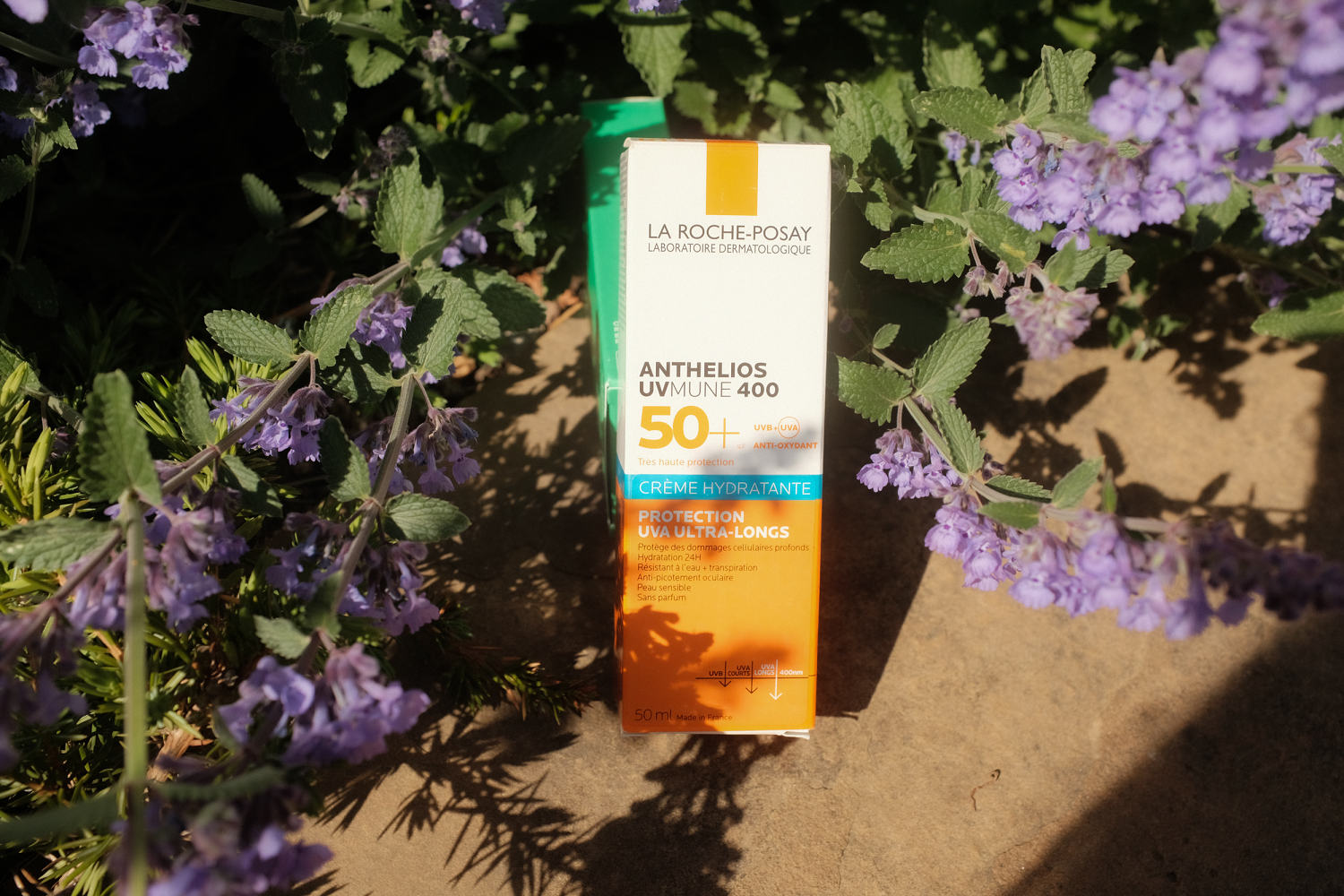
The chemical filter sunscreens available in the U.S., however, either protect against UVA or UVB. None of the chemical filters in the U.S. are broad-spectrum on their own. (Sunscreens will often contain a mix of chemical filters to cover both UVA and UVB.)
Chemical sunscreens also break down in the sun, so they need to be regularly reapplied.
Enter bemotrizinol. It’s a broad-spectrum chemical sunscreen that’s far more stable. “It would not degrade upon exposure to sunlight,” Lim said.
Another concern with other sunscreens is that some have shown the ability to seep into the bloodstream. (It remains unclear whether this is harmful.)
Bemotrizinol “does not penetrate the body surface and does not absorb into the bloodstream, so it has a good safety profile,” said Dr. Steven Wang, chief of dermatology at Hoag Memorial Hospital Presbyterian in Newport Beach, California.
Dr. Adam Friedman, a professor and the chair of dermatology at the GW School of Medicine and Health Sciences in Washington, D.C., added that chemical UV filters “are irritating at baseline, let alone if someone has acne, rosacea, eczema — it’s hard for people to be adherent to them because they sting.”
“It does seem to be better tolerated,” said Friedman of bemotrizinol, “in comparison to other UV filters.”
“Bemotrizinol will be a welcome addition to the U.S. sunscreen industry,” Wang said.
It will also be the first new UV filter in the U.S. in over 25 years.
The FDA acknowledged that it has taken a long time to arrive at this point.
“The agency has historically moved too slowly in this area, leaving Americans with fewer options than consumers abroad,” FDA Commissioner Dr. Marty Makary said in a press release.


:max_bytes(150000):strip_icc()/Health-GettyImages-1286492721-54ba01ddba52430f8b658552c79bfbd5.jpg?w=390&resize=390,220&ssl=1 "9 Foods With More Iron Than Chickpeas")
