Duck-Billed Dinosaur ‘Mummies’ Are Clay Molds Formed by Microbes, Scientists Say


October 23, 2025
3 min reading
Fossilized skin from dinosaur ‘mummies’ isn’t skin at all
Wyoming’s “dinosaur mummies,” once thought to preserve fossilized flesh, are actually detailed clay molds formed by microbes as the creatures decomposed.
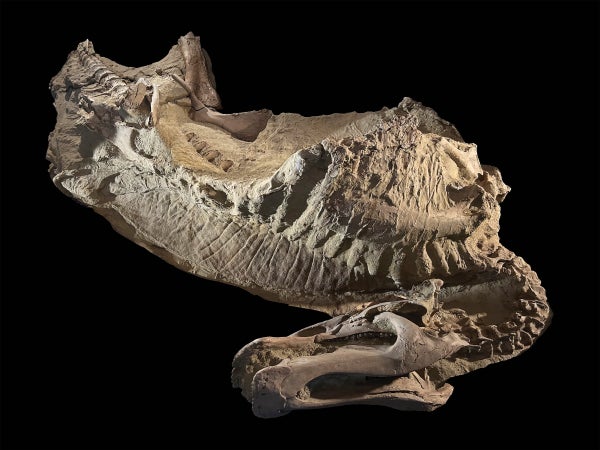
Mummy of the juvenile duck-billed dinosaur Edmontosaurus annectens preserved as a dried carcass resting on its rib cage approximately 66 million years ago. Large areas of scaly, wrinkled skin and a tall, fleshy crest on its back were preserved as if in a thin layer of clay on its fossilized skeleton.
More than a century ago, prolific fossil collector Charles Sternberg discovered the skeleton of a duck-billed bird. Edmontosaurus dinosaur in sandstone rocks of the Lance Formation in eastern Wyoming. The remains were covered in fossilized flesh and skin, making it the first “dinosaur mummy” ever discovered. Two years later, Sternberg found another a few kilometers away.
New research, however, reveals that the skin found on duck-billed dinosaur “mummies” recently discovered in the same region – and perhaps also on Sternberg’s – is not fossilized flesh at all but clay molds welded together by microbes as the creatures decomposed.
“This is going to shock a lot of people,” says University of Chicago paleontologist Paul Sereno, lead author of the new study, published in Science. This clay-molding process was known to preserve the shape of soft animals in oxygen-poor areas, such as sludge at the bottom of lagoons and underwater trenches, Sereno says. But “no one imagined that it could work its magic on a dinosaur suddenly buried by the sand of a flooded river”, an environment quite rich in oxygen.
On supporting science journalism
If you enjoy this article, please consider supporting our award-winning journalism by subscription. By purchasing a subscription, you are helping to ensure the future of impactful stories about the discoveries and ideas shaping our world today.
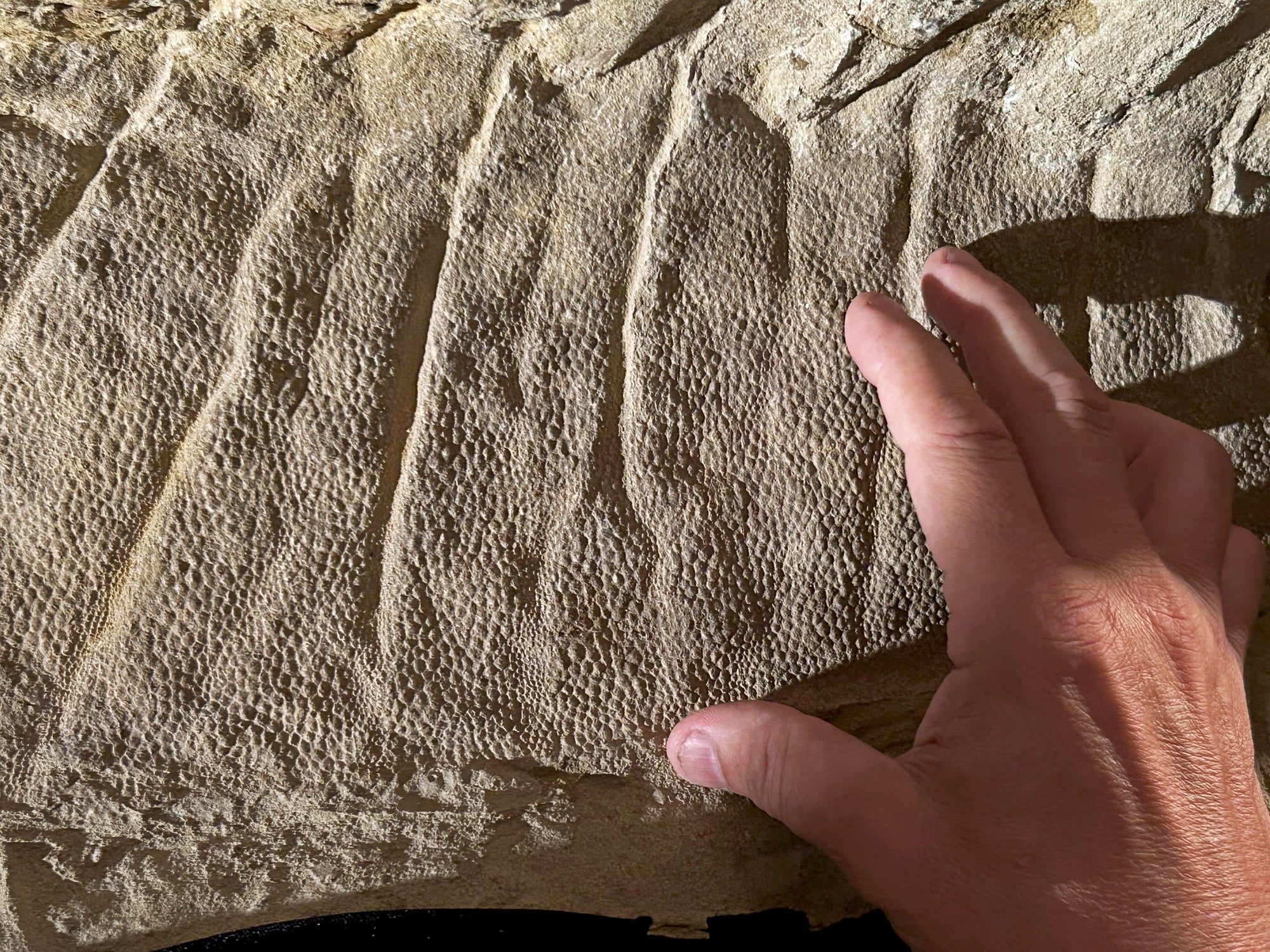
The scaly skin of a crest on the back of the young duck-billed dinosaur Edmontosaurus appendixnicknamed “Ed Jr.” The juvenile duckbill, approximately two years old at the time of his death, is the only juvenile dinosaur mummy ever discovered.
When “mummified” in this way, all of an animal’s exterior soft tissues become films of clay less than a millimeter thick. Sereno proposes that the carcasses of these creatures were first desiccated during a drought before being suddenly engulfed by sediment, probably caused by a flood. A layer of bacteria clung to the wet, porous surface to form a biofilm that attracted the surrounding clay. Then, weeks after they were buried, the soft parts of the carcasses decomposed and were washed away by groundwater, leaving the clay mask forever preserving the shapes of what was just beneath, Sereno said.
“The basic kind [fossilization] the question “How did this thing fossilize in the first place?” “has not received as much attention in the past,” says Stephanie Drumheller, a paleontologist at the University of Tennessee at Knoxville, who was not involved in the study but is mentioned in the acknowledgments section. “I think it was a really good deep dive into this area where we see multiple specimens.”

Three horny spikes are preserved atop the tail of a mummy of an adult duck-billed dinosaur. Edmontosaurus appendix nicknamed “Ed Sr.”
Sereno and other researchers managed to discover many more mummies near the original Sternberg site in Wyoming. These included a Triceratops horridus and a Tyrannosaurus rex, with two others E. annexes which were first described in the new study. All are within a 10-kilometer radius of each other in an area Sereno calls the “mummy zone.”
One of them E. annexes was two years old when he died and the other five to eight years old, making him a “late juvenile” and an “early adult” who researchers named “Ed, Jr.” and “Ed, Sr.”, respectively. Ed, Jr., the “late juvenile”, is the first adolescent dinosaur mummy ever found and the first large dinosaur with a fully preserved fleshy outline of its trunk. Meanwhile, Ed, Sr., the “young adult”, is the first dinosaur of his species to be discovered with a full set of spikes along his tail, and he has the oldest known hooves of any four-legged animal.
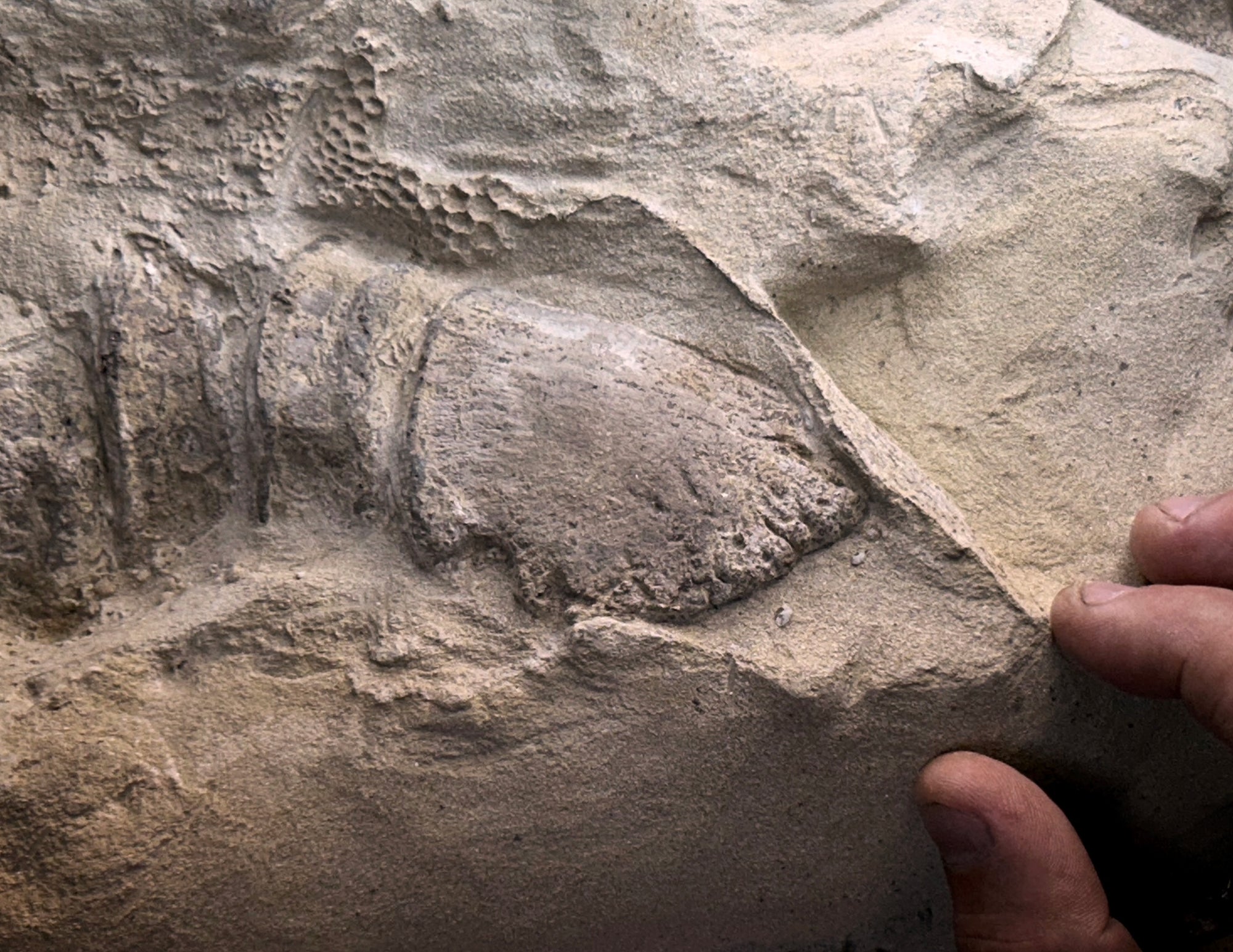
The hoof, preserved in section as a very thin layer of clay, covers the toe bone of the foot of an adult mummy of the adult duck-billed dinosaur. Edmontosaurus appendix.
The researchers used a series of methods involving X-rays, CT scans, and microscopic and chemical analyzes to ensure that the fleshy parts were indeed just a clay cast. This process is careful and the clay from many previous specimens was accidentally damaged or removed during preparation.
“They approached this question from many different angles,” says Drumheller, “to understand what the history of this fossil was, how this thing became a fossil in the first place – and then relate that to the unusual conditions that seem to have existed in this environment where they found so many mummy fossils.”
“The question now,” Sereno says, “is whether this process of preserving clay masks applies to other dinosaur mummies and skin renderings that have been found at many other sites around the world.”
It’s time to defend science
If you enjoyed this article, I would like to ask for your support. Scientific American has been defending science and industry for 180 years, and we are currently experiencing perhaps the most critical moment in these two centuries of history.
I was a Scientific American subscriber since the age of 12, and it helped shape the way I see the world. SciAm always educates and delights me, and inspires a sense of respect for our vast and magnificent universe. I hope this is the case for you too.
If you subscribe to Scientific Americanyou help ensure our coverage centers on meaningful research and discoveries; that we have the resources to account for decisions that threaten laboratories across the United States; and that we support budding and working scientists at a time when the value of science itself too often goes unrecognized.
In exchange, you receive essential information, captivating podcasts, brilliant infographics, newsletters not to be missed, unmissable videos, stimulating games and the best writings and reports from the scientific world. You can even offer a subscription to someone.
There has never been a more important time for us to stand up and show why science matters. I hope you will support us in this mission.


