Oil hits $90 per barrel, stocks continue to drop as escalating Iran war shocks markets


Oil prices continued to soar Friday, putting them on track for their biggest rise since early 2020 as the escalating war in Iran threatens global energy supplies.
US crude oil climbed more than 9% in early trading to reach more than $91 a barrel, its highest price since October 2023.
Brent, the international oil benchmark, exceeded $90 per barrel, jumping more than 6% to reach its highest level since April 2024.
This price development occurred amid growing fears that the war in Iran could lead to long-term energy supply problems. A Wall Street Journal report said Kuwait had “begun to cut production at some oil fields after running out of space to store its bottled crude.” NBC News was not immediately able to verify the report, but industry analysts have warned of the possibility in recent days.
Shortly after this report, President Donald Trump spoke to Truth Social, stating that “there will be no deal with Iran short of an unconditional surrender!” »
Stocks also fell sharply. At the opening bell, the S&P 500 fell more than 1.6%. The Dow Jones Industrial Average slipped 900 points and the Nasdaq Composite fell 1.4%.
Markets also fell after a gloomy jobs report showed the economy shed 92,000 jobs in February and included downward revisions to the last two jobs reports.
“The pace of job gains in recent months is still considerably slower than it was in 2024 and much of 2025,” said Elyse Ausenbaugh, head of investment strategy at JP Morgan Wealth Management. “Add rising oil prices due to Middle East conflict and renewed tariff uncertainty to the complex jobs market story, and you have a delicate, stagflationary mix of risks as a backdrop for the Fed.”
Earlier in the week, Qatar’s state-owned energy company also cut production of liquefied natural gas and other energy products.
Currently, hundreds of ships containing oil and LNG are stuck off the coast of Iran, unable to pass through the Strait of Hormuz to the global market as tensions continue to rise between the United States, Israel, Iran and neighboring countries.
More than 20% of the world’s daily oil supply normally passes through the strait off Iran’s southern coast.
“On the sixth day of the conflict, commercial traffic through the Strait of Hormuz remained virtually nonexistent,” JPMorgan Chase commodities analysts wrote Friday morning. “The market is moving from pricing pure geopolitical risk to grappling with tangible operational disruptions, as refinery closures and export constraints begin to hurt crude processing and regional supply flows.”
Iraq has also cut production by 1.5 million barrels per day, JPMorgan analysts said, adding that an additional 4 million barrels in total could be disrupted by the end of next week if the situation persists.
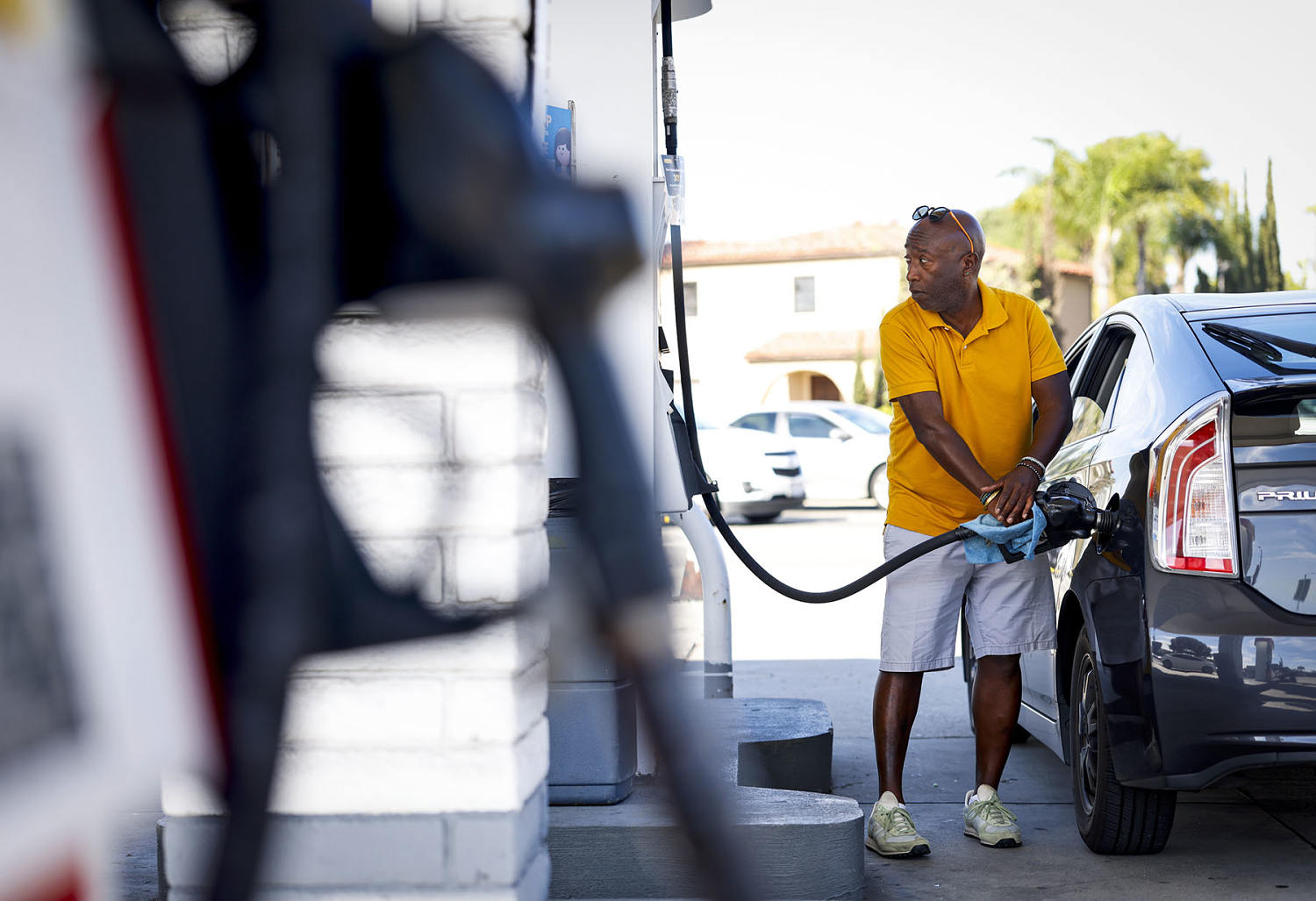
Since the start of the war last weekend, the price of American crude oil has jumped more than 30%. In turn, this has driven up gas prices for consumers. The current national average of about $3.32 a gallon as of Friday morning is up nearly 35 cents from Sunday, according to price tracking service GasBuddy and AAA.
U.S. natural gas prices also jumped more than 4% on Friday. Wholesale gas prices, known as RBOB, also increased by 2%.


