On AI and data centers, state lawmakers find bipartisan agreement : NPR

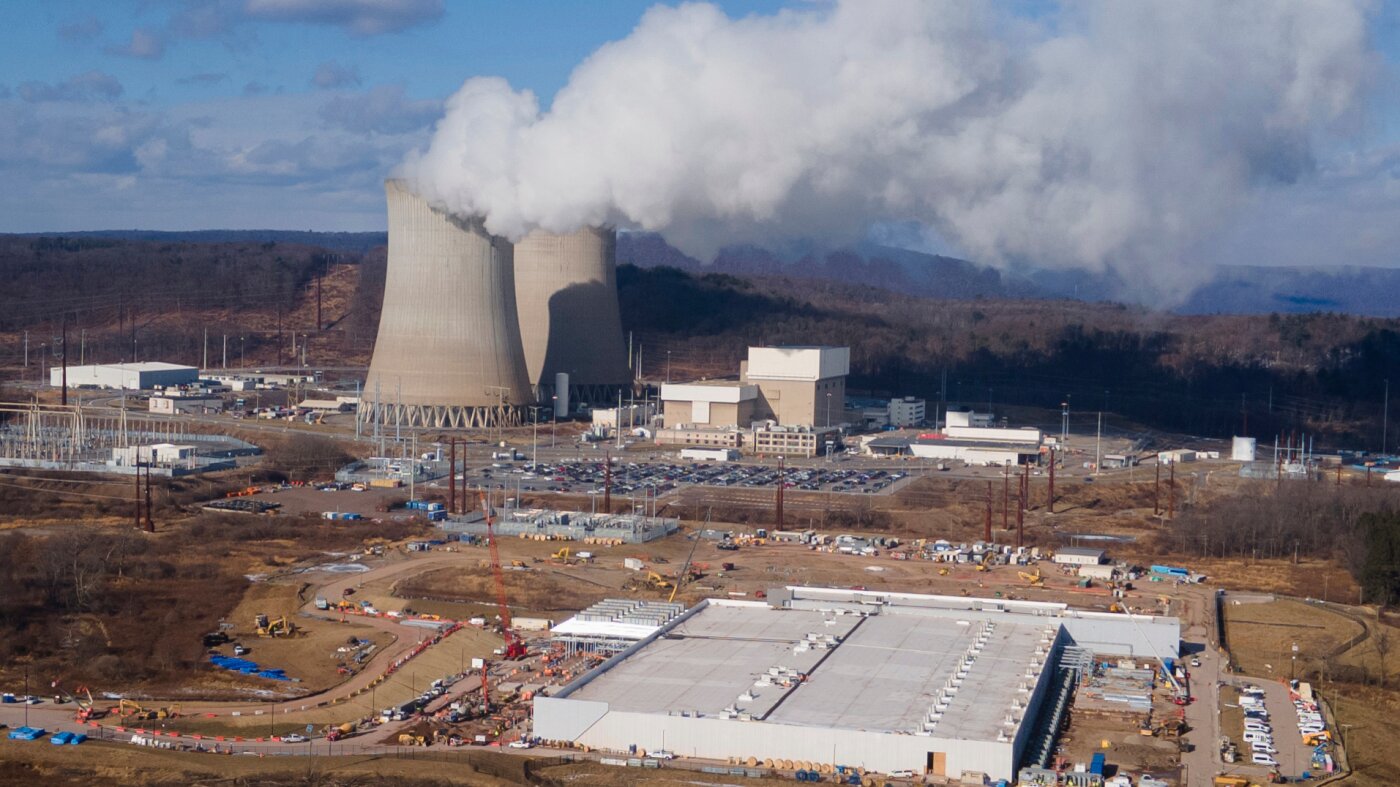

A data center owned by Amazon Web Services, front right, is under construction next to the Susquehanna Nuclear Generating Station in Berwick, Pennsylvania, January 14, 2025.
Ted Shaffrey/AP
hide caption
toggle caption
Ted Shaffrey/AP
Unlike the deep partisan divisions that are paralyzing Congress, Democrats and Republicans at the state level are coming together on some of the most important issues of the 2026 legislative season.
Lawmakers in most states want to regulate artificial intelligence and rein in the sprawling, power-hungry data centers that make AI possible in the first place.
Big tech has “blurred the typical ideological alignments of left and right,” says David Primo, a professor of political science and business administration at the University of Rochester in New York. “Conservatives and liberals are saying, ‘Well, here’s an opportunity for us to end what we think is a problem.'”
And while the two parties remain far apart on many issues — like tax policy, Primo says — it’s not just big tech that aligns Republicans and Democrats.
Regulating artificial intelligence
Ron DeSantis of Florida and Kathy Hochul of New York, two governors on opposite sides of the political spectrum, are very similar when it comes to mastering AI.
DeSantis, a Republican, supports legislation in Florida called Artificial Intelligence Bill of Rights. The proposal, currently working its way through the state Senate, makes it illegal to use a person’s name, image or likeness without their consent, requires anyone under 18 to have parental permission to interact with companion chatbots and requires the bots to remind users that they are not talking to humans.
“I really fear that if this issue is not dealt with intelligently and appropriately, you know, it could trigger an era of darkness and deception,” DeSantis said in proposing the bill. Tech companies need to be regulated, he says, because they have prioritized profits over user safety.
New York already requires chatbots to identify as non-human. This year, Hochul pushes to limit them further. She wants to ban chatbots in social media apps for children under 18. Other proposals would limit how robots can interact with young people.
“We are going to disable some related features. You’ve heard of it, haven’t you? » she asked an audience gathered at her high school alma mater earlier this year.
“As part of our proposals, we are removing this burden from parents and placing responsibility where it belongs: on the shoulders of the app companies and platforms themselves.”
Late last year, Trump released a decree trying to prevent states from regulating AI on their own. But state Republicans and Democrats nonetheless continue to move forward. Almost all states have a proposal to regulate AI. They range from requiring humans to supervise AI decisions regarding employees to blocking AI surveillance that could be used to set different prices for consumers.
Data center pushback
As the public’s appetite for AI grows, so does the need for additional data centers to meet massive computing demands. This is a concern in the states because data centers require significant amounts of electricity and water to operate.
In Florida, lawmakers are raising questions about the effects on the power grid and water consumption, as well as whether rising utility costs could be passed on to residents, which the Republican-led state Senate strives to resolve. DeSantis says he thinks many of the arguments for data centers, such as the idea that they will spur job creation or lower property tax rates, are vastly overblown.
South Dakota wants to ensure the state cannot override local governments when it comes to regulating data centers. Oklahoma is also considering bills to limit the impact of data center growth.
As with the AI debate, Trump and most states also found themselves on opposing sides in the fight over data centers. Trump has largely supported their growth, but says tech companies must pay for it themselves. In his State of the Union address Tuesday, the president said, “We’re telling big tech companies that they have an obligation to provide for their own electricity needs; they can build their own power plants as part of their factory. » His administration wants to force tech companies that build new centers to pay more for electricity to control price increases affecting consumers.
Democratic lawmakers in New York and Maine Propose Temporary Data Center Ban, Just Like Republicans Oklahoma.
The bill in New York is relatively new, but Hochul announced that the state’s Public Service Commission will examine the issue closely to ensure data centers “pay their fair share.”
In Colorado, a proposal require data centers to use renewable energy for their operations. And many states, led by both Republicans and Democrats, are considering developing nuclear energy to help power AI.
Technology companies are opposing many of these proposals And invest money in political campaigns. They say it would be impossible to comply with different laws in each state and that regulations could stifle innovation that could benefit the public.
Accommodation
Nationally, the rising cost of housing is also a concern for both parties. In Florida, a bill to ease restrictions on accessory dwelling units received full bipartisan support in the state Senate. DeSantis wants to solve the affordable housing crisis by cutting property taxes. That doesn’t sit well with state Democrats, who say they’re worried about the impact on local governments. They say lowering property insurance rates would be a better solution.
Lawmakers in New York and other states are trying to streamline environmental regulations. Dozens of states are considering proposals to reduce building regulations, strengthen tenants’ rights and improve rental housing conditions. In other words, when it comes to housing, lawmakers across the political spectrum embrace ideas that are generally popular with one party or another.


