Why does food by the campfire taste better?


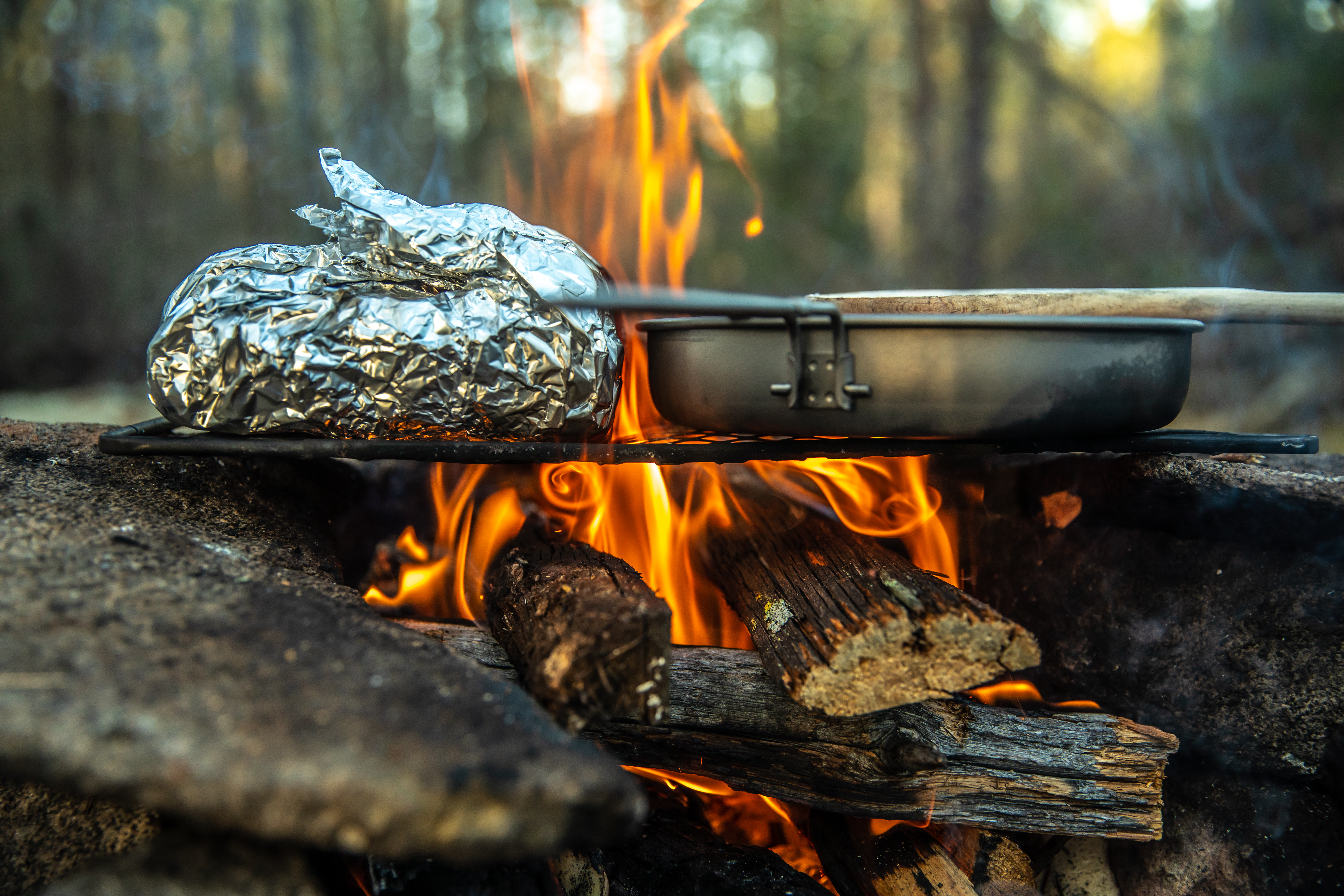
Under an obscuring sky, the stars are just starting to tremble through the canopy of a thick forest. The smoke moves upwards with a campfire, while the charred pine smell and the sizzling onions fill the air. Maybe you just hike at 10 miles, your feet are bad and your fingers are rolled up around a bowl of hot stew baked above the open flame. And although the ingredients are simple and primitive tools, it may be the best food you have ever tasted.
But why does food have a better taste by a campfire? It turns out that the answer has less to do with food itself and more to do with the multi-resistant symphony that surrounds it. It is chemistry, psychology, evolution, nostalgia, the joy and the ancient attack of this hot light that gathered for millennia under the stars.
[ Related: How to build and extinguish a campfire without sparking a catastrophe. ]
A multisensory illusion
“When you are around a fire, you are in a way in the pot,” explains the evolutionary biologist Robert Dunn, author of Delicious: the evolution of flavor and how it made us human. “You fully experience the results of the kitchen and food.”
The flavor, notes Dunn, is not only a question of taste buds. It is a complex interaction of smell, texture, temperature, sound, memory and even story. A key actor in this process is Rétronasale olfaction– The aroma of food derived from the back of your mouth in your nasal cavity. Around a campfire, you do not only taste food; You breathe in a complete cloud of aromatic particles, both dish and fire itself.
“You get a double dose in substance,” explains Dunn. “The flavor includes the smells that are in your mouth and around the fire.”
Fire makes the magic of food chemistry
When food is toasted, roasted or burned on a fire, it undergoes Maillard’s reaction, a chemical process where amino acids and sugars recombine to create hundreds of compounds of complex flavors. This is what gives a seized steak, toasted marshmallows and golden brown bread their irresistible taste.
In addition to that, the fire introduces pyrolysis – thermal degradation of organic materials – which adds smoked notes, sometimes argued bitter. Unlike the convection of the stove, the cooking of the fire rests strongly on the radiant heat and the infusion of smoke. Tiny aerosolized particles transport compounds of burning wood flavors directly in food. The researchers have identified dozens of aromatic molecules – such as guaiacol and syringol – in wood smoke which improves the perception of Umami and sweetness.
The renowned food science writer Harold McGeehas argued that we can be biologically listening to the complex aromas of meat cuisine. “If it’s true,” said Dunn, “and if we are listening to complex experiences Also?”
Why nature increases flavor
Beyond food, the experience of campfire concerns the place, body and mind. Environmental psychology offers some clues. Studies have shown that spending time in nature lowers cortisol (a stress hormone), attracts attention and stimulates sensory sensitivity. In this more attentive state, we tast more.
There is also the effect of justification of efforts – a principle of behavioral psychology which says that we tend to assess the results more when we have worked for them. This spice of the path could have a divine taste in part because you fed for ignition, I stirred the pot or that you simply won it by sweat and the puffy heels.
And, the light of fire itself, like lamps in hot tones or a spark plug, turned out to relax the brain and probably increase oxytocin, the so-called “bond hormone”.
“In the isolated world, we live today, around a fire, you are with other people,” says Dunn, “and you get a hormonal bump – like the chimpanzees preparing.”
[ Related: Ice age humans built sophisticated fireplaces. ]
An older ritual than us
Fire cooking is also one of the oldest things that humans do. Anthropologists believe that our ancestors began to use fire to prepare food over a million years ago, long before we are even entirely human. Fire not only made our food safer and more digestible, but it transformed meals into community experiences.
“You reconnect with a way of being with other people, it is our oldest way of being,” continues Dunn. “It is a deeper satisfaction.” What is the advantage of being able to see the stars? ” It’s more than everything the word “flavor” will capture. »»
Indeed, around a fire, we fall in rhythm. Someone stir, another tells a story, others look at the cosmos. The act of cooking and eating becomes a ceremony and the flavor becomes inseparable from the presence. For many, the taste for charred marshmallows or hot dogs evokes childhood summers, bonfire songs or family conviviality – souvenirs stored not only in brain hippocampus, but in the intestine, skin and hair with smoke.
This story is part of popular sciences Ask us anything series,, Where we answer your most bizarre and burning questions, from the ordinary to the wall. Do you have something you always wanted to know? Ask.

More offers, reviews and purchasing guides


