How Calvin Duncan, ‘The Jailhouse Lawyer,’ helped free himself : NPR

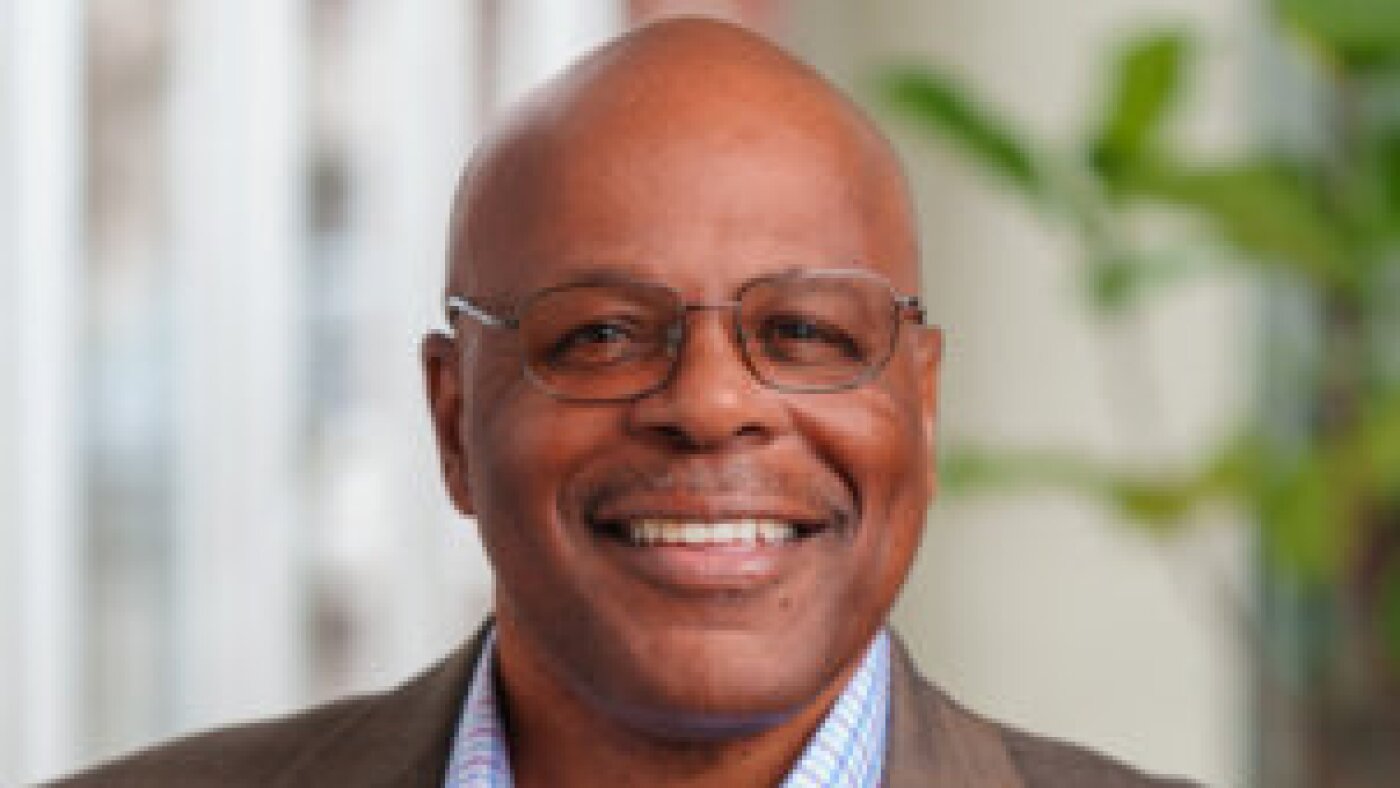

Calvin Duncan is the founder and director of the Light of Justice program in New Orleans.
Zack Smith Photography / Penguin Random House
hide
tilting legend
Zack Smith Photography / Penguin Random House
Calvin Duncan was 19 years old in 1982 when the police arrested him for a bearer in New Orleans. The testimony of the eyewitnesses during his trial was not reliable, but Duncan’s lawyer offered only a minimum defense, and he was sentenced to life imprisonment.
In prison, Duncan studied law, hoping to appeal his case. In the process, he became a prison lawyer – officially within the framework of the prisoners’ substitute for prisoners at the penitentiary of the State of Louisiana in Angola.
“In places like Louisiana, once a conviction is confirmed on a direct appeal, we are not entitled to a lawyer,” said Duncan. “”[Jailhouse lawyers] In fact provide legal assistance to people who cannot afford a lawyer. “”
Duncan worked on hundreds of cases while he was in prison. “There are guys who have committed their crimes. There are guys who have not committed their crimes,” he said. “As a lawyer for the prison, we have assisted everyone that we determined who did not have an equitable trial.”

One of the biggest challenges encountered by Duncan was to get public archives: “I used to give my plasma just to save enough money to buy my files,” he said.
Duncan has helped many colleagues detained to reverse their convictions. After years trying to reopened his own case, Duncan finally succeeded with the help of the innocence project of New Orleans. In 2011, he was released from prison after serving more than 28 years, and he was then exempt from crime.
After his release, Duncan went to university and obtained his BA from Tulane. Last spring, at 60, he graduated in law from Lewis and Clark University in Oregon. He now lives in New Orleans where he is the founder and director of the Light of Justice program, which strives to improve access to the courts for imprisoned persons.
“Going back to help people who need help is the thing I live,” he said. “I know that there are a lot of people in prison need help and they want people to help them. And, for me, to return to fill this obligation, that is what makes me move forward.”
The new Memoirs of Duncan, co-written with Sophie Cull, is called The prison lawyer.
Strengths of the interview

On his role as a lawyer in prison
Our function was to provide legal assistance to people who could not afford to hire a lawyer, in which case we operate as lawyers. We spent most of our time reading the recordings, if we could get our hands on the files. We spent a lot of time looking for problems, then reviewing the case of a person … [looking for] Errors that have occurred in the case that prevented this person from being offered a fair trial, all the facts in cases that really increase the flags noted as for the perhaps innocent person.
If a person is innocent, we in fact contact the innocence project in New Orleans to examine the individual case, but if we have no innocence, and we determine that the person could not be granted the fair trial, we actually write the petition which is generally, in most states, a petition for a post-conviction repair. Once we have prepared it, we get with our customers, and if they approve of it, the customer signs it and sends it to the court. In a word, we operate like lawyers. One of the things we cannot do as a lawyer is to leave the prison to provide surveys.
On the Innocence project, taking its case

The innocence project of New Orleans accepted my case and they started investigating my case. They went to speak to the witness. They had access to documents that I couldn’t get alone. And following this, they discovered evidence according to which if the jury had heard of these elements of evidence, I would not have been found guilty. And one of the things that was the key to my case was that the two detectives who stopped me in Oregon, they made an investigation themselves. The two were under investigation by the FBI for trying to make evidence against an Oregon representative. And one was charged. Another thing that we discovered from the files … was that the statements they say that I told them, they made me say these statements. And having access to these files proved that the detectives in my case had lied to the jury which condemned me.
After being exempt 10 years after being released from prison

In 2021, I was recalled in court and I was exempt. … Because my case had never really been tried, the new evidence was never examined when I concluded the agreement, they examined it [later]And they determined that my condemnation was unconstitutional. I was innocent and, therefore, they left the two guilty pleas and I was completely exempt. … It was the second best day of my life. The first best day of my was when I got out of January 7, 2011. The second best day in life was August 3, 2021.
If he obtained apology or repairs after spending more than 28 years in prison for a crime he did not commit
The judge said she was sorry for what happened to me, but I had no compensation. I postulated it. In Louisiana, they have this unjustified condemnation law that allows a person who has been wrongly sentenced, innocent, they grant you up to $ 400,000 and you would get $ 40,000 per year for a period of 10 years. Well, I applied for that, but … I didn’t understand it. But what I got when I was released was a check for $ 10. And I still have this $ 10 check.
On his persistence despite all his obstacles

What I firmly believe is that we are all entitled to hope. You make sure to keep hope and make sure that other people keep hope. … In Louisiana, we are not entitled to a lawyer and you therefore have all these people condemned by non -unanimous jury verdicts [which were legal in Louisiana prior to 1991] We know that condemnation is unconstitutional and therefore I believe that once we know that injustice has occurred, I think it is [the] Each person’s obligation to continue to educate people, saying to people: “Look at this law creates damage. This law is unfair.” … My perseverance comes just believing that if you give people the opportunity to do the right thing, they would. Sometimes it takes a long time to make it happen. But history has shown that it really happens and that you simply cannot give up despite the fact that we say “no, no, no”, especially when you know that you are right.
On the American judicial system
It’s so twisted. It is so rude to tell the poor that because you do not have enough money to hire a lawyer, we will not give you the same justice that we will give someone who could allow us a lawyer. For me, it’s a coarse way to really treat the poor because I saw people who have lawyers to prevail. People without lawyers do not take it.
Sam Briger and Anna Bauman produced and published this interview for Broadcast. Bridget Bentz, Molly Seavy-Nesper and Meghan Sullivan adapted it for the web.


