2032 and 2036 Taurid Meteor Showers Could Bring Larger Halloween Fireball Debris to Earth


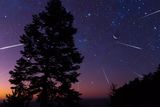
The Taurid meteor shower is an autumnal spectacle that can sometimes produce “Halloween fireballs.” Dust, rocks and other debris from Comet Encke as they fall into Earth’s atmosphere cause these flashes of light. Larger debris usually causes fireballs.
Most of the space debris that makes up this meteor shower is rather small and likely burns up completely before even reaching Earth’s surface. But what if these Halloween fireballs were much bigger? Could the planet be in danger?
A new study from the University of New Mexico (UNM), published in Acta Astronautiqueexamines how future Taurid meteor showers, in 2032 and 2036, could produce near-Earth objects (NEOs) that could require planetary defense.
Learn more: Taurid meteor showers are already glowing and could unleash sparkling fireballs this fall 2025
What is planetary defense?
It is not uncommon to see meteor showers caused by small space debris, such as dust and rocks, in our planet’s atmosphere. However, events such as the Tunguska asteroid impact and the Chelyabinsk meteor are much less common.
When these larger meteor events occur, they can cause major damage – not planetary damage – but enough to be concerning. Putting a mitigation plan in place to potentially deflect these larger impacts could help keep the planet safe.
“Planetary defense is a multidisciplinary, internationally coordinated effort to protect the Earth and its inhabitants from impacts of near-Earth objects (NEOs),” Mark Boslough, UNM research professor and lead author of the study, said in a press release.
“This requires surveys to discover and track near-Earth objects, campaigns to characterize which ones are hazardous, modeling efforts to understand and predict impact effects and associated consequences, and mitigation through impact avoidance and/or civil protection,” Boslough added.
Larger NEOs from the Taurid Stream
For this study, Boslough and the research team analyzed Taurid flow data and found a high risk of near-Earth objects the size of an airburst. These explosion-sized near-Earth objects are small enough to explode in the atmosphere but without impacting the ground, like the Chelyabinsk meteor.
The team also said it was investigating the possibility of a Taurid Resonant Swarm (TRS).
“The resonant swarm is theoretical, but there is evidence that a sparse swarm of small objects exists, as bright fireballs and seismic signatures of impacts on the moon have been observed at times that theory predicted,” Boslough said.
Although theoretical, the study suggests that the resonant swarm is likely due to Jupiter’s gravity, which pulls objects closer to the Tauride flow during their orbits. If this theory proves true, the Taurid swarm could overtake Earth in 2032 and 2036, increasing the risk of impact.
“Our conclusions are that we have the technology to test the Taurid resonant swarm using existing telescopes for targeted surveys of the sky in 2032 and 2036, when the hypothetical swarm will come very close,” Boslough said.
Catch the impact in time
If the Taurid resonant swarm theory of 2032 and 2036 is true, the objects should be large enough to be spotted, although many would not be observable through telescopes until they pass our planet, according to the press release.
“If we discover the objects with sufficient warning time, then we can take steps to reduce or eliminate the risk. If the new infrared telescope (NEO Surveyor) is operational, then we can potentially have a much longer warning time,” Boslough said.
Boslough does not intend to cause alarm; he only wants to help people become aware of potential impacts in the future, just as people are aware of earthquakes and volcanoes.
“Asteroid impacts represent a small but significant risk, and New Mexico National Laboratories have some of the best minds working on this problem,” he said.
Learn more: Simulations reveal alarming effects of exploding asteroid before it hits Earth
Article sources
Our Discovermagazine.com editors use peer-reviewed research and high-quality sources for our articles, and our editors review the articles for scientific accuracy and editorial standards. See the sources used below for this article:


