Oz Escalates Medicaid Fraud Claims Against States After Focus on Minnesota


The Trump administration has signaled its willingness to suspend billions of dollars in federal health payments to several states, similar to the measures it took against Minnesota.
The specific target is Medicaid, the public health insurance program that combines state and federal money. Federal officials announced unprecedented measures in Minnesota this year, saying they could withhold more than $2 billion in planned payments to the state and recoup nearly $260 million from last year.
Minnesota’s actions are part of the administration’s stated crackdown on fraud, but critics have likened them to using a cudgel instead of a scalpel, likely harming patients who rely on Medicaid for their care but are not responsible for fraud in the program.
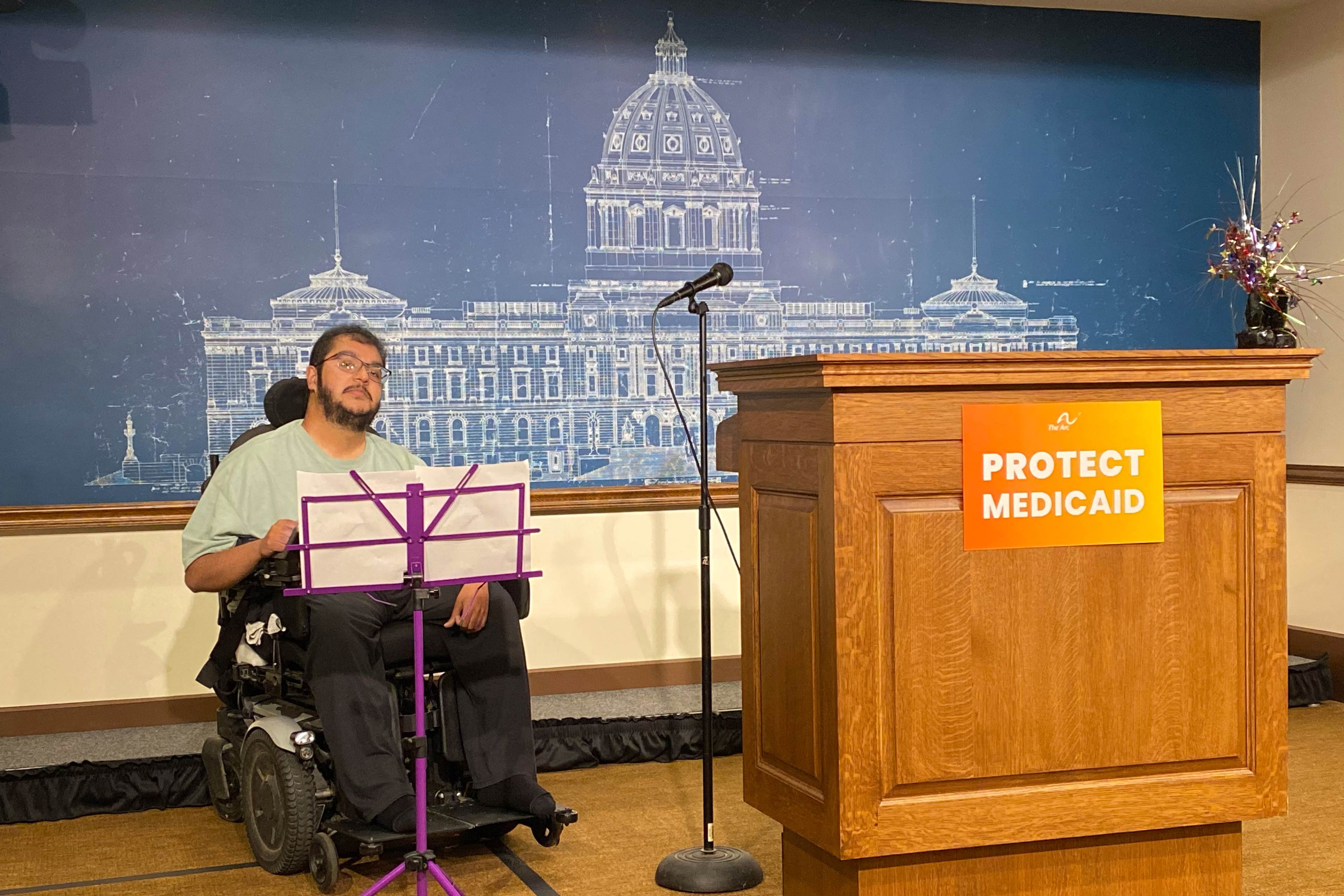
“It’s going to hurt a lot of people if they end up experiencing this,” said Sumukha Terakanambi, a 27-year-old with Duchenne muscular dystrophy who works as a public policy consultant with the Minnesota Council on Disability.
“Of course we support the fight against fraud,” Terakanambi said, but “this overly aggressive action misses the point. It’s not about punishing fraudsters. It’s about punishing people.”
Longtime Medicaid observers also doubt that federal actions will achieve their purported goal.
Meanwhile, fraud prosecutions have stalled in Minnesota, as the U.S. attorney’s office grapples with the exodus of nearly half of its lawyers and a surge in cases stemming from the Trump administration’s immigration crackdown.
Despite these concerns, Centers for Medicare & Medicaid Services Director Mehmet Oz said the techniques the federal government is using in Minnesota could be applied to other states, and he has launched social media campaigns alleging significant public benefits fraud in California, Florida, Maine and New York. And the February release of incomplete Medicaid data by the Trump administration’s Department of Government Efficiency appears to be part of a campaign to portray the program as riddled with fraud, Guyer said.
Andy Schneider, a research professor at Georgetown University’s Center for Children and Families, said the administration’s campaign seems particularly focused on services designed to keep people with disabilities out of institutions, and he described withholding $2 billion from Minnesota’s Medicaid program as the “nuclear option.”
A “political football”
The review of Minnesota’s public benefit programs began early in the Biden administration, years before the most recent investigations. Attention to the state’s Medicaid system increased after FBI raids targeting two autism treatment providers in December 2024.
The following May, an investigation by a Minneapolis television station into Minnesota’s Medicaid housing stabilization services sparked greater scrutiny from federal prosecutors and Gov. Tim Walz.
Under the Democratic governor’s leadership, the state launched investigations into 85 autism service providers, ordered a third-party audit of 14 types of Medicaid services deemed “at high risk” for fraud, and delayed payments for those services for up to 90 days. Many services are those that people with disabilities receive at home, which makes them more difficult to follow.
Terakanambi feared that the state’s “authoritarian approach” would destabilize the entire home care system. Although his own care has not been interrupted — his parents provide the 10 hours of daily personal care he is entitled to through Medicaid — other disabled Minnesotans have reported experiencing interruptions and have criticized payment delays.
In December, a man was found dead after losing his home care services due to the crackdown.
“We lose sight of the people who haven’t done anything wrong and who rely on these supports and services to live in the community,” said Sue Schettle, executive director of ARRM, a Minnesota nonprofit that represents organizations supporting people with disabilities. “It becomes a political football.”
Schettle said she raised her concerns about the crackdown with state officials, who have since met regularly with her and other advocates. The federal actions that followed, however, left her “in shock,” she said.
The “nuclear option”
In December, a video posted by a conservative YouTuber, with help from state Republicans, amplified the problem in Minnesota, alleging widespread fraud at daycares owned by members of the Somali community. A state follow-up investigation of the child care centers featured in the video determined that all were “operating as intended.”
On Jan. 6, CMS’s Oz sent Walz a letter alleging that Minnesota’s Medicaid program was not in compliance with federal fraud, waste and abuse rules, paving the way for the Trump administration’s decision to withhold more than $2 billion in federal Medicaid funds from Minnesota this year, or about 18 percent of what the state received the year before.
Minnesota appeals.
The Paragon Health Institute, a Republican-aligned think tank that recently issued a policy brief calling for similar enforcement measures across the country, applauded the federal measures.
“This will incentivize states to take necessary actions, ensuring that Medicaid funds go to those who are actually eligible,” said Chris Medrano, a legal research analyst who co-authored the brief.
Georgetown’s Schneider questioned the necessity and effectiveness of withholding the money.
“I don’t see any relationship between this and actually reducing fraud against Minnesota’s Medicaid program, given that the state has already taken many steps,” he said.
In late February, Oz went further, announcing that in addition to withholding $2 billion in future payments to Minnesota, the administration was also “deferring” about $260 million in federal Medicaid payments to the state.
“We have informed the state that we will give them the money, but we are going to hold it and release it only after they propose and implement a comprehensive corrective action plan to resolve the problem,” Oz said during a Feb. 25 news conference with Vice President J.D. Vance.
Minnesota is challenging the postponement in court.
“We are awaiting feedback from CMS on our corrective action plan, which is why we were surprised and confused when Dr. Oz said at a press conference with the vice president last week that we needed to provide one,” Minnesota Medicaid Director John Connolly said during a March 3 press briefing.
“Another Minnesota”
Oz and Vance both said at the February press conference that they were not specifically targeting Democratic-led states. Oz noted that Florida had a “big fraud problem” and sent a letter to state officials in mid-March with a list of questions about their Medicaid program. Until then, Oz’s letters and most social media videos were limited to California, Maine and New York, all run by Democrats.
“We could have another Minnesota on our hands,” Oz said in a video released the same day as a letter sent to Maine Gov. Janet Mills, a Democrat, seeking information on how the state was addressing Medicaid fraud.
“And if we are not satisfied with their progress, we reserve the right to suspend payments completely,” Oz said in the video.
The video and letter were prompted by a federal audit of autism services in Maine that found the state made at least $45.6 million in improper Medicaid payments. Similar audits in Indiana, Wisconsin and Colorado produced comparable results.
In a statement, Mills called Oz’s letter “a pretext to send ICE and other armed federal agents into states run by Democrats.”
CMS spokesman Chris Krepich said the agency doesn’t take funding measures lightly. “The focus is on strengthening oversight, improving accountability and ensuring that vulnerable patients receive the services to which they are entitled,” Krepich said.
But Terakanambi said it’s not hard to see how federal actions like Minnesota’s could put services at risk. The amount of money Minnesota could lose from CMS actions announced this year is already equivalent to about two-thirds of the state’s rainy day fund.
Many states are seeking to reduce or even eliminate funding for home care services due to much smaller budget shortfalls. And more cuts are expected, with Congressional Republicans’ One Big Beautiful Bill Act, signed into law last year, expected to reduce federal Medicaid spending by more than $900 billion over the next decade.
“People are going to die,” Terakanambi said. “People will lose essential support and will no longer be able to participate in the life of their community as they wish. »


