Ozzy Osbourne, Who Suffered with a Form of Parkinson’s, Dies at 76


The death of Ozzy Osbourne highlights a form of parkinson
Ozzy Osbourne, main singer of Black Sabbath, died at the age of 76. It had already been diagnosed with a form of Parkinson’s disease linked to the gene Prkn
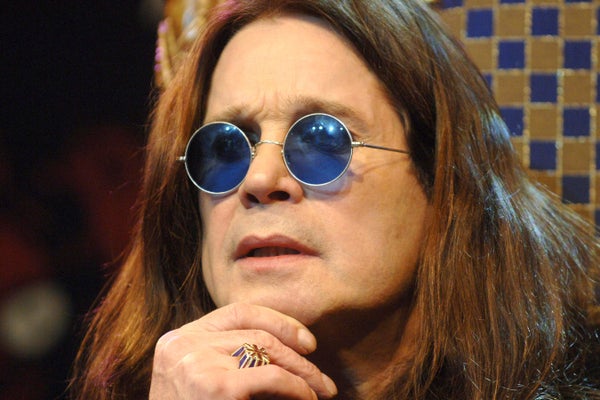
Ozzy Osbourne at the press conference of the Ozzy Ozbourne Hard Rock Cafe t-shirt revealing for the benefit of the Sharon Osbourne Colon Cancer Foundation at Hard Rock Cafe in New York on July 28, 2006.
George Taylor / Everett / Alamy Stock Photo collection
On July 22, Ozzy Osbourne, main singer of Black Sabbath, died at the age of 76. The “Prince of Darkness” had struck the performance and tours while taking care for a form of Parkinson’s disease linked to the gene PRKN, Which makes a protein called Parkin. He played his last live performance with his group comrades in Birmingham, England, July 5.
“It was terribly difficult for all of us,” said Osbourne in 2020 Hello America Interview in which he discussed his diagnosis.
“There are so many different types of Parkinson,” said Sharon Osbourne, the wife of Ozzy Osbourne, during the interview. “It is not a death condemnation by an effort of the imagination, but it affects certain nerves of your body.”
On the support of scientific journalism
If you appreciate this article, plan to support our award -winning journalism by subscription. By buying a subscription, you help to ensure the future of striking stories about discoveries and ideas that shape our world today.
The cause of the death of Ozzy Osbourne was not disclosed. The late heavy metal musician had often openly shared his intense lifestyle and his experience with the consumption of drugs, which may have aggravated the progression of its Parkinson form, according to the New York Times.
What do we know about the condition?
Parkinson’s disease is a neurodegenerative condition in which the nerve cells, largely in the central gray nuclei of the brain, deteriorate or die. According to the National Institute of Aging, the disease generally progresses with age (most people develop the disease after 60 years), and it is known to cause tremors, stiff muscles, balance problems, a slowdown in movements and other mobility problems. People can also have difficulty swallowing, chewing and speaking, as well as mental health problems, including changes in depression and mood. Emerging research suggests that dreams could also predict Parkinson’s disease.
Prkn is one of the genes involved in Parkinson’s disease. It is involved in maintaining the mitochondrial function, which could affect cellular energy, but the way it leads exactly to the disease is not clear, according to Medlineplus. Parkinson’s disease has been linked to more than 200 mutations in this gene, some of which can cause production, sustainability and protein function problems.
In 2020 Hello America Interview, the Osbourne family disclosed the state of Ozzy Osbourne. He volunteered to make his genome sequenced in 2010 to see if his DNA could offer more indices on his health.
[Read more: Ozzy Osbourne’s Genome Reveals Some Neandertal Lineage]
Does Parkinson’s disease cause death?
Parkinson’s disease and mortality data is incoherent. Some studies suggest that those who have the condition, in particular an advanced or severe form, have a mortality rate which is approximately 1.5 times higher than that of the general population, according to the American Parkinson Disease Association. Parkinson’s disease, in combination with another disease or injury, such as falling, ulcer or pneumonia, could also increase the probability of death.
Although uncukerable, Parkinson’s is considered a habitable disease. Drugs that act on certain cerebral neurotransmitters, including dopamine – a hormone involved in movement – can help relieve symptoms. Research on deep brain stimulation, which was approved for Parkinson tremors by the US Food and Drug Administration in 1997, showed that technology was an effective treatment.
Publisher’s note (07/22/25): This article was modified after publishing for better clarifying the descriptions of the state of Ozzy Osbourne.


