Some Fig Trees Can Turn CO2 Into Stone — A Hidden Talent That Could Combat Climate Change


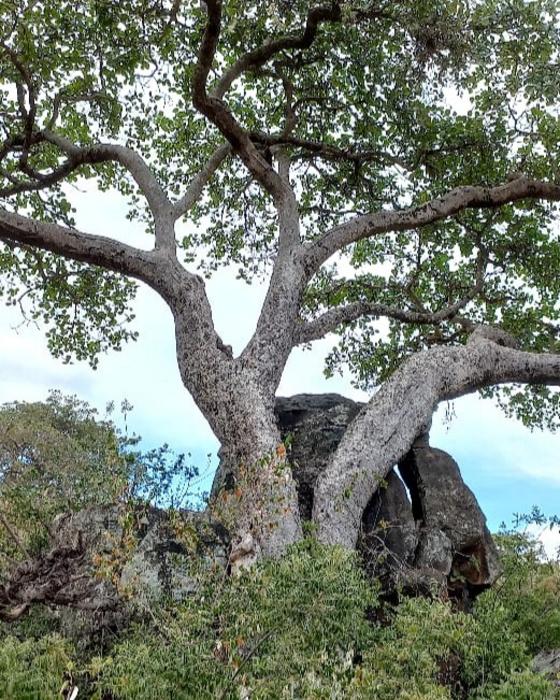
Although all trees can alleviate climate change by absorbing carbon dioxide, some have another turn in their handle which allows them to transform CO2 into stone. Recent research has shown that certain species of figs that grow in Kenya specialize in this hidden talent, which can give CO2 storage efforts an additional boost.
The new research – which will be presented this week at the Goldschmidt conference in geochemistry in Prague – is focused on improving sequestration C02. Since some figs can hide atmospheric CO2 as “rocks” in the surrounding soil, they show potential to become an unexpected icon for climate change strategies.
Transform carbon dioxide into stone
Whenever trees are involved in climate change dialogue, they are generally high for their ability to remove carbon from air and use it to create oxygen during photosynthesis. A 2023 Study estimated that world forests could hypothetically capture around “226 carbon gigatons in regions with low human imprint if they were allowed to recover”.
Many conversations on the recovery of forests therefore have this sequestration of organic carbon in the foreground. The sequestration of inorganic carbon, on the other hand, has not won almost the same traction.
This is probably because inorganic sequestration of carbon is not something that each tree is able to make. Only some trees can use CO2 to create calcium oxalate crystals, the first step in a process called Oxalate carbonate route. When certain parts of these trees decompose, fungi and microbial communities transform the crystals into calcium carbonate, the primary ingredient which constitutes limestone and chalk.
In some cases, termites Even help this process to materialize by transporting leaves that have fallen on their mounds, where microbes convert carbon into calcium carbonate and store it underground.
Find out more: The trees do not like to breathe forest smoke and they will hold their breath to avoid it
Fight climate change with figs
When carbon in certain trees is transformed into calcium carbonate, it increases the pH of the soil around the tree. Researchers say that this form of inorganic carbon could be of major help for sequestration C02 because it lasts much longer in the soil than organic carbon.
The research team has identified three species of figs cultivated in Kenya, some of the first fruit trees that showed the way to oxalate carbonate. They found that calcium carbonate was formed outside the tree trunks and more deeply in the wood.
“While calcium carbonate is formed, the ground around the tree becomes more alkaline,” said Mike Rowley, biogeochemist of the University of Zurich who will present research, in a press statement. “Calcium carbonate is formed both on the surface of the tree and in the structures of the wood, probably when the microorganisms decompose the crystals on the surface and also penetrate more deeply into the tree. It shows that the inorganic carbon is deleted more in the wood that we have done before.”
Plants with a goal
One of the figure species, Ficus Wakefieldiiwas particularly effective in sequencer C02. Researchers plan to carry out other tests to determine to what extent this tree can store CO2 in different environments.
Oxalate carbonate research has mainly focused on news environments and trees that do not produce food, such as Iroko on the west coast of Africa. According to the researchers, this tree can “kidnap a ton of calcium carbonate in the soil during its lifespan”.
Researchers suggest that there are probably many unexplored possibilities of sequestration of inorganic carbon, since calcium oxalat is a very abundant biomineral produced by many plants, and microorganisms which facilitate its conversion to calcium carbonate are also spread.
By planting more figs, the perilous consequences of carbon emissions could potentially be attenuated. And in this case, the fruits of sequestration C02 can be even softer.
Learn more:: Midwest American forests have doubled in carbon storage during the Holocene
Article Sources
Our writers at Discovermagazine.com Use studies evaluated by high -quality peers and sources for our articles, and our publishers examine scientific precision and editorial standards. Review the sources used below for this article:
Jack Knudson is a deputy editor -in -chief to discover with a strong interest in environmental sciences and history. Before joining Discover in 2023, he studied journalism at the Ohio University Scripps College of Communication and previously interned at Recycling TODAY magazine.


