Physicist lawmaker claims Iran nuclear stockpile lacks US security plan


NEWYou can now listen to Fox News articles!
A House Democrat with a background in physics is sounding the alarm over what he sees as a lack of plan to manage Iran’s nuclear sites during the U.S. offensive campaign.
After a classified briefing Tuesday with senior administration officials, Rep. Bill Foster, Democrat of Illinois, said lawmakers had not been given a clear plan to secure or neutralize Iran’s stockpile of enriched uranium.
“We heard that they never had a plan for this nuclear stockpile of enriched uranium – to destroy it, seize it or subject it to international inspection,” he said.
American intervention was publicly justified by the Trump administration as a necessary step to prevent Iran from developing a nuclear weapon.
U.S. forces struck more than 1,700 targets across Iran, including ballistic missile launch sites, air defenses, naval assets and command centers. However, major nuclear facilities are not among the main targets.
“In the meantime, Iran will be very, very close to being able to use this material – as many observers have pointed out in an unclassified situation – to make a handful of Hiroshima-type nuclear devices,” Foster told Fox News Digital. “Not the kind you can put on a missile, but the kind you can launch by several other means and are very difficult to stop.”

After a classified briefing with senior administration officials, Rep. Bill Foster, Democrat of Illinois, said lawmakers had not been given a clear plan to secure or neutralize Iran’s stockpiles of enriched uranium. (Scott Applewhite/Pool via Reuters)
Foster was referring to Iran’s stockpile of highly enriched uranium, a material that, if used as a weapon, could be used to make a nuclear explosive device.
Experts note that building a compact warhead suitable for a ballistic missile is technically complex and requires advanced engineering. But a simpler, larger nuclear device — similar in basic concept to the bomb the United States dropped on Hiroshima, Japan, in 1945 — would not need to be miniaturized to fit a missile. Such a device could not be transported by long-range rocket but could theoretically be transported by other means.
Foster argued that containing Iran’s nuclear materials, most of which are buried deep underground, would likely require U.S. forces to enter Iran.
Recent satellite images show damage to support buildings and access points at Iran’s Natanz enrichment site, although the deeper underground infrastructure of the major nuclear facilities has not been confirmed as a primary target of the current campaign.
U.S. and international officials have already acknowledged that while strikes may damage enrichment infrastructure, stockpiles of enriched uranium stored underground may remain intact and potentially recoverable unless physically secured or removed.
“You have to go in there with boots on the ground and grab a bunch of equipment,” Foster said. “You have to go underground in these facilities and lose many soldiers’ lives in doing so.
“They don’t want to do it, or they’ve decided not to do it, or they’ve decided it’s impossible. In any case, they haven’t presented us with any plan that would actually control the material.”
Without securing nuclear materials, he argued, military operations could bring Iran closer to nuclear weapons than diplomatic negotiations would have done.
“The only positive thing about the ayatollah is that he issued a fatwa against the building of nuclear weapons,” Foster said. “Who knows how the next generation of ayatollahs will feel? They will come under heavy pressure from the IRGC, which was not so opposed to nuclear weapons.”
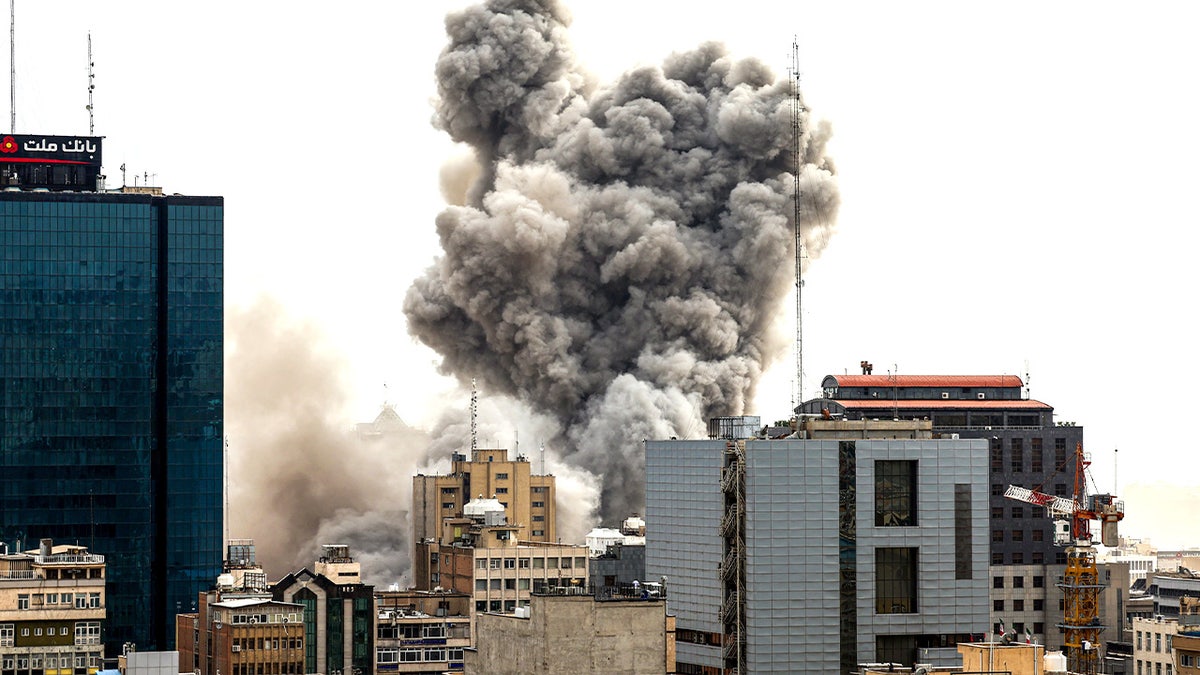
President Donald Trump confirmed the launch of US strikes against Iran on February 28, 2026. (Contributor/Getty Images)
Ayatollah Ali Khamenei, who was killed during joint US-Israeli operations, previously issued a fatwa, a religious edict, opposing the pursuit of nuclear weapons. Analysts have long debated whether this decision would be binding or lasting.
At a White House press briefing Wednesday, Press Secretary Karoline Leavitt said the administration believes Iran “wants to build nuclear weapons to use against Americans and our allies,” viewing the strikes as necessary to prevent Tehran from advancing its nuclear ambitions.
“The U.S. military has more than sufficient ammunition and weapons stockpiles to meet the Operation Epic Fury goals set out by President Trump – and beyond. Nonetheless, President Trump has always been intensely focused on strengthening our armed forces and he will continue to call on defense contractors to produce American-made weapons that are the best in the world faster,” she said in a follow-up statement to Fox News Digital.
Missile suppression strategy faces ‘mathematical problem’
Senior administration officials have stressed that the current phase of the campaign aims to dismantle Iran’s ability to project force with missiles, drones and naval assets.
Defense Secretary Pete Hegseth highlighted strikes against Iran’s ballistic missile systems, air defense and naval capabilities, describing the efforts as an attempt to degrade the conventional tools Tehran uses to threaten U.S. forces and its regional allies.
Secretary of State Marco Rubio also said the United States was working to “systematically dismantle” Iran’s missile program, so it could not “hide behind” developing a nuclear weapon.
While the broader rationale for intervention centered on preventing a nuclear-armed Iran, the more immediate threat facing U.S. troops and their partners is Iran’s continued missile and drone launches. Administration officials say Iran’s missile construction was intended to create a deterrent buffer, protecting its broader strategic ambitions, including its nuclear program, from outside attacks.
Lawmakers from classified briefings said the campaign had become, in part, about sustainability.
US ‘WIN DECISIVELY’ AGAINST IRAN, WILL OBTAIN ‘COMPLETE CONTROL’ OF AIRSPACE WITHIN DAYS, HEGSETH SAYS
“We don’t have an unlimited supply,” Sen. Mark Kelly, Democrat of Arizona, said of U.S. and allied interceptor stockpiles. He warned that the conflict could become a “math problem,” balancing launch volumes with limited air defense munitions and the ability to resupply them without weakening the readiness of other theaters.
“At some point – and we’re probably already there – it becomes a math problem,” Kelly added.
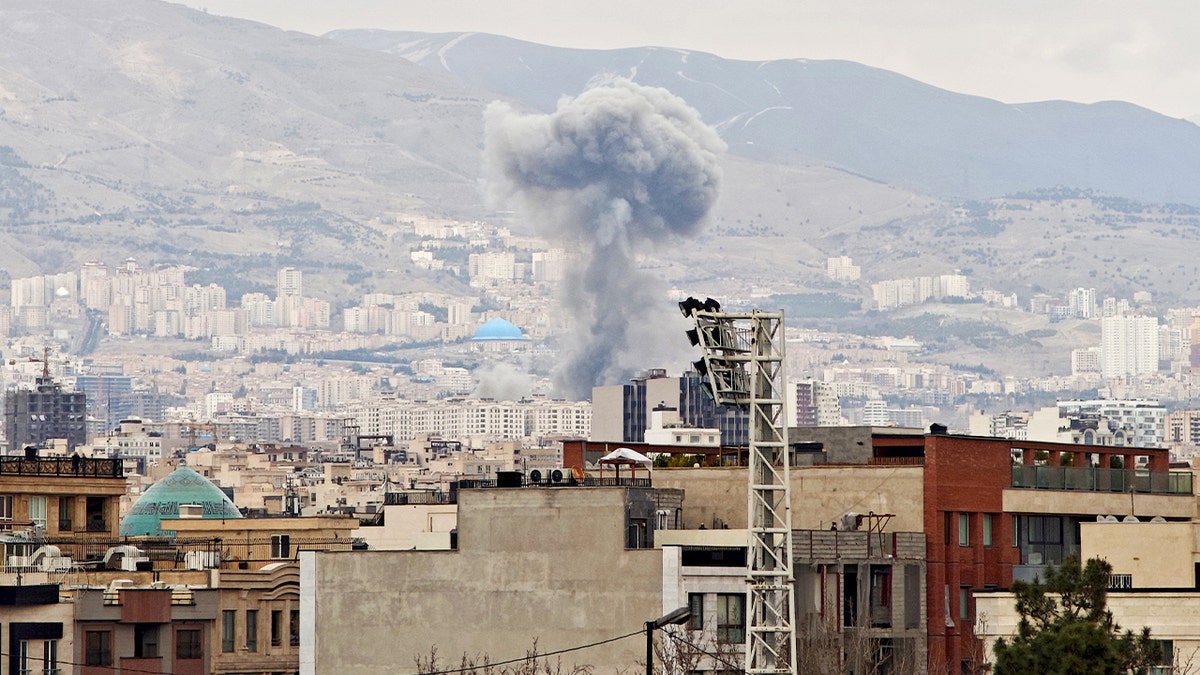
Smoke rises in Tehran after an explosion on March 2, 2026, amid ongoing US and Israeli military strikes. (Majid Saeedi/Getty Images)
He said he pressed defense officials on how interceptor stockpiles were being replenished and whether diverting munitions to the Middle East could undermine U.S. readiness elsewhere.
“How do we resupply air defense munitions? Where are they going to come from? What impact does this have on other theaters?” he said. “The calculations on this currently appear to be problematic.”
Sen. Andy Kim, D-N.J., said he also asked for clarification on interceptor inventories but did not receive detailed answers.
“It concerns me a lot,” Kim said. “I didn’t get any clarity today. … Something like ‘trust us’ doesn’t cut it for me.”
Republicans, however, pushed back on the idea that interceptor supplies are tight.
Sen. Markwayne Mullin, Republican of Oklahoma, said officials told lawmakers that U.S. forces were “in very good shape,” dismissing concerns about shortages.
US LAUNCHES OPERATION EPIC FURY, STRIKES 1,700 IRANIAN TARGETS IN 72 HOURS
Ehud Eilam, a former Israeli defense official and national security analyst, said that while nuclear weapons remain the most serious long-term threat, missile and drone systems pose the most immediate danger if intelligence assessments conclude that Iran is not about to assemble a device.
“As long as there is an assessment that Iran cannot produce a nuclear weapon in the near future, then the focus shifts to missiles and drones,” Eilam said, emphasizing that ballistic missiles would ultimately be needed to carry any future nuclear warhead. Removing mobile launchers, crews and command networks can reduce Iran’s firing rate, saving interceptor supplies while degrading Tehran’s broader military capability, he said.
The concern is not theoretical.
During the intense Iran-Israel conflict of June 2025, U.S. forces reportedly fired more than 150 high-altitude area defense interceptors, about a quarter of the world’s inventory, as well as a large number of standard ship-borne missile interceptors to protect allies.
Analysts note that resupply of high-end air defense systems such as the Patriot, THAAD and SM-3 interceptors could take more than a year at current production rates.
CLICK HERE TO DOWNLOAD THE FOX NEWS APP
The Pentagon also seeks to balance competing demands. The same missile defense systems used to protect U.S. bases and Gulf partners are being provided to Ukraine to defend against Russian cruise missile attacks, creating what some analysts describe as “zero-sum” competition for stockpiles between Europe and the Middle East.
“There is a limit to the number of THAAD missiles that can be used,” Eilam said. “These are not systems that can be reproduced overnight.”
Related article