Pneumonic Plague Infections in Modern Times Show the Black Death Isn’t Dead


PLAGUE IS OFEN ASSOCITED WILD WITH MEDIEVAL History and the CENTURIES-OLD BLACK DEATH EPIDEMIC, but a recent death in northern arizona is a disorders reminder of the flea-borne dissease’s lingering hold in parts of the world, include the us local Health Officials in Arizona’s Coconino, Which Includes The City of Flagstaff, Confirmed Late Last Week That A Person There Had Died of Pneumonic Plague – Severe Lung infection caused by Yersinia Pestisthe bacteria behind the disease.
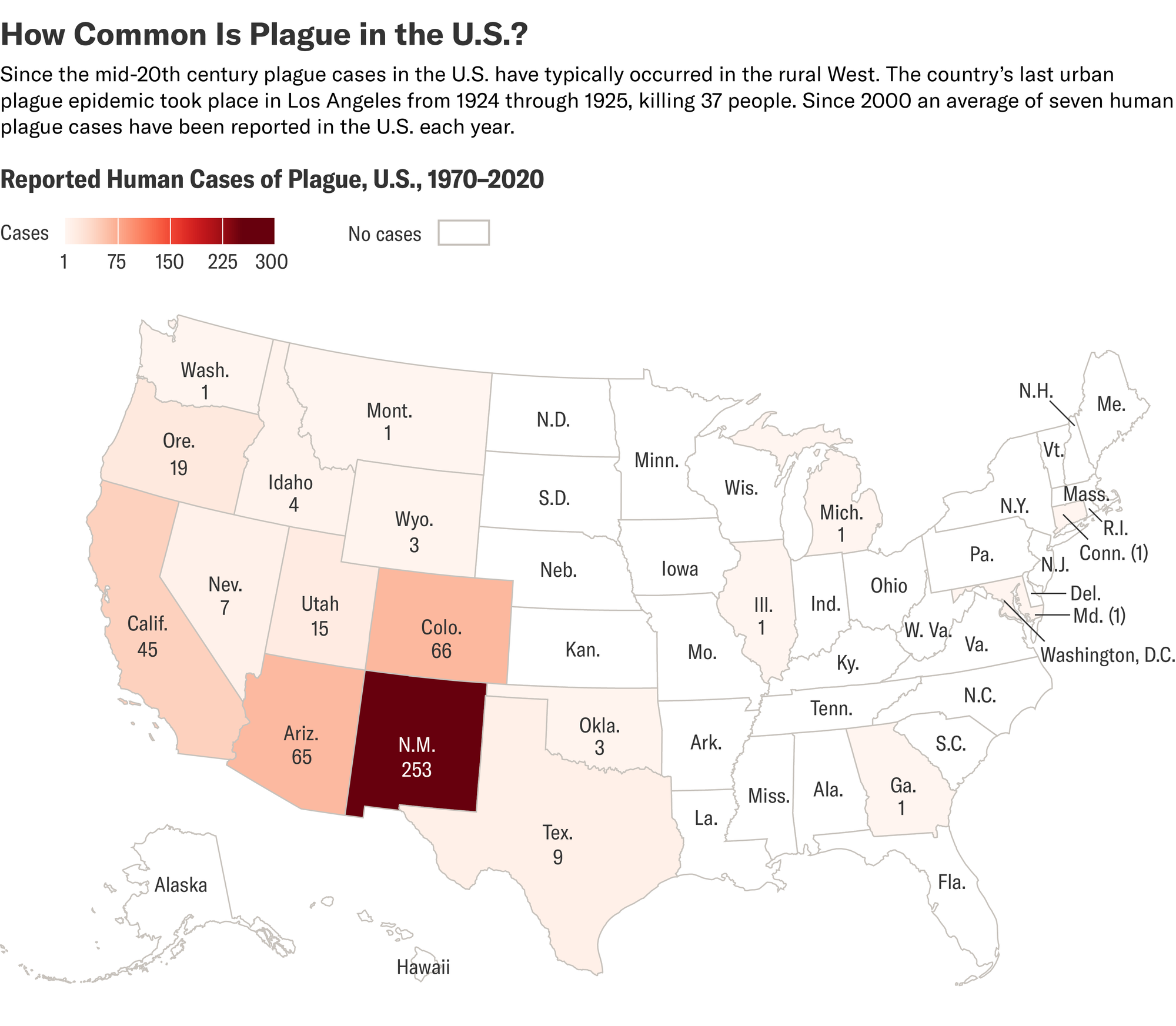
Human infections and deaths of the plague are relatively rare in the United States; According to centers for Disease Control and Prevention, seven human cases are reported each year on average. Before the case in Arizona, the most recent death was reported in 2021. Y. Pestis Arrived in port cities in the United States around 1900 and has since become endemic for rats and other rodents in the western American states, including New Mexico, Arizona, Colorado, California, Oregon and Nevada.
“From the point of view of public health in the United States, it is a frightening thing that it is the plague, and it is tragic that it is a deadly case, but people must remember that it is extremely rare,” explains David Wagner, executive director of the pathogen and the microbiome Institute of Northern Arizona University, who studied the plague for more than 25 years. “In order not to be casual, but it is more important that you put your seat belt to go to the grocery store than to worry about the plague in the west of the United States”
On the support of scientific journalism
If you appreciate this article, plan to support our award -winning journalism by subscription. By buying a subscription, you help to ensure the future of striking stories about discoveries and ideas that shape our world today.
American scientist spoke with Wagner signs and symptoms of Plague, and his persistence over time.
[An edited transcript of the interview follows.]
How do people get sick with the plague?
The plague is caused by the bacteria Y. Pestis And is really a disease of rodents and their chips. You have an infected rodent; A chip feeds the blood of this rodent, and he picks up Y. Pestis. Then when the chips feed on another rodent, he can pass along the Y. Pestis. He constantly makes bikes between rodents and fleas in nature; This is how it has been maintained for thousands of years in the environment around the world.

What is the difference between bubonic and pneumonic plague?
People call it black death; They call it the bubonic plague; They call it pneumonic plague – it’s the same disease, just different clinical manifestations. What is distinguished [with the recent case is] that it is the pneumonic plague. It’s a bit rare, especially in the United States
Almost all human cases, with a few exceptions, are acquired from the environment – from the bite of an infected chip. If there is no rodent host so that this chip can eat, she will look for other mammals to eat. And if humans are nearby, he will feed on humans and can transmit Y. Pestis.
If the immune system does not stop Y. Pestis At the source of the chip bite, it will migrate in your lymphatic system to your nearest lymph node. So let’s say that I was a little on my wrist; Then, the bacteria would go to this lymph node in my armpits and begin to reproduce there. And this swelling of mass, this swollen lymphatic knot is called BUBO – that is why it is called the bubonic plague. These days, it is a dead end because there is no transmission to fleas from one human to another. He stops right with the treatment or death of this individual.
Laisée not treated, however, bubonic plague can go down to your lungs via blood circulation. This is called the secondary pneumonic plague. These individuals, via cough or direct contact, can spread the plague to person, and this is called primary pneumonic plague.
What people may not know is that the plague has been endemic in the western United States in rodent populations for over 100 years.
Someone could also get the pneumonic plague of an animal – for example, if he manipulated an infected animal and this coughing animal. Sometimes hunters from Central Asia kill [infected] Land squirrels, and when they spread them can inhale particles. People also talk about septicemic plague, which means that it has entered your blood circulation, and this generally also comes from bubonic plague. You could also get [septicemic plague] Directly if you had blows on your hands and manipulate rodents without gloves.
Can pets be infected or transmit the plague to humans?
Pets, especially those in freedom, can come into contact with dead rodents who died of the plague. Fleas can jump on pets, which then brings them home. It’s quite rare because there are so few [human] In the United States, but that’s something we think about.
Collars with fleas and ticks are a good idea. If animals fall sick, most evidence show that dogs fight infection and can create antibodies against Y. Pestis. Cats are more sensitive and can quickly become sick and can really switch to pneumonic plague. It’s great, super rare, but it’s a possible way for humans to be exposed to pneumonic plague.
What are the symptoms and treatment?
With bubonic plague, people generally develop fever, headache, chills and fatigue, then they will get these swollen lymph nodes called bubbles. It usually takes a few days to manifest itself because it somehow begins in stealth mode inside the body to try to avoid the immune system.
The plague is easily treated with many different types of antibiotics, as long as it is taken in time. If it is not treated, mortality rates by bubonic plague can be between 30 and 60%, depending on the situation. The pneumonic plague, left untreated, is almost always deadly. The diagnoses therefore become really important. The challenge is that many doctors in the United States have never seen a plague. Symptoms are somewhat common to other things, so laboratory quick tests can help.
Where is the plague generally in the United States and in the world?
What people may not know is that the plague has been endemic in the western United States in rodent populations for over 100 years. It turns out that many host species of rodents in Central Asia, where it has evolved, were quite similar to some of the terrestrial squirrels that we have here in the United States, it was reported for the first time in the native terrestrial squirrels in California in 1908 and was in human populations before. And then he spread very quickly to the east and sort of stopped at the western end of the North Dakota, southern Dakota, Nebraska, Kansas, Oklahoma and Texas. It’s a bit of a mystery why; The diversity and the climate of rodents change a lot [that region].
I also work on the plague with colleagues from Madagascar, who have more cases of human plague than any other country – 75% of the world [case] total. He has hundreds of thousands of cases each year, with a lot of death.
How did he persist over the years?
We do not have a good handful on the rodents that really keep it in the United States, so we go out and collect the fleas infected by the plague for more than 25 years, because it is our window on the activity of the plague. Prairie dogs are terrestrial squirrels that live in dense colonies, so they are very visible. If the meadow dogs die, we go out and collect the fleas of their burrows. We take a piece of white flannel, breathe on it to bait it with carbon dioxide, then put them in the burrows. The chips will jump, then we put them back to our laboratory and freeze them to kill them. Then we can study the Y. Pestis DNA directly from these chips. We are very cautious when we do this, and we talk with our doctors here to the Northern Arizona University. Each year, we review the symptoms and they give us a prescription of antibiotics. Then we do what we call Watch fever, where we take our temperature before going out.
Prairie dogs cannot keep it because they are so sensitive – it will just eliminate an entire colony when it enters.
How did it become less dangerous?
There were three major historic plague pandemics, and it is estimated that perhaps 250 million people died [total]. But we no longer have these big pandemics because we have hygiene, which controls the populations of rats in cities – and then, above all, we have antibiotics.


