The best way to sleep on a plane, according to science


Just a few weeks ago, I took a long-haul flight to Europe from the East Coast. As I packed and got ready, excited about what was planned, I also wondered and worried: How on earth was I going to sleep on this eight-hour flight, so I wouldn’t sleepwalk sightseeing the next day?
It’s a conundrum that many of us have faced. There are plenty of TikTok videos, articles, products, and tips on how to complete the challenge. But what exactly does science say? What is the best way to sleep on a plane?
Popular science went to the experts. Here’s why it’s so hard to sleep on a plane and how to prepare yourself to have the best chance of getting some shut-eye in the air.
Why is it so hard to sleep on planes?
Almost all environmental cues work against us on airplanes, making it nearly impossible to fall asleep. The human body evolved to sleep in dark, quiet spaces, says clinical psychologist and sleep scientist Dr. Joseph Dzierzewski, senior vice president for research and scientific affairs at the National Sleep Foundation.
A circadian rhythm, our body’s internal clock, guides us. It helps regulate our sleep and wake cycles and is largely determined by our exposure to sunlight, he says.
Inside an airplane we get the opposite. Not only do we sit upright – or slightly reclined in increasingly smaller airplane seats – but light and noise are unpredictable and largely beyond our control during a flight. A seatmate might decide to turn on their reading light all night or the guy in the row behind you keeps calling the flight attendants for an extra cup of water.
Cabin conditions and timing add to the challenge. The air on planes is dry, which can contribute to dehydration, and long-haul flight times often don’t match our normal sleep window.
And when we try to force sleep at the wrong time for our body clock, we can become frustrated and anxious, says Dzierzewski. This can lead to a kind of performance anxiety about sleep itself, which only makes it harder to relax when we start to worry about being too tired for the next day’s business meeting or sightseeing excursion.
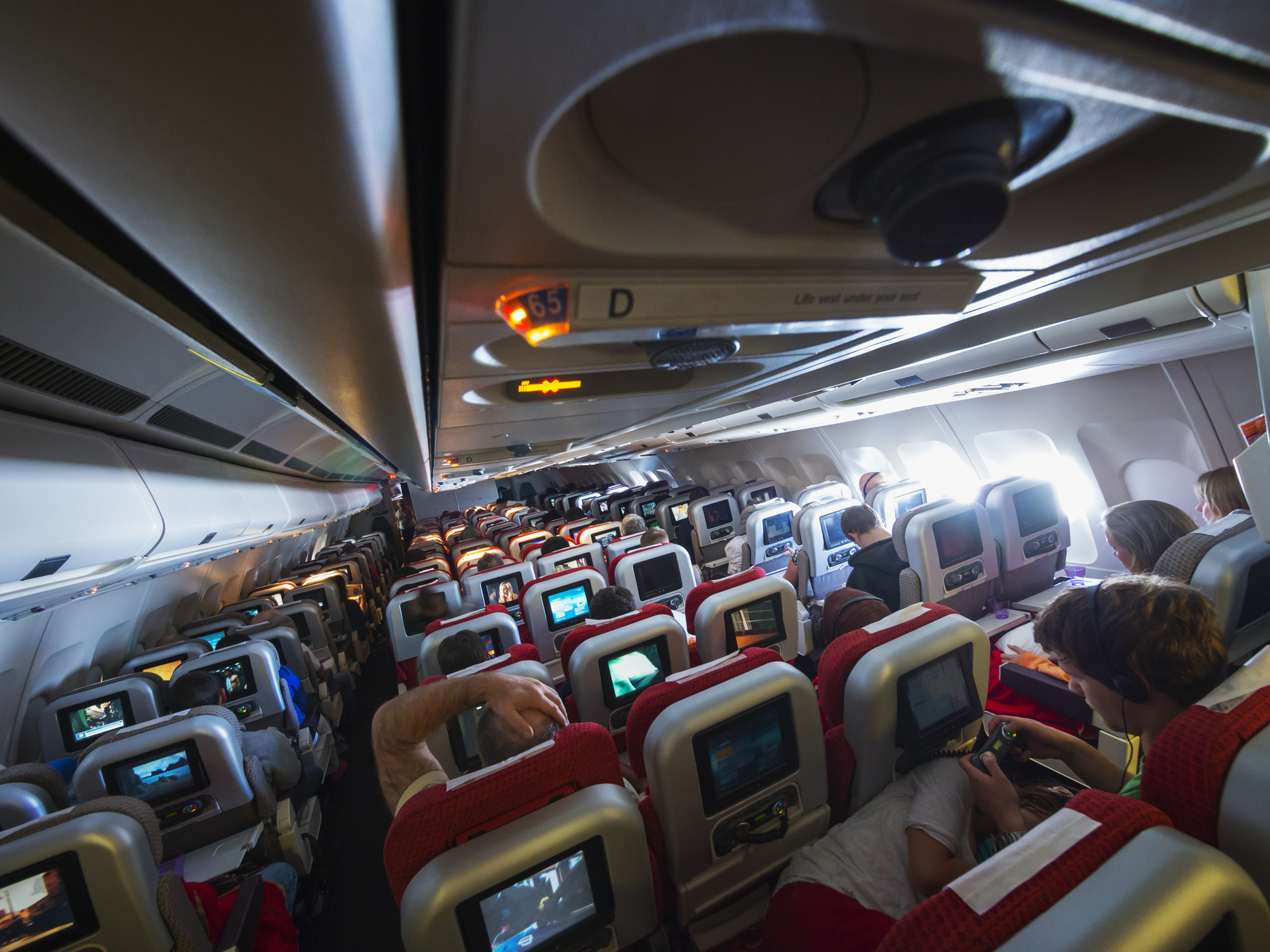
Even that vaunted in-flight drink can backfire. Alcohol contributes to dehydration and can also lead to more nighttime bathroom trips, according to sleep and health experts.
Beware of TikTok Tips
It’s also important to be wary of advice from TikTok or Instagram influencers without training in sleep science and airline safety.
“Just because we all sleep doesn’t mean everyone is a sleep expert,” says Dzierzewski. “Sleep is a science. You should want to consume sleep information from people with advanced degrees who are credible, trustworthy, independent and perhaps not traditional influencers.”
The viral TikTok travel hack is actually a really bad idea
For example, a viral TikTok travel hack claims to help you close your eyes better in the air with a sleeping position best suited to a contortionist. In the videos, travelers place their knees to their chest and tie the seat belt around their ankles or legs to hold them in place, which they say makes it easier for them to rest.
Don’t do it, doctors and experts say. Fastening the seat belt around your legs poses serious safety risks if you encounter turbulence or another in-flight emergency. The posture could also set you up for a potentially fatal blood clot.

Wrap the seat belt around your legs ✈️
Don’t do that. Video: Wrap the seat belt around your legs, @ZoreTomek
This position prevents blood in the veins in your lower extremities from flowing back toward your heart, says Dr. Marc J. Kahn, chief of hematology at the University of Nevada Kirk Kerkorian School of Medicine in Las Vegas, who spoke with Popular Science.
This creates stasis, or a slow pooling of blood, which increases the risk of a blood clot in an environment already conducive to clotting, Kahn says. When you sit for long periods of time, blood flow in the legs slows down.
How to sleep on a plane
Unfortunately, there’s no magic trick to guaranteeing a few hours of sleep on a plane, especially for those of us confined to seats that don’t convert into beds—something I experienced personally on my own red-eye flight to Europe. But, experts say, there are practical strategies to improve your chances of getting some sleep on a plane.
Control light and noise
You can’t control what your seatmate (or the person behind you) does when the cabin lighting dims, but you can take some control over your personal environment. Pack an eye mask to create darkness, as well as earplugs or noise-canceling headphones to muffle the roar of engines or incessant chatter from the person in front of you. Some travelers love neck pillows, but they’re not for everyone.
Related Stories “Ask Us Anything”
“Whenever possible, you want to create a more welcoming environment when you’re on the plane,” says Erin Clifford, a licensed professional counselor who works with professionals to maintain wellness routines during travel and author of Well-being reinvented.
“When we exclude everyone around us, it can help us sleep a little.”
Prepare before you board
Good in-flight sleep starts on the ground, says Clifford. Before a long flight, avoid large meals and caffeine and stay hydrated. Some travelers may benefit from carefully timed melatonin, a sleep-promoting hormone, under medical supervision, or from apps that gradually shift sleep schedules to the destination time zone.
To burn out, don’t skip your workout that day, Clifford says. “When we make an effort, it makes us want to sleep more.”
Create a familiar, calming routine
To work with your biological clock, replicate sleep signals at home in the air. Wear comfortable clothes and swap your screen for a book, podcast or audiobook as lights out approaches, experts recommend. Connect to a white noise app through your headphones or apply your favorite lotion if that’s something you do at home.
“If you’re a person who always does A, B, and C before bed, and you have a night flight, and you want to try to sleep on that flight, if you can translate any of those behaviors or activities onto the plane, go for it,” Dzierzewski says. “That will let me know it’s a safe place and it’s time for me to get ready for bed.”
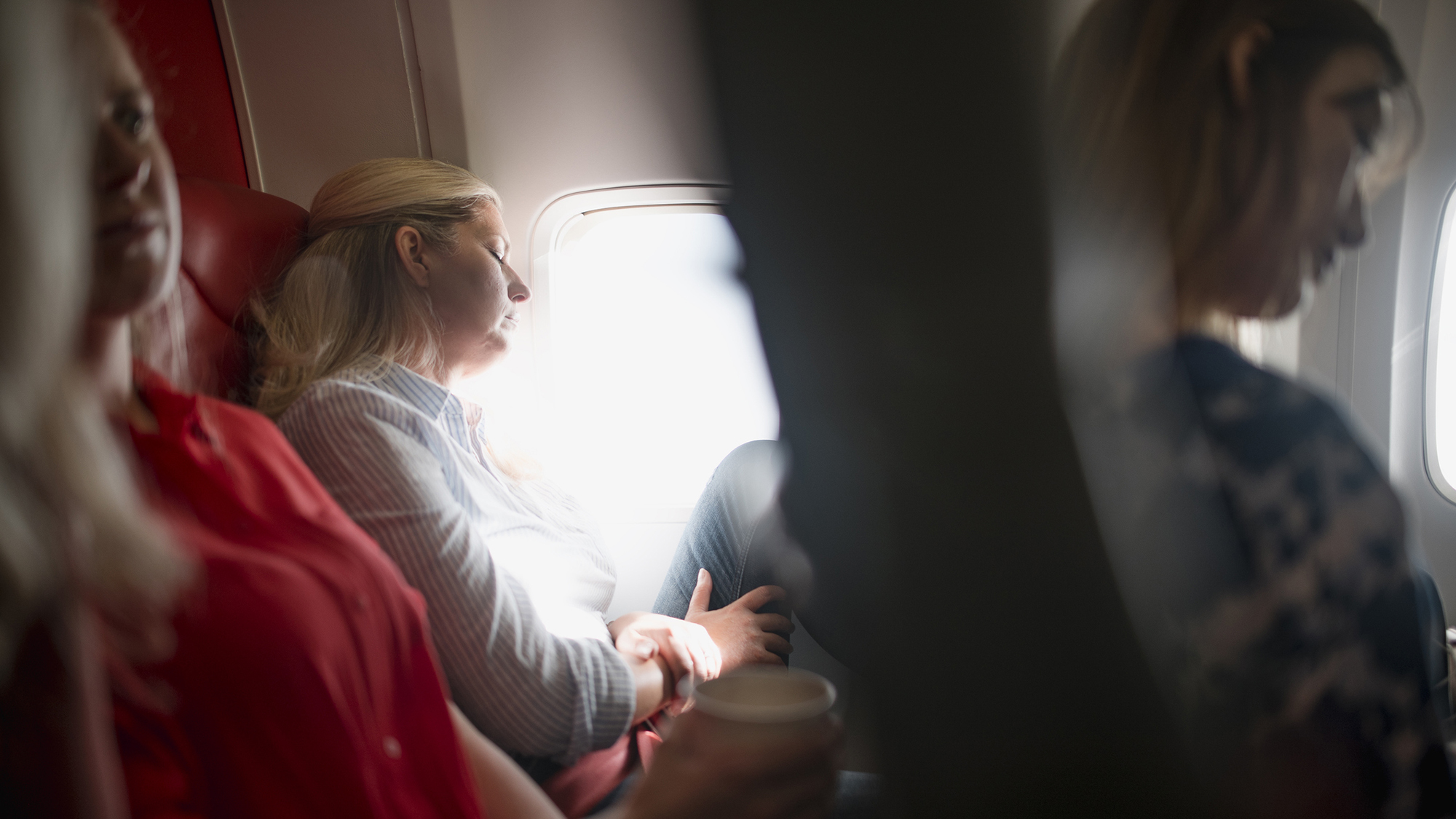
Adjust your expectations
Even with perfect preparation, be realistic. Few people get a good night’s sleep on a plane. Control what you can and accept that some variables, from chatty neighbors to turbulence, will always be out of your control.
“Exertion is the enemy of sleep,” says Dzierzewski. “The more you try to do it, the more excited you get, the more anxious you get, the more frustrated you get, and all of those emotions are incompatible with sleep.”
Quite exhausted
During my overnight flight to Frankfurt, I followed the recommendations of the sleep and travel experts I had interviewed. The screen in the back of my seat froze in the middle of the movie, so I ended my screen time early for the evening. I put on an eye mask and earplugs and tried to get comfortable with the blanket and pillow the plane provided. Earlier in the day, I made sure to take time to do my usual exercise routine and walked around the terminal for an hour before boarding.
Sleep came, but intermittently and sporadically. Later that morning, on my two-hour connecting flight, something different happened. Without all these extras, my eyes barely stayed open for takeoff. I slept through most of the flight. Even the noise from the drinks and snacks service didn’t wake me up. My eyes were opened when we landed and, ultimately, the first day of my long-awaited vacation was everything I hoped it would be.
So maybe the moral of the story is this: sometimes, to sleep on a plane, you just need to be sufficiently exhausted.
In Ask us anythingPopular Science answers your wildest and most burning questions, from everyday things you’ve always wondered to bizarre things you never thought to ask. Do you have something you always wanted to know? Ask us.

The best new PopSci 2025 releases


