Portugal involved in seizure of clams, other enforcement operations


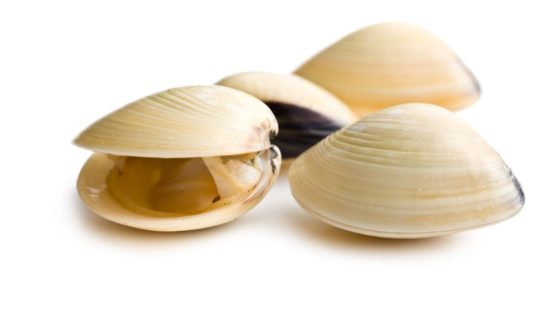
The Spanish and Portuguese authorities have taken measures to stop the introduction of potentially contaminated clams to the food services industry.
Eleven people were arrested. They are suspected of having achieved at least 1.6 million euros ($ 1.8 million) in profits this year. More than seven tonnes of Japanese clams worth € 150,000 ($ 175,000) was entered on two operations. Suspects can face accusations such as environmental crime, money laundering, documentary fraud, as well as human health fraud and health.
The Guardia Spanish Civil Nature Protection Service, the Portuguese Economic and Food Safety Authority (ASAE) as well as the maritime police (Polícia Marítima) were supported by Europol experts in environmental crime.
Europol said that in the border region between Portugal and Spain, the Japanese manila or clam is illegally harvested in the Tajo river. The clams are kept alive in water containers before being put on the market. The suspects use false documentation to circumvent administrative and health inspection measures.
The clams are mainly distributed in Portugal, Spain, France and Italy, posing a serious risk for consumers. Eating contaminated clams can cause food poisoning or other diseases.
The investigation started in April with raids over two days in June as well as a day at the end of July. The Guardia Civil initially seized an expedition of 235 kilograms of clams and shared this information with Europol.
Verification of wine and honey
ASAE has also published information on several other operations to which the agency has been part of it recently.
In July, Operação Restoran involved inspecting Cascais establishments to verify hygiene and food safety, in order to protect public health.
Seven operators were inspected and five administrative offense procedures were opened. Four sites have suspended their operations. Due to the lack of traceability, 8 kilograms of meat and 22 liters of sauces have been seized.
Asae helped another operation to target a wine distribution warehouse in the north of the country.
During the inspection, the storage and sale of wine in bottles labeled with original information from the Douro region were detected.
This allows the operator to pass the product as a wine with characteristics and allegations of authenticity which are not accurate, deceiver of the consumer, obtaining higher profits and leading to unfair competition on the market.
About 3,256 liters of wine were seized and criminal procedures were launched for fraud involving label counterfeiting and improper use of the original complaint.
A similar operation covered with Figueira viticultural products from Castelo Rodrigo and Anadia.
More than 3,500 liters of wine have been removed from an operator – 1,107 liters of white wine, 1,339 liters of red wine and 1,057 liters of rosé wine. The bottles were ready to be published on the market, but some labels lacked compulsory information. In total, 81,000 labels were also entered and an administrative offense procedure was opened.
In another company, a criminal case was deposited to add citric acid to the gin, with 1,330 liters seized. The product label mentioned citric acid, but this is not authorized by law. It was confirmed by an analysis in the ASAE food security laboratory.
Finally, the ASAE carried out a national inspection operation focused on verifying compliance with the rules covering the treatment establishments for honey and bees, in order to detect possible fraudulent practices in the authenticity, labeling and traceability of these products.
In Operação Mellis, 17 companies were visited. Checks in a Silves company revealed a lack of documentation on honey traceability procedures, as well as non-compliance with hygiene requirements, and the lack of implementation of the HACCP system and security processes. The company was suspended and three tonnes of honey were confiscated.
(To register for a free subscription to food security news,Click here))


