DC residents call Trump’s federalization plan a ‘terrible idea’


NEWYou can now listen to Fox News articles!
President Donald Trump shared new details on Monday on his plan on Monday to take control of public security in Washington, DC, following a brutal attack on a former staff member of the Government Ministry (DOGE), but DC residents are not convinced. –
Trump announced on Monday that he activated the National Guard of the Columbia District and took control of the Metropolitan Police Service after floating the idea since last week’s assault in the Washington Logan circle.
Some residents of Washington who spoke to Fox News Digital called it a “terrible idea” which “does not make much sense”.
“I think that DC’s policy should stay with DC, and, unfortunately, the federal government apparently exceeds their limits at the moment, so I hope that DC is authorized to govern itself, as well as the police itself,” Washington resident in Fox News Digital told Trump’s announcement.
Trump threatens to “federalize” DC with the National Guard and more. Here’s how it could be playing
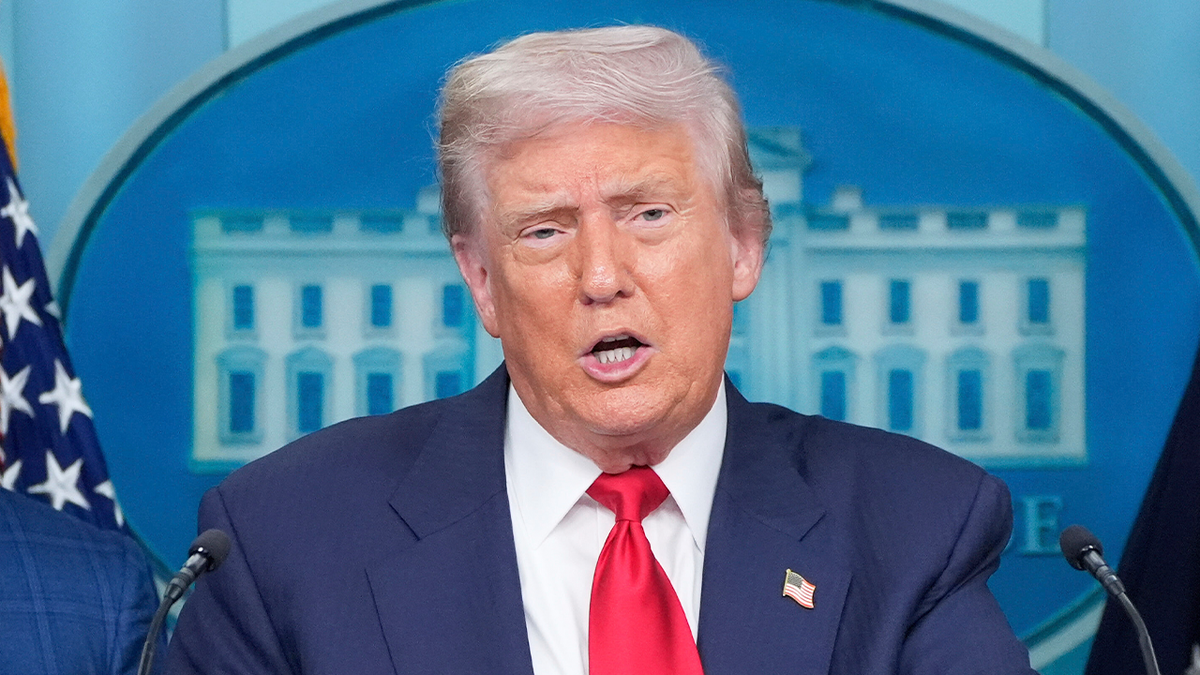
President Donald Trump speaks with journalists from James Brady Press’s information room in the White House on Monday, August 11, 2025. (AP photo / Alex Brandon)
Trump controversially federally federally the California National Guard in the midst of anti-glacial demonstrations that plunged into riots in Los Angeles in June. The demonstrators rejected American deportations of immigration and customs application (ICE) and the robust repression of Trump’s immigration.
The Trump administrator reducing $ 20 million DC security funding after federal police ordered increased presence
The president bypassed Governor Gavin Newsom to deploy the national guard troops to support the expulsion of the ice. It was the first time that a federalized president of the National Guard in more than 60 years.
Now the tension between local and federal powers takes place in the national capital. But just like in California, many residents of Washington care to see “troops in our streets”.
“We have laws for a reason,” said a resident at Fox News Digital.
“Privatized security is a terrible idea, and I think everything Trump is doing is garbage,” added another resident of Washington.
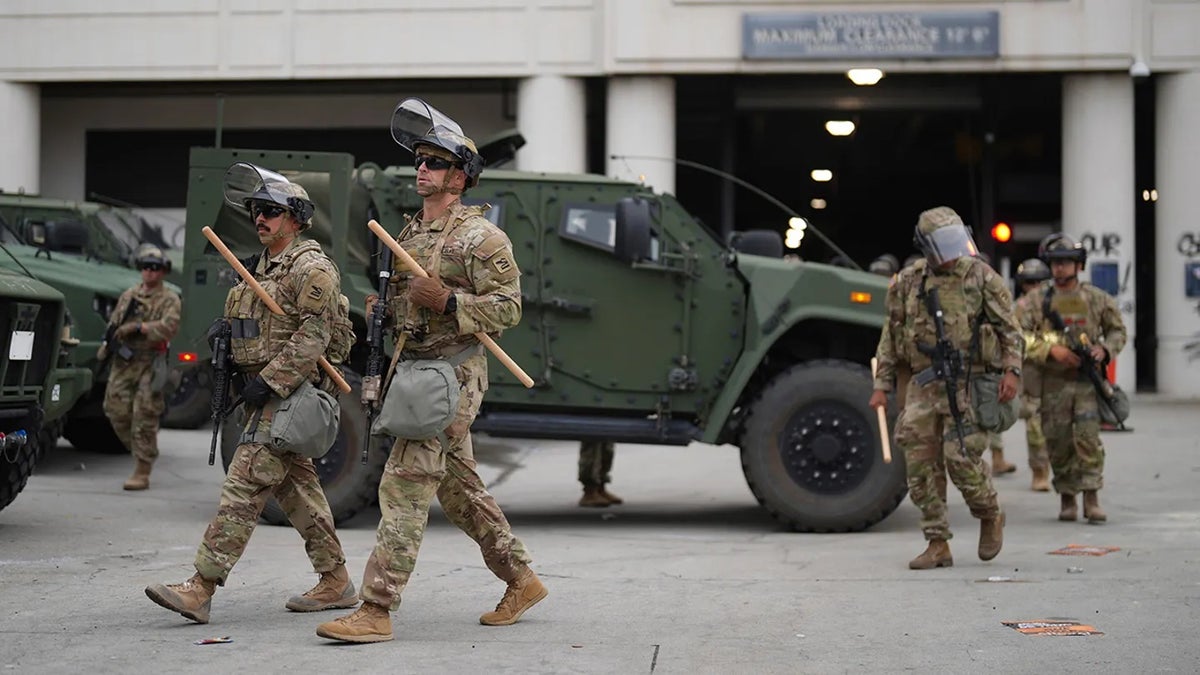
The American National Guard was deployed in downtown Los Angeles on Sunday June 8, 2025, following an immigration raid demonstration the day before. (AP photo / Eric Thayer)
Despite their apprehension about the troops of the National Guard patrolling the national capital, many residents said that something should be done to fight crime in Washington, DC
While the Ministry of Justice indicated a hollow of 30 years of crime violent last year, the concerns concerning the security of the city persist, a resident saying to Fox News Digital, “the city becomes dangerous”.
“I think it’s a good idea,” said a resident about Trump’s new plan. “This is something that must be done so that the city is safe. At the moment, we are not safe. Children and adolescents are doing everything. So yes, I think it’s a great idea.”
And another resident of Washington said: “We need all the protection we can get in the city, because the city becomes really dangerous,” saying to Fox News digital that she must “make sure to go home before sunset” and she is afraid of being robbed when she will descend public transport.
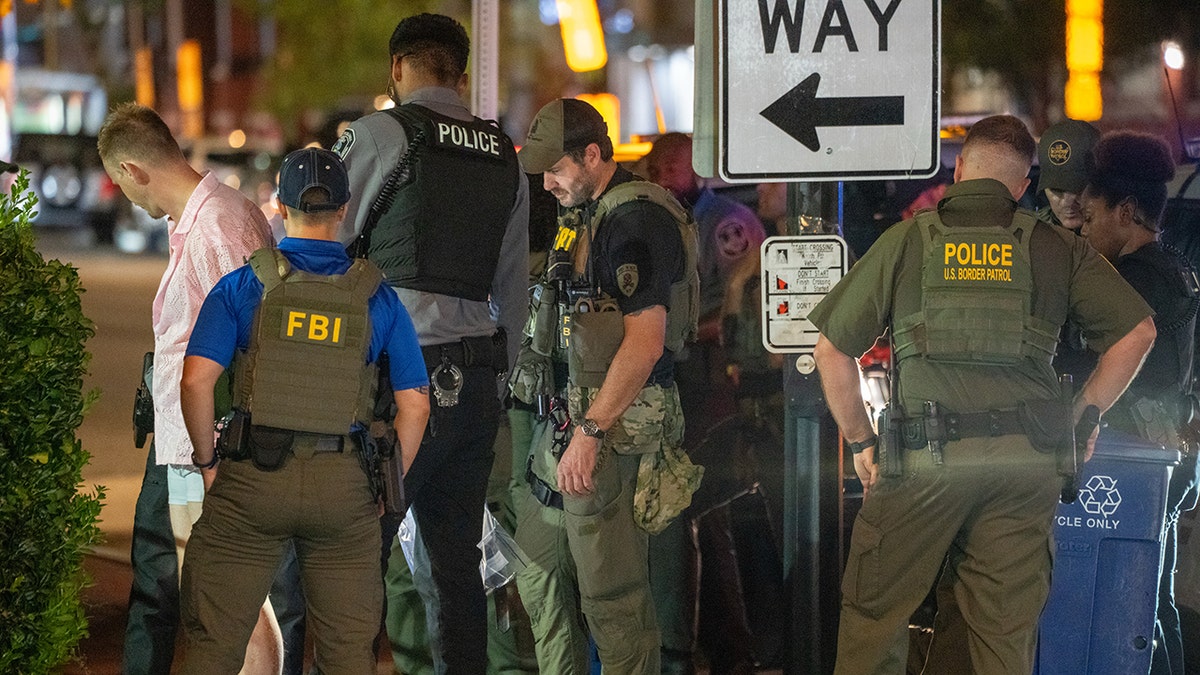
The agents of the FBI and the border patrol stop a man along the corridor of rue U during a federal deployment of the law application in the national capital on August 10, 2025, in Washington, DC (Andrew Leyden / Getty images)
“Things seem out of control and desperate, but I do not know what type of figures to take, what figures read. One minute, they will say that the crime is out of control. The next minute, they will say that the crime is down from a certain percentage. It is a little confusing, and I do not know who to believe and what way to be honest,” said a resident of Washington.
But another DC resident said: “There is no way to control anything”, and Washington, DC, “should be a state”, so the district has more power to make decisions for itself.
“I don’t think it’s necessary,” added another Washington resident. “I think there must be a change in [the] Metropolitan [Police Department] Because security is a problem. “”
Click here to obtain the Fox News app
She added: “He must be located.”
Diana Stacy of Fox News Digital contributed to this report.


