Premature babies in UK to be immunised against winter virus RSV


Health journalist
 Southampton University Hospital
Thousands of premature babies in the United Kingdom can now be protected from a common winter virus that can cause a dangerous and sometimes kill pulmonary infection.
The injection will provide them “a protective bubble” against the RSV (syncytial respiratory virus) over time for the coldest months, said NHS Medics.
Most babies are protected by vaccination at the end of pregnancy, but babies born before 32 weeks are more vulnerable to potentially fatal infections of the virus.
From the end of September, 9,000 babies and young children at risk across the United Kingdom will be offered a dose of nurses from drugs via the NHS.
The RSV generally causes a cough and a cold, but can make some children very sick with respiratory problems, pneumonia and pulmonary infection called bronchiolitis.
According to NHS England, premature babies are three times more likely to go to the hospital with RSV and are 10 times more likely to need intensive care compared to babies in the long term.
Each year, around 30,000 children in the United Kingdom under the age of five need hospital care due to the virus and around 30 years old do not survive.
The drug offers six months of protection in a single dose and is more effective by more than 80%.
The neonatal clinics will deliver the injection to premature babies. Families of vulnerable infants with heart or pulmonary conditions or weakened immune systems will be informed by their medical teams how to get it before this winter.
“He will offer sustainable defense, helping to avoid unnecessary hospitalizations and serious illnesses, giving babies the best possible start in life and protecting them from damage,” said Dr. Claire Fuller, co-national medical director of NHS England.
Last year, a vaccination program was launched in the United Kingdom to protect newborns and the elderly against RSV. Pregnant women at least 28 weeks old and people aged 75 to 79 are now offered this vaccine, called Abrysvo.
JAB stimulates a woman’s immune system during pregnancy and protects babies during her first weeks of life.
But babies born prematurely, before 32 weeks, do not have time to protect themselves from this vaccine before their birth.
Rather, they will receive Nirsevimab.
Unlike a vaccine, which encourages the body to create antibodies and takes a few weeks to be effective, Norsevimab offers immediate protection against RSV infection.
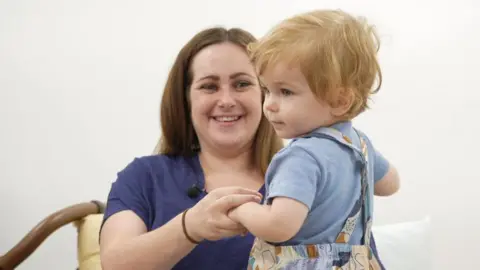
Ceri Cox, 33, wanted his son, Harry, two years old, was protected as much as possible against RSV. As a pediatric infirmarian, she saw the damage he can do.
“I know a lot about the virus to work in a unit where we see many children with RSV each year,” she said.
“It is incredible that this vaccination is now offered to young babies across the country. I hope we will see fewer young in our hospital this winter.”
Harry participated in an international clinical trial of vaccination at Southampton University Hospital.
Premature babies and high -risk infants in England, Scotland, Wales and Northern Ireland will benefit from the drug.
What are the symptoms of the RSV?
They usually start in a few days after their infected.
Most people have only cold symptoms, such as:
- a flowing or blocked nose
- a cough
- sneezing
- fatigue
- A high temperature – signs include your back or your chest warmer than usual, perspiration and chills (chills)
Babies with RSV can also be irritable and feed less than usual.
If the RSV leads to a more serious infection (such as pneumonia or bronchiolitis), it can also cause:
- A cough that is getting worse
- shortness of breath
- breathe faster or long deviations between the breaths
- difficulty feeding (among babies) or losing appetite
- noisy breathing (whistling breathing)
- confusion (in the elderly)
Source: NHS UK website


