Prostate cancer screening could ‘save countless lives’


Hugh Pymhealth editor And
Catherine Armstrong

 BBC
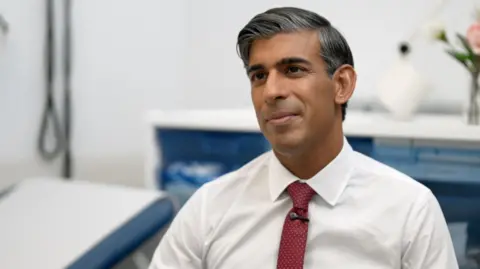
BBCA targeted prostate cancer screening program for men most at risk could “save countless lives”, former Prime Minister Rishi Sunak has told the BBC.
Prostate Cancer Research, of which Sunak is a patron, has published a report on the costs and benefits of such an initiative. It would focus on black men and/or those with a family history of prostate cancer aged 45 to 69.
Sunak said he was “convinced of the urgency” of introducing such a scheme, which he said would be affordable and achievable.
But some medical experts are skeptical of the value of screening, arguing that there is a risk that patients will be treated unnecessarily for cancer.
Prostate Cancer Research estimates that the screening programme, which would involve an MRI, a PSA (prostate specific antigen) blood test and a biopsy, would cost £25 million a year – or around £18 per patient – as would bowel and breast cancer screening.
It assumes that 20% of eligible men – of whom there are an estimated 1.3 million in the UK – would be invited each year, with a take-up rate of 72%. Diagnostic activity (scans and biopsies) is expected to increase by 23%, with only a modest increase in the NHS workforce, according to the charity.
The prostate is a walnut-shaped gland at the base of the bladder that grows naturally with age, but can sometimes become cancerous when cells grow out of control. Prostate cancer may be asymptomatic in its early stages.
Asked if he could have done more during his time in Downing Street to promote prostate cancer screening, Sunak said the tests had now become more reliable through the use of MRI.
“I’ve had family and friends who were affected – luckily they didn’t lose their lives – but it partly made me realize why it’s so important to catch it early – the doctors are so brilliant now at treating you if you catch it early.”
Sunak said men, including himself, were often embarrassed to come forward to discuss health concerns: “That’s why a proactive, targeted testing program could make a difference in helping to save lives. »
More than 58,000 men will be diagnosed with prostate cancer in England alone in 2024, an increase of 9% on 2023, according to the latest figures from the National Prostate Cancer Audit.
Meanwhile, one in four black men will be diagnosed with prostate cancer, compared to one in eight white men and one in 13 men of other ethnicities, according to Prostate Cancer Research. Men are also twice as likely to develop cancer if they have a family history.
The UK National Screening Committee is currently reconsidering its decision five years ago not to recommend routine screening. Media reports suggest he may stick to his current position.
Urologist Noel Clarke, representing the British Association of Urological Surgeons, told the national audit that while it encourages more men to be diagnosed and treated earlier, “we also need to tackle the inequalities revealed by the audit so that age or postcode never determines the quality of care men receive”.
Oscar-winning director Sir Steve McQueen, whose own father’s death from the disease led him to seek more information about it, agrees.
“I find it very, very difficult to think that people can be treated just because they have a certain type of privilege. It’s unfair,” he told BBC Radio 4’s Today programme.
He added that increased screening for prostate cancer could help “even out” the situation.
Sir Steve was himself diagnosed with prostate cancer in 2022, but made a full recovery.
“I had the potential to discover this cancer, not my father. Now we have the potential to cure so many men of this cancer, when they don’t even know they have cancer,” he said.
 PA Media
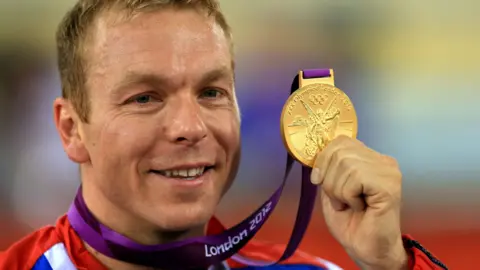
Olympic cycling champion Sir Chris Hoy, suffering from advanced prostate cancer, calls for earlier checks.
He wants to lower the age threshold for requesting a PSA blood test. Currently, it is not systematically offered to asymptomatic men under 50 years old.
The PSA test, however, is controversial. Levels can increase for reasons other than cancer, such as infections, leading to false positives. Critics say it can lead to unnecessary treatments and side effects.
According to the report’s authors, the benefits of introducing targeted screening for those most at risk outweigh the financial and logistical costs.
Professor Hashim Ahmed, chair of urology at Imperial College, says further research is needed to determine the potential value of screening.
“The problem is that we can often find diseases that don’t need to be treated and we end up causing harm…and what worries me at the moment is that the harm-benefit equation isn’t quite right.”
Potential side effects of prostate cancer treatment include incontinence and erectile dysfunction.
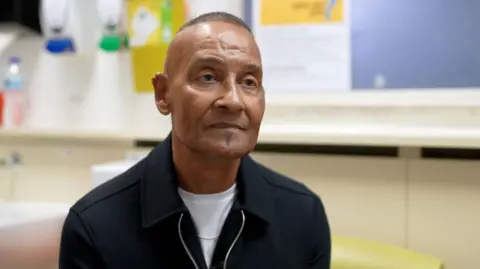
Patient voices help shape the debate. During a recent visit to a prostate cancer clinic at Guy’s Hospital in London, Sunak met David Bateman, 66.
He was diagnosed with cancer at the age of 59 after requesting a SPA test, and was told the cancer had spread to his pelvis.
Mr Bateman has since received chemotherapy, radiotherapy and hormone treatment, but there is no cure. It supports the screening of potentially vulnerable people.
“It’s very important to me because my sons – they are 38 and 40 – I want them to be tested as soon as possible. If I had been tested at 50, I’m sure I wouldn’t be in the situation I am today,” he said.