Prostate cancer screening trial to recruit thousands of men


Fergus WalshMedical writer

 Getty
GettyA major prostate cancer screening trial aimed at finding the best way to detect the disease has been launched in the UK.
The first letters were sent from GPs inviting men to take part in the study, the largest of its kind in decades.
The £42 million Transform trial is funded by Prostate Cancer UK and the National Institute for Health and Care Research.
Hashim Ahmed, chief investigator of the trial, said: “Transform is truly a game-changer…the start of recruitment today marks a crucial step towards delivering the results men urgently need to make prostate cancer diagnosis safer and more effective so we can unlock the potential of prostate cancer screening in the UK. »
The trial will enroll men aged 50 to 74, with a lower age limit of 45 for black men, who are twice as likely to develop and die from prostate cancer as white men.
It will not be possible to volunteer for the trial, but Prostate Cancer UK strongly encourages anyone who receives a letter to take part.
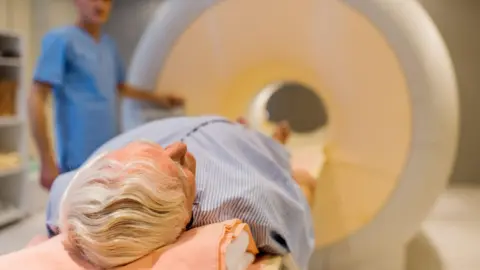
The trial will examine how rapid prostate MRIs could be combined with prostate-specific antigen (PSA) blood tests to improve the accuracy of cancer diagnosis.
Currently, men over 50 can order a PSA test, which looks for abnormally high levels of proteins in the blood, but this is unreliable, detecting many prostate cancers that would never need treatment, and missing others that do.
The trial will also use spit tests, which extract DNA from saliva, to see if this is more accurate than PSA readings.
Matthew Hobbs, director of research at Prostate Cancer UK, said current diagnostic methods do not detect enough aggressive cancers and cause too much harm.
“We hear from men who were diagnosed late, whose lives could have been saved if they had been screened or tested earlier. We also hear from many men who suffered incontinence or impotence as a result of the treatments they received,” Mr Hobbs said.
“Some of these men did not need these treatments, and that is the harm we must try to prevent.”
“If we want to prevent 12,000 men from dying prematurely every year, this is the obvious solution”
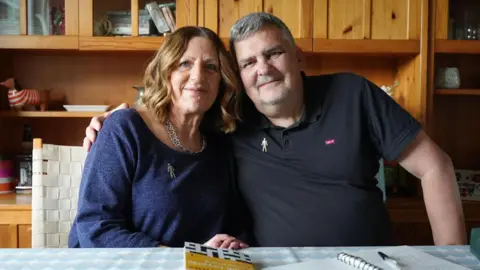
Danny Burkey, 60, from West Yorkshire, is terminally ill with prostate cancer. When his condition was diagnosed four years ago, it had already spread to his bones.
The former teacher and father-of-three told the BBC that if men had received regular screening from the age of 50, his condition may have been detected while it was still treatable.
“I think a screening program would be a game-changer. If you want men not to be in the same situation as me and if we want to prevent 12,000 men from dying prematurely every year, this is the obvious solution.”
 Danny Burkey
The opening of the trial comes a week before the National Screening Committee (NSC) – an expert body which advises the NHS – announces whether it recommends the introduction of screening for the disease, the most common cancer in men in the UK.
Previously, the NSC concluded that the harms of screening outweighed the benefits.
Initial results from the Transform trial are expected in around two years, after which it will be expanded to 300,000 men across the UK.


