Protesters rally across Morocco in final push for reforms before king’s expected address

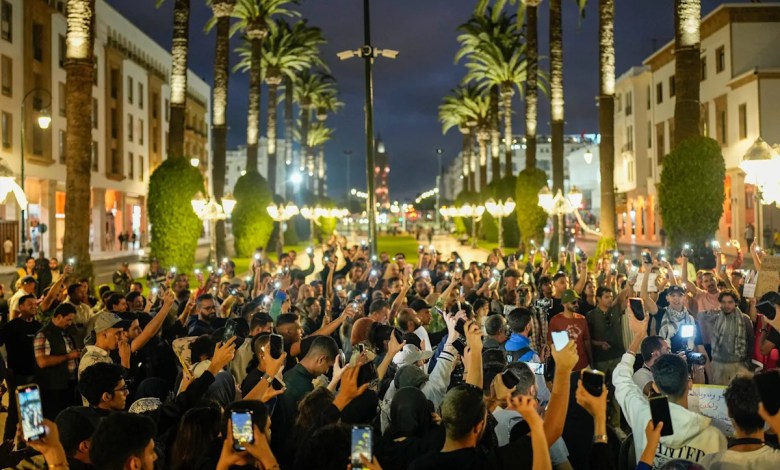
CASABLANCA, Morocco (AP) — Morocco’s youth-led movement returned to the streets Thursday after a midweek break, hoping its return will be loud enough to push King Mohammed VI to fire the prime minister and implement long-promised reforms to fight corruption and improve public services.
The “Generation Z 212” movement behind the protests has called for a withdrawal of what it describes as “corrupt government” and urged officials to prioritize spending on health and education.
The nationwide protests came after a midweek break that organizers said was intended to focus energies on a final show of force before King Mohammed VI’s speech to the national parliament on Friday.
Despite a smaller crowd, the anger of those present towards the government did not subside.
In Casablanca, hundreds of people took to the streets brandishing photos depicting government ministers as devils. Some held banners reading “We will no longer be silent,” while others demanded the resignation of Prime Minister Aziz Akhannouch, who is also one of Morocco’s richest businessmen.
Many said they looked forward to the king’s planned speech Friday and hoped he would expand on reforms proposed by officials in response to the protests.
“I am here, a day before the king’s speech, to demand better public services and an end to corruption,” said Koyo, a 22-year-old psychology student who declined to give his full name.
Protesters appeal to the king
The protests targeted Morocco’s spending on infrastructure such as stadiums for the 2030 FIFA World Cup and drew a direct line between these priorities and the neglect of health care and education facilities. The protests first erupted after eight women died giving birth at a public hospital in Agadir, a large coastal city 300 miles (483 kilometers) south of the capital Rabat.
Gen Z 212 – the leaderless collective behind the protests – organized them on social media platforms, including TikTok and Discord, where they now have more than 200,000 followers. The collective says investment choices reflect how corrupt and irresponsible officials are out of touch with the concerns of young people.
Elected officials and government ministers tried to respond to their grievances. But planned investments and reforms in medical education have done little to appease them and they are turning to broader reforms.
Last week, the leaderless movement issued a public letter to the king asking him to sack the corrupt government and political parties, release political detainees and convene a national forum to bring corruption to justice.
“We, the Moroccan youth, ask Your Majesty to intervene for a profound and just reform that restores rights and punishes the corrupt,” the group wrote in the letter.
These demands were made clear during Thursday’s protests, notably in Casablanca, where young activists attacked government officials and called on the king – as Morocco’s highest authority – to act on their behalf.
“We hope this will bode well for us, Moroccan youth and for all Moroccans,” Soufiane, an 18-year-old student, told the Associated Press. He carried a “Wanted” poster depicting Health Minister Amine Tahraoui and, like most of those present at the unauthorized protests, refused to give his full name for fear of reprisals.
The Health Ministry did not respond to requests for an interview.
The movement faces setbacks
Generation Z 212 lost some popular support after reports of looting and destruction of storefronts in several cities last Wednesday and Thursday. He worked to reignite momentum and maintain pressure on the government. The group has denounced violence and vandalism, and in some cities protesters have staged cleanups and offered flowers to security forces.
Despite organizers’ strategy, Thursday’s protests appear smaller than those last week and over the weekend, which became one of the largest displays of anti-government anger in the country in years.
Since September 27, security forces have arrested hundreds of participants, killing three people and injuring others in clashes that rights groups have described as violent. Local media reported last week that 66 participants were facing vandalism charges linked to protests in northern Morocco.
Amid the arrests, politicians across the political spectrum expressed sympathy for the protesters’ demands and urged them to engage in dialogue rather than demanding resignations.
Mustapha Baitas, a Moroccan government spokesperson, reiterated Thursday that officials were working quickly to mobilize resources and identify gaps to fill.
Support spans generations
In Morocco, people born between 1995 and 2010, called Generation Z, make up the largest part of the population. According to official data, around 25% of them are neither employed, nor in education, nor in training.
Unemployment remains a major problem for 15-24 year olds. In total, 35.8% are unemployed, including 19% graduates. The outlook is worst in regions far from Morocco’s urban centers, where protests have been strongest.
Although the protests originated on social media platforms popular with young people, they began to attract support from different demographic groups, now including that of all age groups.
“I am not a generation Z myself but I decided to come to the demonstration because for me all these demands are legitimate,” said Ali, an entrepreneur in Casablanca.


