

 EPA
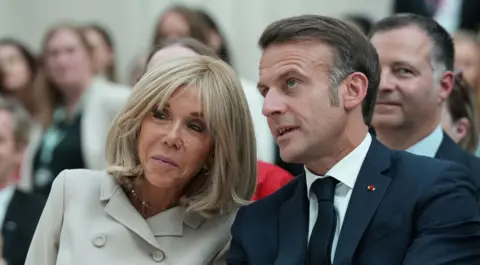
EPAFrench President Emmanuel Macron and his wife Brigitte have filed a defamation lawsuit against right-wing influencer Candace Owens, who claims that France’s first lady was born male.
The legal action, filed on Wednesday in the US state of Delaware, said Owens has been spreading “outlandish, defamatory, and far-fetched fictions”.
Owens has regularly repeated the claims on her popular podcast and social media channels, and in March 2024 stated that she would stake her “entire professional reputation” on her belief that Mrs Macron “is in fact a man”.
In an episode of her podcast released on Wednesday, Owens stood by her allegations and said of the lawsuit: “This is just goofy.”
Owens taunted the French first lady and described being sued by her as an “obvious, desperate public relations strategy”.
A conspiracy theory that has circulated for years in fringe online spaces alleges Mrs Macron was born male under the name of Jean-Michel Trogneux, which belongs to her brother.
Owens has spread the conspiracy theory to her audiences, including nearly 7m followers on X. Earlier this year she released a video series titled Becoming Brigitte.
The Macrons said in a statement released by their attorneys that they had asked Owens repeatedly for a retraction, but “ultimately concluded that referring the matter to a court of law was the only remaining avenue for remedy”.
“Ms Owens’ campaign of defamation was plainly designed to harass and cause pain to us and our families and to garner attention and notoriety,” the statement said.
“We gave her every opportunity to back away from these claims, but she refused.”
The lawsuit alleges Owens “disregarded all credible evidence disproving her claim in favor of platforming known conspiracy theorists and proven defamers”.
It also accuses Owens of falsely alleging the French president and his wife are blood relatives and that Emmanuel Macron was installed in office by a secret CIA plot.
Owens worked for conservative organisations including the student group Turning Point and media outlet Daily Wire before launching her independent podcast in 2024.
 Getty Images
She has since spread rumours or suggested that conspiracies lie behind things such as Covid vaccines, the Holocaust and the moon landings.
The lawsuit also names her Delaware-headquartered companies and asks for unspecified damages.
Under US law the Macrons will have to prove “actual malice” – meaning that the defendant knew the information was false, but published or broadcast it anyway.
In September a French court found two women guilty of libel for spreading the false claims about Brigitte Macron, however, that decision was overturned on appeal earlier this month, according to local media.
Owens is married to George Farmer, a British-American entrepreneur and the son of Baron Michael Farmer, a House of Lords peer and former Conservative Party treasurer who has distanced himself from some of his daughter-in-law’s views.


