Bird Flu Could Be Spreading through the Air on Dairy Farms, Preliminary Study Shows


Bird flu in dairy farms can be in flight after all
The infectious virus of the bird flu has been found in milk, on equipment, in wastewater and aerosolized in the air in dairy farms in California
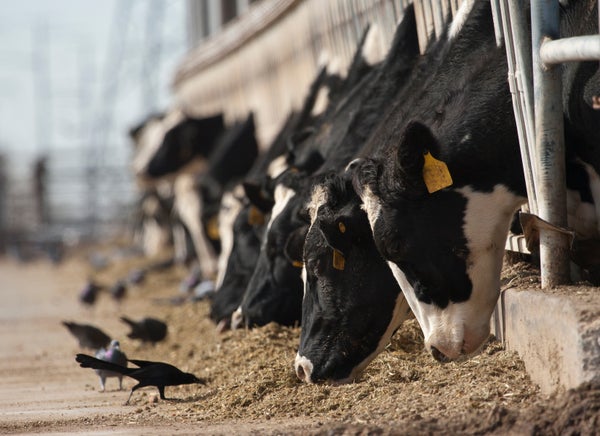
H5N1 bird flu spread through dairy farms in the United States
Dusty Pixel Photography / Getty Images
The H5N1 avian influenza virus can now be found not only in milk and on milking equipment, but also in the wastewater of the farm and in the air, say that researchers who have tried to understand how the virus spreads in dairy farms.
The researchers have identified the virus in large and small aerosol particles in the air in the farms affected by the bird flu in California, according to a new pre -impregnated document published on the Biorxiv biology server.
“There are a lot of H5N1 viruses on these farms,” explains Seema Lakdawala, an associate professor of microbiology and immunology at the Emory University School of Medicine and the main author of the new study, which has not yet been examined by scientific peers. “It’s everywhere. We must extend biosecurity measures, biosecurity measures and try to control where the virus is. ”
On the support of scientific journalism
If you appreciate this article, plan to support our award -winning journalism by subscription. By buying a subscription, you help to ensure the future of striking stories about discoveries and ideas that shape our world today.
The observation – that the virus is “everywhere” – adjusts what has been seen in the work previously published, explains Richard Webby, who studies the host -microbe interactions at St. Jude Children’s Research Hospital. “It is a ridiculously contaminated environment,” says Webby.
High concentrations of H5N1 in the environment can explain why the virus is so easily transmitted among cattle on dairy farms, as well as why a study last fall revealed that 7% of tested dairy farm workers had proofs of antibodies of a previous bird flu infection. H5N1 infected cattle have been reported for the first time in March 2024. Since then, the Centers for Disease Control and Prevention have found 41 human cases resulting directly from contact with trafficking cows. And the disease has easily spread in herds.
But exactly how it spreads was strangely difficult to pin.
Another recent preliminary study by the professor of veterinary medicine at the Ohio State University, Andrew Bowman and his colleagues, revealed that when the liquid containing the virus was put in cows lines, only a very low dose was necessary to cause an infection. But strangely, when the researchers milked the cows of well with contaminated equipment – the way the virus was supposed to spread in farms – healthy cows did not fall ill.
“It seems that it should not be so difficult to carry out the transmission, given the way we see it spreading in dairy farms on the ground,” said Bowman in an interview with American scientist in June.

AJ Campbell samples the breath exhaled cows in a dairy farm in California.
Lakdawala and his team wanted to understand how the virus moves between the cows in the hope of finding a way to slow down or stop the spread. They started testing the dairy farms affected in California in the winter of 2024 and ended up assessing a total of 14 farms at the beginning of 2025, a period representing the peak of the dairy cattle epidemic. The researchers used aerosol sampling devices to test both cows and ambient air exhalations in milking lounges and barns. They also tested the milk and the entire wastewater system, drains in the milking lounges with manure lagoons outside.
The team has found many opportunities for the virus to transmit, since viral particles have been found everywhere. “This is not a single event or only one thing that stimulates transmission,” says Lakdawala. “The probability is: the surbombage of viruses in the environment leads to an effective transmission. They inhale it; they probably also find it on their bodies; they lick it; they find it on the milking equipment – all this together.”
The researchers found a sample with mutations in an area of the H5N1 genome which is known to change when avian viruses become more able to spread between humans. It is not clear if this particular mutation would have helped the virus to infect humans more effectively. Fortunately, this version of the pathogen did not continue to reproduce: it seems to have emerged and, just as quickly, to be extinguished. Another recent article, published by Webby and his team in the newspaper Nature communications In July, noted that, so far, the virus circulating in cattle is still very similar to the virus circulating in birds. This research also revealed that the cattle virus could not spread in the air between the ferrets, which are used because they transmit the viruses of the flu a bit like humans.
“We have dodged a small ball so far with the cows and this virus,” said Webby.
But with so many viruses in affected farms, there is a chance that future changes focused on man can occur, warns Lakdawala. She suspects that the virus becomes aerosolized during milking and cleaning. In addition, workers often vaporize soils and other agricultural surfaces with wastewater which, they say, can contain infected milk. Face shields that can block large droplets and large aerosols without the discomfort of masks can be a way to reduce human cow infections among workers. The H5N1 “At-Barn” tests rapid, unlike home flu or wearing tests, people can buy in pharmacies, would help farmers identify and isolate sick cows before being able to infect others, she says. And the treatment of infectious milk before it is thrown away – perhaps with a weak acid like vinegar or lemon juice to inactivate the virus, says Lakdawala – could prevent H5N1 from wastewater.
“It emphasizes that we really have to work harder to master this whole epidemic,” she said.
It’s time to defend science
Before closing the page, we must request your support. Scientific American has been a defender of science and industry for 180 years, and we are thinking at the moment is the most critical moment of this two -centuries story.
We do not ask for charity. If you become a digital, printed or unlimited subscriber In Scientific American, you can make sure that our coverage is focused on significant research and discoveries; that we have the resources necessary to report the decisions that threaten laboratories in the United States; And that we support future scientists and workers at a time when the value of science itself is often not recognized. Click here to subscribe.


