Qualcomm hinted at a 6G future and for the first time I’m not excited for what’s next


- Qualcomm says that 6G devices will appear for the first time in 2028
- Its Snapdragon 8 Elite Gen 5 platform is designed to collect large amounts of data
- We know that 6G networks will take so much data, when will they offer in return?
At the Qualcomm Snapdragon Summit, among all the news in the processor on new Snapdragon Elite Platforms Fast for smartphones and laptops, I also heard a concrete step for 6G networks. Qualcomm says it will be ready for 6G aircraft by the end of 2028. It will be the start of the 6G race, not the finish line, but from the indices, Qualcomm drops on our 6G future, it is not a race that I am excited to run.
I was a phone critic via all the big GS, and I remember the promise that each has made – what each generation would give us.
From 2G to 5G, each generation of network has given us something new
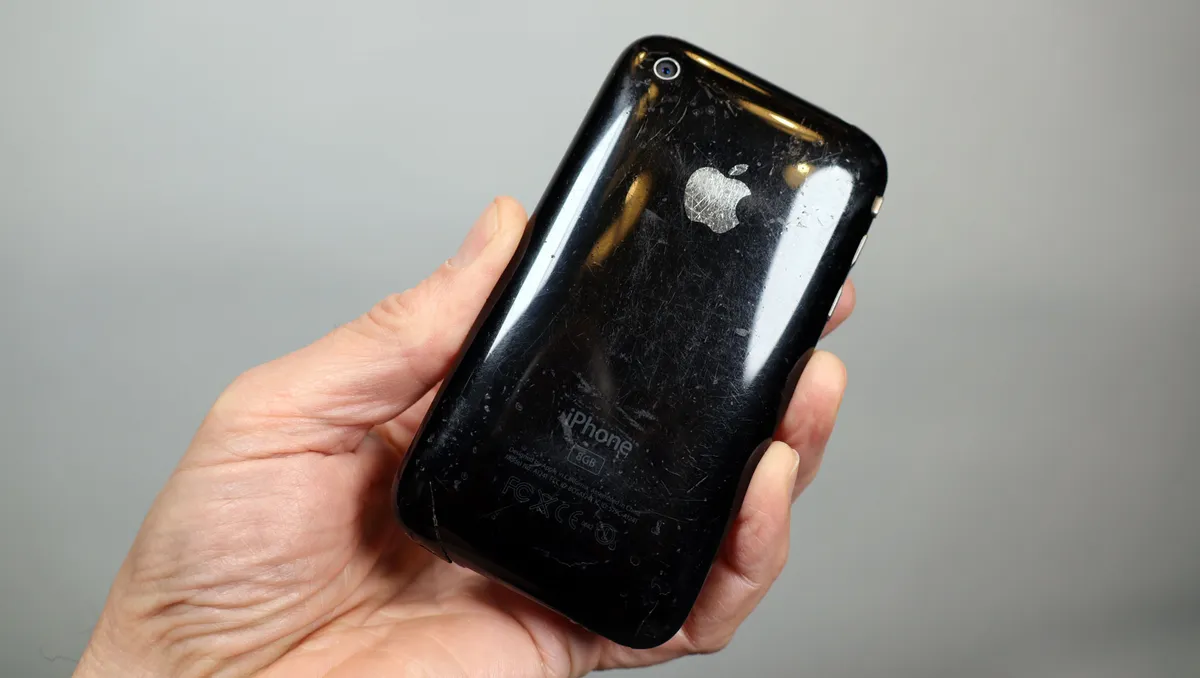
The first two GS gave us data on our phones – while browsing the web, reading an email, this kind of thing. This is where the first iPhone joined the party, at the end of 2G, when 3G networks spread.
The 3G networks gave us a video on our phones – the dawn of YouTube. Do not broadcast networks as we have done today, but video clips or sound with high sound quality. The path was being posted for Netflix and Hulu, but it was strewn with Mobitv and Samsung Milk Music first.
With 4G networks, we obtained live video streaming. YouTube, Snapchat and older services like Vine and Periscope were all born after 4G networks.
You can even spread yourself. For the first time, anyone could become a diffuser using only a smartphone. Frankly, the idea seemed so bizarre that it was ignored for years. Your phone has been able to broadcast a live YouTube channel for much longer than you think.

The 5G networks gave us the Internet of Objects. Everything is connected. Not just your lights and thermostat, but also your car and – why not!? – Your tea kettle. These 5G networks are not only faster; They also manage much more traffic. I still do not see much faster speeds on 5G networks, but the networks are much more reliable and the network is more coherent.
I think 5G is the place where things have started to turn. My car is always connected to the Internet, and I used to hope that a connected car could speak to other cars for safety features or with traffic signs for better navigation. Instead, I receive emails telling me that I left my doors unlocked, or an alert that someone hit my mirror with accompanying video clips.
Qualcomm says that 6G networks will be ready to receive data on AI

What is the 6G promise? We heard Qualcomm and other companies that 6G networks will allow AI features like never before, but it was not clear what it meant. I assumed that the phones would speak to more powerful AI computers via the cloud, but there is more to 6G than to ask questions and to obtain faster answers. The real promise of 6G networks, at least Qualcomm, is the amount of data from these networks that bring us together.
Qualcomm brought me to the Snapdragon Summit on Maui to talk about fleas like the Qualcomm Snapdragon 8 Elite Gen 5, which will be the fastest mobile platform you can buy when it was launched in phones this month.
In addition to driving applications faster, running AI features on your device and drawing detailed graphics in games, the Snapdragon 8 Elite Gen 5 is also designed to collect your phone’s sensor data more efficiently than ever.
How many data? You will need a larger network

Your phone can listen to and save video with microphones and cameras. It can detect your movement and the direction you face using the accelerometer and the magnetometer, respectively. With GPS, it can detect your location and speed.
Some phones, such as Pixel 10 Pro, have temperature sensors. The iPhone 17 Pro has an infrared sensor which he uses for unlocking the face. The Galaxy S25 Ultra has a hallmark sensors to detect when your cover box has opened or closed.
But wait, there is more! You also have radios on your phone for Wi-Fi, Bluetooth and perhaps Ultra Wideband (UWB) for accessories like Airtags. These radios can detect other networks and devices around you and feed this information at AI. In fact, by measuring the changes in the signal strength of these devices, your phone can detect your location or the location of others in the room with you, depending on the amount of interference that your body causes.

All this data collection will feed a new breed of AI called Aicica
So far, I have not heard what will give 6g, only what it will take
To create models of large language (LLMS) of today like Chatgpt, IA developers as Openai had to feed the computer with each written word available. They scanned each book they could find and scratched each website and babbles that was accessible. Even it was not enough to create a perfect language system, and AI is constantly trained and updated on new data.
The next generation of AI models will be an agency AI, which means that they will be agents capable of taking measures on your behalf. How do you train such a model? By studying the actions we already take. Unfortunately, there is not a large mine of training data available, such as the Set of written language. The data must be collected – and in massive quantities – to quickly form agenic AI models.
Qualcomm chipsets bring together this data, but ultimately, it will exceed the current 5G networks once the flow will really start. The advice we obtained on 6G networking came while Qualcomm discussed this data collection to create a new generation agent. Its 6G networks will be robust enough to manage so much data.
With Qualcomm predicting the first 6G aircraft in two years, it will take three or four years before buying a 6G smartphone, and probably five years or more before a phone as the iPhone uses 6G networks.
We must know what 6G networks will offer

So what do 6g give us? Each generation of previous network has given We something: data, video, streaming, omnipresent connectivity: 2G, 3G, 4G, 5G, respectively.
So far, I have not heard what 6G will only give, what it will take. He will take our data. He will collect our information. He will watch our lives. Without understanding the advantages, it scares me.
Qualcomm says that AI is the new user interface, and I agree that AI will bring the biggest changes of use since the dawn of the graphic user interface (GUI). To get there, Qualcomm and AI developers need a lot of training data, and 6G networks will be an integral part of the collection of this data. This path is inevitable since dawn of AI; It is not a surprise.
This is the problem with AI, and why AI feels like a characteristic that is forced to us. I don’t see obvious advantages. It is not clear how AI improves my life. It is very clear how AI is used to sell me things like new smartphones and the new GS network, and if Qualcomm wants me to be excited by the next one, I need to hear what the next generation will give us to what it will take.
You might also like …