Can you trust calorie counts on food labels? What nutrition scientists say


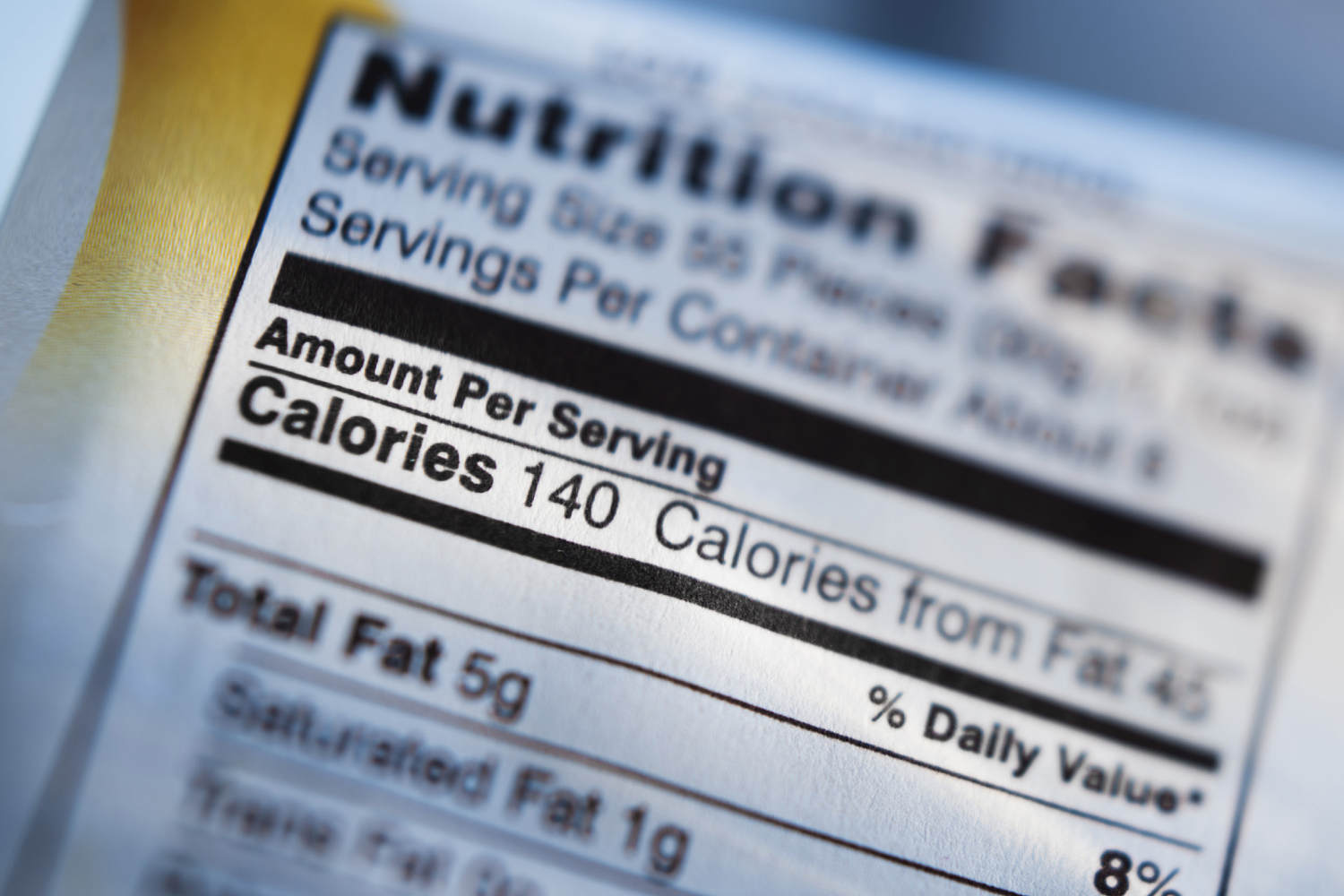
The math needed to figure out how many calories are in your favorite snack involved a lot more guesswork than you might think.
The Food and Drug Administration began requiring standardized nutrition labeling — including the number of calories per serving — on most packaged foods in 1990. Obesity rates soared in the United States in the following decades, prompting a 2016 change to the rule to list calorie counts on nutrition labels in large, bold print.
How accurate are these calorie counts?
Popular protein bar brand David is currently fighting a lawsuit alleging that the company’s bars contain nearly twice as many calories as labels claim, based on independent testing. The company’s founder said the lawsuit used an incorrect testing method to measure calories and that the fat substitute the company used in protein bars did not contain as many calories as real fat (about 9 calories per gram).
Nutrition scientists say there is wide variation in the amount of nutrients and calories each person absorbs during digestion.
This is why the FDA allows a deviation of up to 20% when counting calories.
For example, if a frozen meal is labeled as containing 500 calories, it could contain up to 600 calories and still be compliant, said Lindsay Moyer, a registered dietitian at the Center for Science in the Public Interest.
Dr. Zhaoping Li, chief of the division of clinical nutrition at UCLA, said the amount of energy we get from food is affected by many factors, such as “how your stomach digests it, how much is absorbed in your small intestine, and how much energy can be harvested once the microbiome acts on the large intestine.”
Together, these variables can lead to inconsistencies between the number of calories a food actually contains and the number listed on that food’s nutrition label, even if a company has made serious efforts to calculate them.
“It’s a guess,” Li said.
Or as Marion Nestlé, professor emeritus of nutrition, food studies and public health at New York University, puts it: “Calories make your eyes roll.”
How to measure calories in food?
The most accurate method for measuring the energy and calories in food is called a bomb calorimeter, Li explained. The process works on the theory that when one thing releases heat – in this case, food – it is absorbed by another, in this case the one digesting that food, as energy.
To make this calculation, food scientists seal a piece of food in a pressurized steel container filled with oxygen – the “bomb”. This container is enclosed in an insulated box filled with water.
Scientists light the food on fire and let it burn completely. Then they take the temperature of the water. They use an equation to tell them how much energy – and therefore calories – are in that piece of food, based on how much the burning piece of food has increased the temperature of the water around it.
But the bomb’s calorimeter calculations may be wrong, Nestlé said.
“Not all components of food are absorbed, and the only thing that counts for calories is what is absorbed through the intestinal wall — calories from fiber, for example, don’t count,” she said.
Nestlé said it was much more common for food manufacturers to estimate the number of calories in packaged foods using an Atwater factor. This mathematical equation uses a fixed number of calories per gram for macronutrients, including fats, carbohydrates and proteins.
Each gram of carbohydrates, including sugar, contains about 4 calories. The same goes for proteins. Fats contain about 9 calories per gram. Food scientists can get a basic estimate of the number of calories in a food based on this equation.
“And it’s pretty close,” Nestlé said. “You have to be comfortable with approximations.”
Latest food and nutrition news
Some businesses, particularly restaurants seeking to calculate calorie counts for menu items, may use a U.S. Department of Agriculture database that hosts calorie estimates for individual foods, such as a roma tomato or a commercially prepared slice of white bread. They can also use a more specific database calculation program that takes into account the restaurant’s suppliers, CSPI’s Moyer said.
However, this involves a bit of guesswork.
“Let’s say they get the ingredients from a supplier. That supplier may have already done some analysis, but then it may be cooked or processed in a way that changes the nutrients in the ingredient,” Moyer said.
Then there is the human factor. Restaurants that prepare meals on site likely have more variation in calorie counts than, say, a protein bar.
“If someone makes your sandwich at a place that makes subs, you might see them grab a pre-weighed piece of meat, so that calorie number might be pretty accurate. But then if they grab a bottle of sauce and just go at it for a while, it will vary,” Moyer said. “I would not treat calorie labels on a menu the same as a prepackaged food such as a bar.”
Few calories from fiber
Some types of foods are harder to break down, meaning the body actually absorbs fewer calories from them than the label indicates.
For example, an accurate calorie count is particularly difficult to calculate for plant foods, whose cell walls can be heard through teeth, because chewing is the first phase of digestion, Moyer said.
“People generally take in a few fewer calories from these foods than the label calculates,” she said.
Almonds are another good example, she said. People absorb more calories from almond butter than whole almonds because “it’s basically chewed for you.”
Several studies conducted by the U.S. Department of Agriculture have found that whole almonds, cashews, lentils and chickpeas all contain fewer calories when digested than labels estimate. Nuts, rich in protein and omega-3 fatty acids, contain 21 percent fewer calories than commonly thought, according to USDA estimates.
Insoluble fiber is another nutrient that may not provide calories because the body lacks the enzymes needed to digest its chemical bonds, meaning it passes through the digestive system without being broken down for energy. Whole grains, nuts, seeds and the skins of fruits and vegetables contain insoluble fiber: although they contain calories from sugars, fats and proteins, calories from insoluble fiber are not absorbed.
“In general, fiber is a carbohydrate that we can’t completely break down and digest, so fiber contains few, if any, digestible calories,” Moyer said.
The large intestine can extract some, but not all, of the calories from another type of fiber, called soluble fiber. Oats, beans, lentils, apples and avocados are all high in soluble fiber. Soluble fiber can also prevent the digestive system from absorbing certain fats and cholesterol.
So, should we trust calorie counts?
There is little research measuring the accuracy of packaged food labels, and the FDA does not test every product on the market.
“It’s kind of ‘buyer beware’ if the facts on a nutrition label seem too good to be true,” Moyer said. “Compare it to similar products; if you look at a row of peanut butter and see one that has 120 calories per serving while everyone else says 180 calories per serving, that would raise a red flag for me.”
Paying attention to the calorie count on nutrition labels is a good place to start, she said, but no company can claim to calculate calories down to a single number—say, a serving of frozen pizza has 352 calories.
“People have good intentions, and the calculation software will give you a number for the precise calorie, but it’s a joke. Nobody knows that much,” Moyer said.


