Raspberry Pi is raising prices, but this open source alternative is staying affordable


Are you buying an SBC right now? There are tons of choices, but the conventional choice is a Raspberry Pi device. This is not your only option, however, and looking for alternatives is worth it.
Raspberry Pi devices are getting (even) more expensive
In direct response to skyrocketing RAM prices, the Raspberry Pi company announced that it is raising Pi board prices this month. Most jumped $5 or $10, but the Raspberry Pi 5 with 16GB of RAM jumped $25.
This comes after years of a pricing roller coaster. Raspberry Pi devices sold by third-party retailers became extremely expensive in the early 2020s due to the semiconductor shortage. This happened because of the cryptocurrency craze at the time, and now, thanks to today’s AI craze, we’re facing a new shortage that’s driving up the cost of “affordable” computers.
It’s not yet clear if or when Raspberry Pi computers will become more affordable. Given that a major manufacturer has exited the consumer PC market, I don’t have high hopes.
These prices are not increasing
In contrast, there are alternative SBCs that were initially priced lower than similar Pi devices and have since barely moved, if at all. I’m talking about RISC-V cards.
This is not a specific brand of SBC but rather a CPU architecture. You see, Raspberry Pi and its competitors almost always use some type of Arm processor, but a few Pi competitors now offer SBCs that replace the Arm processor with one with another architecture called RISC-V.
While shopping for SBCs, I checked the price history of popular RISC-V boards and their closer Raspberry Pi cousins in terms of RAM and clock speed. The contrast is surprising.
For example, the 2GB RAM version of the Orange Pi RV2, a RISC-V board similar to the Raspberry Pi 3B, arrived in March 2025 for a low price of $42 on Amazon. Since then, the price has remained stable.

Compare that to the 2GB edition of the Raspberry Pi 4 Model B, a mainstay of the Pi line. Its first listed price on Amazon was $60, which was $18 more than the Orange Pi RV2. Since then, it has rebounded, going as high as $57, but recently climbed as high as $67. Depending on when you buy it, you’re looking at paying almost 60% more for a Raspberry Pi 4B compared to an Orange Pi RV2.

Of course, that’s not the fairest comparison, considering the RV2 is less than a year old. It hasn’t faced market headwinds as long as 4B.
If you look at most other RISC-V cards, it’s the same story. The 4GB VisionFive2 card I purchased recently, which is well established with dedicated support across multiple operating systems, still costs the same $69 it did when it first became available on Amazon two years ago. The price of Pine64’s STAR64 RISC-V card has also not changed since its spring 2023 launch.
Why RISC-V cards are so affordable

RISC-V is an open-standard instruction set architecture (ISA) that, unlike Arm and most other ISAs, does not require manufacturers to pay or sign legal agreements for its use. A portion of each Raspberry Pi sale goes to Arm Limited through the royalties it charges for use of the ARM64 instruction set. Meanwhile, since the RISC-V instruction set is open source, manufacturers are able to save you money.
Of course, it’s not as if RISC-V cards don’t need memory and storage, both of which are currently driving up computer prices. So while RISC-V prices currently remain unchanged, I do not anticipate this remaining true given the current trajectory. If you are considering investing in a RISC-V card, I recommend doing so now to get the best deal possible.

The Best Single Board Computers (SBCs) of 2025
An entire PC on a small PCB that can do it all.
Beware of compromise
While I’m excited about RISC-V, I won’t hide the downsides from you. With low cost comes tradeoffs, primarily in the form of software support and optimization. Existing software was generally not programmed to run on RISC-V processors. Although a lot of porting work has been done, not everything you can run on a Raspberry Pi can run reliably on a RISC-V board at this time. Slow performance, especially in graphics-oriented and machine learning tasks, is common.
It’s best to do your research and stay aware of your own goals. What do you want to do with your development board? Before making a purchase, do a web search for the board you are considering and the project you want to complete. Chances are, someone has already tried it and noted their experience. Then find out if your project is feasible and what challenges you might encounter.
I can tell you, based on my experience, that I was able to install the DietPi OS and get a working Pi-hole instance on my VisionFive 2 board. I saw warnings that the HDMI port wouldn’t work, so I was ready to remotely connect to the board. It turned out, however, that this issue had been resolved in the months since this warning was posted, so the process was a breeze with my portable monitor.
Let’s hope the future remains bright for RISC-V
My anecdote about the HDMI port shows that just because something isn’t yet possible on RISC-V doesn’t mean it never will be. While it’s not yet fast or reliable enough for mission-critical projects, it’s an exciting time to get started with RISC-V. More and more hardware is enabled and new emulators fill software gaps, which means the horizon is expanding.
I can’t say what SBC prices will look like in a few months, but I can tell you that right now a RISC-V development board is a better deal than ever.
- Brand
-
Orange-Pi
- Storage
-
16GB eMMC
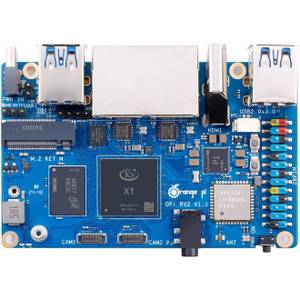
This Raspberry Pi eschews the typical Arm processor for a set of open source RISC-V cores, giving you efficient power at a lower cost. It has two Ethernet ports and comes with Ubuntu preinstalled.