Regional tensions rise after U.S. military action and removal of Maduro : NPR

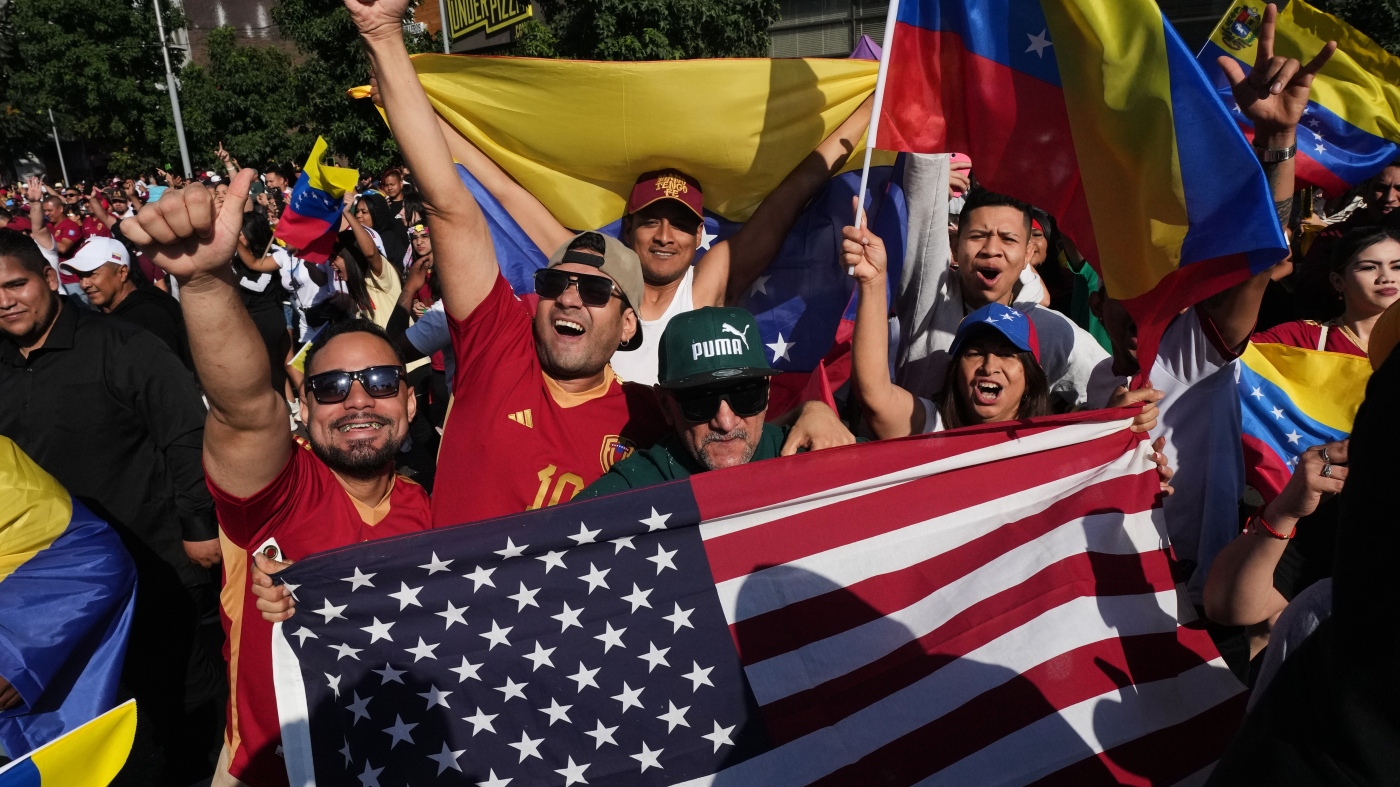

Venezuelans are celebrating after U.S. President Trump announced that Venezuelan President Nicolás Maduro had been captured and expelled from the country on Saturday in Santiago, Chile.
Esteban Félix/AP
hide caption
toggle caption
Esteban Félix/AP
The impact of the Trump administration’s stunning airstrikes and the “capture” of Nicolas Maduro is already being felt far beyond Venezuela’s borders – the most significant US intervention in the region since the 1989 invasion of Panama.

President Gustavo Petro in neighboring Colombia announced that security forces were deployed along the border to prepare for a possible influx of refugees. Colombia is home to the largest Venezuelan diaspora.
Petro confirmed several strikes in Caracas, including against a military air base, other facilities and the legislative building. He condemned the attack as an aggression against Venezuela and Latin America, calling for de-escalation.
Brazilian President Luiz Inácio Lula da Silva condemned the US attack on neighboring Venezuela and the capture of Maduro, saying the strikes “crossed an unacceptable line” and set a “dangerous precedent”.

Lula said the action evoked “the worst moments of interference” in Latin America and threatened the region’s status as a zone of peace. Despite his past alliance with Maduro’s predecessor, Hugo Chávez, relations have cooled since Brazil refused to recognize Maduro’s disputed 2024 election victory, widely seen as fraudulent.
Other regional powers, including Chile and Mexico, echoed strong condemnation. Mexico called the strikes a violation of the United Nations Charter and called for an immediate end to the acts of aggression. In an interview with Fox News on Saturday, President Trump said Mexico was run by drug cartels and said, “We’re going to have to do something with Mexico.”
Cuba and Nicaragua – two of Venezuela’s closest allies – are closely monitoring the crisis. Cuban President Miguel Díaz-Canel called the U.S. action “state terrorism” and called for urgent international intervention.
Cuba, facing its most serious economic crisis since the fall of the Soviet Union, relies heavily on Venezuelan oil. Any disruption could worsen an already dire situation, and the government in Havana – in power since 1959 – is closely monitoring developments.
And then: the world stage
Close allies China and Russia also reacted. Russia condemned these strikes and reaffirmed its solidarity with the Venezuelan people. In a statement, the Russian Foreign Ministry called the pretext used by the Trump administration to attack Venezuela unfounded and said that if reports of Maduro’s capture were true, the U.S. action constituted an “unacceptable attack” on Venezuela’s sovereignty.
Despite such expressions of support, Moscow has not dared to challenge the United States more forcefully, as part of a months-long pressure campaign waged by the Trump administration against Venezuelan leaders.
China said it strongly opposed the US action, condemning the move as a violation of international law. In a statement, the Foreign Ministry said Beijing was “deeply shocked” by what it called Washington’s “blatant use of force” against a sovereign state, arguing it undermined Venezuela’s sovereignty and threatened peace and security in Latin America and the Caribbean.
European Commission President Ursula von der Leyen said the EU supports “a peaceful and democratic transition” in Venezuela. But she did not criticize the American attack.
“We stand with the Venezuelan people and support a peaceful and democratic transition,” she said, adding that any solution must respect international law and the United Nations Charter.
Venezuela called for an emergency meeting of the UN Security Council, raising questions about the legality of the US operation.
In a statement, UN Secretary-General António Guterres said he was “deeply alarmed” by the developments overnight, expressing concern “that international law has not been respected.”


