Relentless rise in carbon pollution from fossil fuels slightly dampens climate-fighting hopes

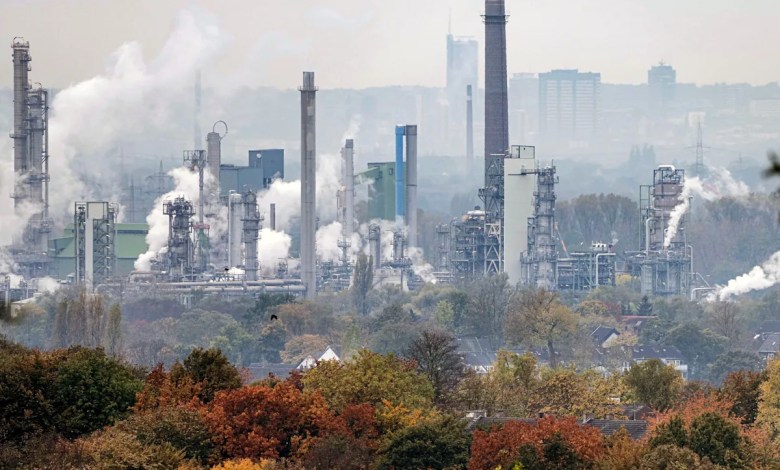
BELEM, Brazil (AP) — For several years, scientists, analysts and officials have hoped that this will be the year when emissions from burning coal, oil and natural gas stop rising.
They will have to wait another year.
For the second year in a row, fossil fuel emissions increased by 1.1% in 2025, scientists reported Wednesday at United Nations climate negotiations. It’s not a big jump. This is one of the smallest in recent non-pandemic years. But negotiators gathered for the COP30 conference on the edge of the Amazon are trying to curb global warming by ensuring that fossil fuel emissions stop increasing, then fall.
“It is disappointing that we have not reduced carbon dioxide emissions,” said Stephen Sitch, a scientist at the University of Exeter and member of the Global Carbon Project, which uses data from around the world to calculate the annual emissions figure and publishes it in two scientific journals. His colleague Glen Peters of the CICERO Center for International Climate Research in Norway called the increase in carbon emissions “relentless”.
On the road to a future where “we will cook”
A second report from another scientific group examined the extent of global warming, taking into account this year’s carbon emissions and government policies. The Climate Action Tracker report shows that the past four years of climate control efforts have not changed projections of a warmer future much. In fact, scientists found that actions taken by U.S. President Donald Trump’s administration this year added a bit more heat to their projections.
“Unless there’s a change in the political dynamic, we’re going to cook. There’s no doubt about that,” said Bill Hare, CEO of Climate Analytics, one of the report’s authors.
Climate Action Tracker said the world is now on track for warming of 2.6 degrees Celsius (4.7 degrees Fahrenheit) above levels in the mid-1800s, a slight drop from last year’s projections of 2.7 degrees (4.9 degrees Fahrenheit), but that most of that decline is due to changes in how scientists looked at China’s numbers, and not so much to new policies being implemented. place.
The 2015 Paris Agreement set an international goal to limit global warming to 1.5 degrees Celsius (2.7 degrees Fahrenheit) since the mid-1800s.
Climate Action Tracker also examined projections based on each country’s climate plan submitted this year ahead of the climate conference in Belém, Brazil. The future, based on these commitments, appears to be a tenth of a degree warmer than a year ago, according to their report. That’s largely due to Trump’s dismantling of U.S. efforts to combat pollution, said Ana Missirliu of the NewClimate Institute, author of the report.
If countries keep their promises, the world is headed for warming of 2.2 degrees Celsius (4 degrees Fahrenheit) above 19th century levels, the report said.
Experts at the climate conference said they see hope and progress, but this year’s emissions figures remain painful.
“When I hear that emissions continue to increase, I am really troubled,” said Jennifer Morgan, Germany’s former chief climate negotiator.
2.7 million pounds of carbon dioxide per second
Carbon Project scientists predict that this year, fossil fuel burning and cement manufacturing will have released an additional 42 billion tons (38.1 billion metric tons) of carbon dioxide into the air. That equates to nearly 2.7 million pounds (1.2 million kilograms) of heat-trapping gases released into the air every second.
This is more than double the global emissions of 1983.
One positive is that 35 countries have reduced their fossil fuel emissions compared to last year and continue to prosper economically, Sitch said. But at the same time, the United States, which once reduced its carbon dioxide emissions from fossil fuels, released 2% more pollution in 2025 than in 2024.
China remained at the same level as the previous year, giving scientists and analysts hope that the top carbon polluting country’s emissions may have peaked.
Air pollution increased by 6.8% between 2024 and 2025, according to the report.
And the slight increase in carbon pollution from fossil fuels has been offset by a sharp decline in deforestation and other land-use changes. Between land use and fossil fuels, Earth’s overall emissions were about the same as in 2024, the report said.
__
Melina Walling contributed to this report.
__
Associated Press climate and environmental coverage receives financial support from several private foundations. AP is solely responsible for all content. Find AP’s standards for working with philanthropic organizations, a list of supporters, and funded coverage areas at AP.org.


