Renaissance sword reveals a hidden engraving


The sword appears to be nothing more than a rusty relic at first glance. Researchers at Germany’s University of Jena (formerly Friedrich Schiller University Jena) knew better, but they needed a way to examine more than 300 years of corrosion. What they discovered still remains hidden to the naked eye, but is clearly visible thanks to some of the latest advances in computed tomography (CT) technology.
The short sword was forged in 1558, shortly after the founding of Schiller University and during the German Renaissance. At the time, only members of the nobility and upper classes were allowed to carry such a weapon, also known as a degen. And for many members of Germany’s highest social order, the University of Jena was a center of education and culture. Between 1594 and 1814, its teachers, students, and even their families were often buried near the church in the heart of the campus called Collegium Jenense. These crypts frequently contained symbolic offerings and personal items, including their trusty short swords.
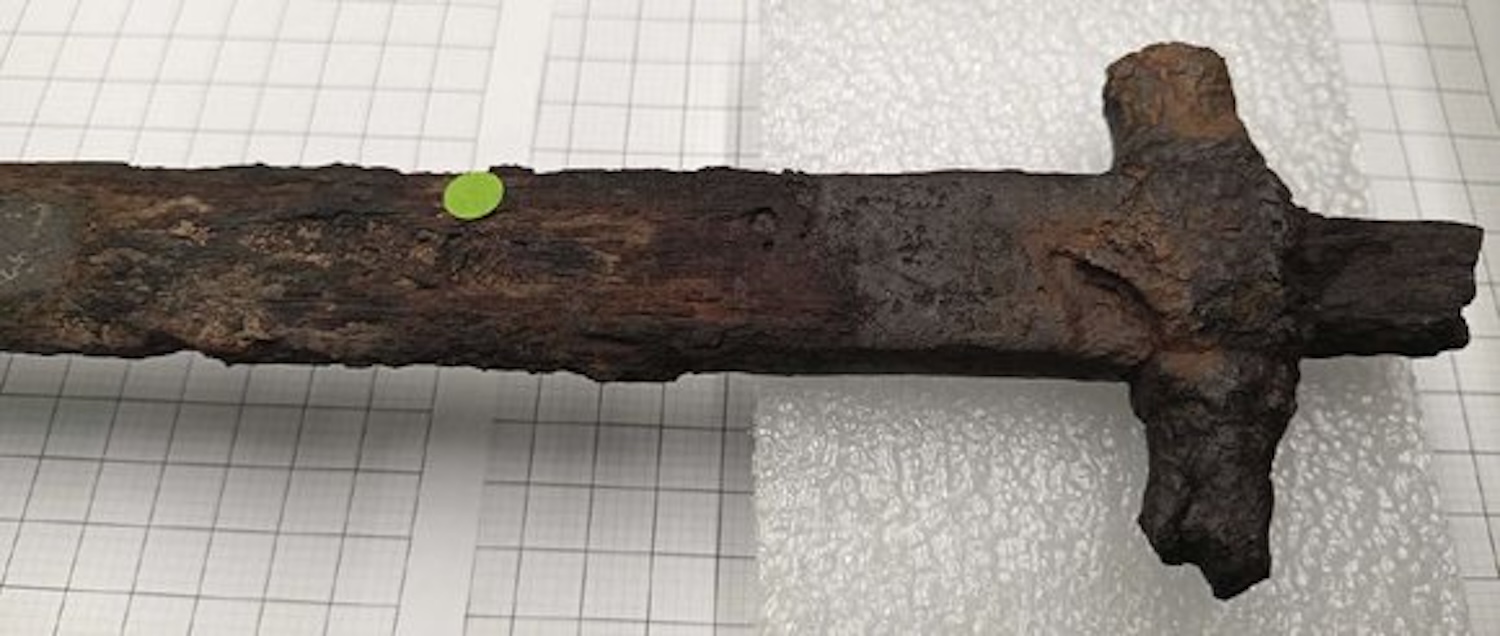
The Collegium Jenense was ultimately destroyed during an Allied bombing campaign near the end of World War II, trapping centuries of historical relics beneath thousands of pounds of rubble. It will take years of excavation to finally reveal the buried tombs and their handmade accessories. Even though one example was found largely intact, that didn’t change the fact that the degen remained covered in rust and grime.
The sword and other items were carefully archived and remained there for decades. In 2018, researchers from the University of Jena launched a project focusing on the early years of the institution, in particular on the tombs of the college district. They thought they could investigate one of the swords beyond its surface layers, but did not have the technology to do so. It will be another four years before the team can partner with INNOVENT, an independent industrial research center based at the university. Thanks to the X-ray, micro and nano-CT scanners recently acquired by INNOVENT, the experts were finally able to see into their mysterious weapon.
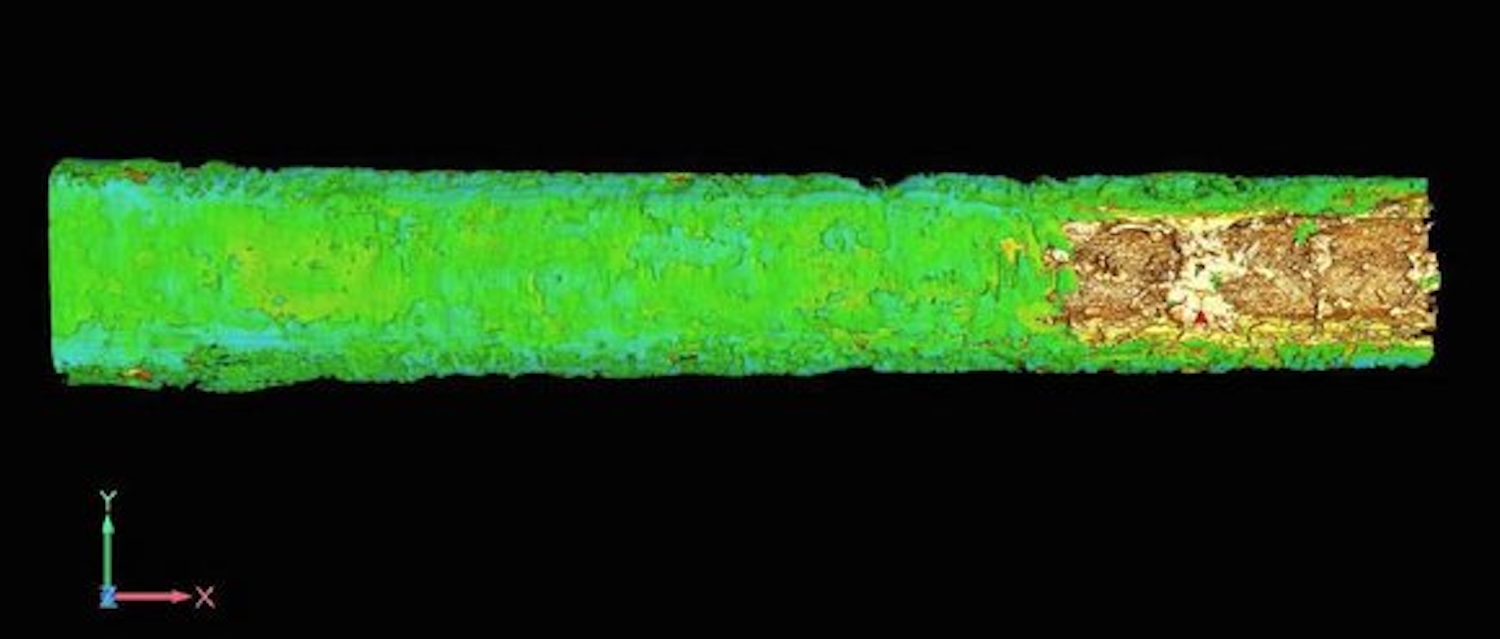

Once scanned, the team used analysis algorithms to generate distinct images of the object’s different material layers, then displayed them in false colors. Green said the remains of one side of the sword’s scabbard had fused with the welded steel of the blade. Additional scans of the exposed opposite side showed the weapon’s elaborate inlay on display in red, as well as the name “Clemes Stam.”
However, Stam was not the owner of the short sword. Researchers have corroborated historical records to confirm that Stam was actually a blacksmith living in the town of Solingen in the late 16th century. Solingen was famous for its sword making, with craftsmen making bespoke weapons for European nobility and even the King of Spain. The engraving of the maker’s name speaks to the status of the owner, as well as the renowned origins of the sword. The team said the sword could only belong to a rector or student from a noble family.
“CT scanning not only captures surface details; it reveals the inner history of the object,” explained project archaeologist Enrico Paust. “In this case, he literally discovered a name that connects Jena to the European sword-making tradition.”

House of the Future Prize 2025


