Renault Twingo I Delivered A Two Decade Championship Run

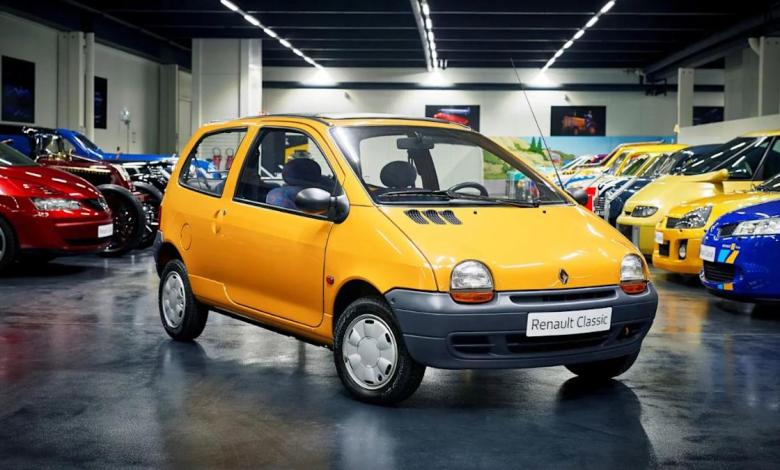
The first generation Renault Twingo did more than become a popular city car. It helped reinvent what an urban runabout could be, reshaping expectations not only in Europe but also in parts of South America where its lifespan has extended well beyond its original market cycle.
The original Twingo arrived in 1992 after years of development. Renault created it to replace the aging Renault 4, but the goal was not to build a direct successor. The company wanted a new approach to packaging, comfort and usability of small cars, with a design that was more friendly than serious.
Small on the outside, big where it counts

Photo courtesy: Autorepublika.
“Small outside, big inside” has been the guiding principle of Twingo’s development. Patrick Le Quément, Renault design director, defended a playful and accessible form with a strong emphasis on practicality. The result was a car that looked cheerful and unconventional, but also offered the kind of interior flexibility that buyers rarely saw in the A-segment of the early 1990s.
The first generation Twingo introduced solutions that were still rare in European mini cars at the time and which were subsequently widely adopted in the segment. Its packaging philosophy proved that a truly small footprint did not necessarily mean a cramped cabin and that intelligent interior design could be a major selling point in a budget-oriented category.
Demand grew rapidly and production followed
The Twingo was an immediate success. Renault initially concentrated production at its factory in Flins, France, but just two years after launch, demand was strong enough for the company to expand assembly to other sites.
Over time, the Twingo was produced not only in France but also in Spain, Taiwan and Brazil. Assembly in Colombia began in 1995, followed by production in Uruguay beginning in 1999. This global footprint helped the car build a reputation as more than just a European city car, turning it into a familiar sight in several regions.
A rarely long life cycle for a small car

Photo provided by: Lothar Spurzem — Own work, CC BY-SA 2.0/Wiki Commons.
One of the clearest signs of the first generation’s success is how long it remained in production. The last European-built example rolled off the production lines in 2007, giving the car a life cycle of 15 years, an unusually long lifespan for an A-segment vehicle where model turnover is generally much quicker.
Even after leaving Europe and moving to the second generation model, the story of the original Twingo continued. Production in Colombia continued for another five years and only ended in 2012, extending its overall production life to a full two decades.
2.6 million sold, and no successor has matched

Photo courtesy: Renault.
During its 20 years of existence, the first generation Twingo reached approximately 2.6 million units sold. This level of success was never repeated by subsequent generations. Even if we combine the sales of the second and third generation models, their total still does not exceed what the original achieved alone.
This is the kind of result that manufacturers rarely reproduce. This reflects not only strong marketing, but also the timing and execution of a product that arrived when buyers were ready for something new and convenient.
Gasoline only, a rare choice even at the time
Another notable detail, the first generation Twingo was offered exclusively with gasoline engines. This changed with the second generation, which added a diesel option, the 1.5 dCi. The third generation then reverted to gasoline-only powertrains.
The move reflects broader changes in the European market, where small diesel engines gained popularity in the 2000s and then gradually disappeared as emissions regulations tightened and electrification strategies accelerated.
The new electric Twingo looks back to 1992

Photo courtesy: Renault.
Renault’s broader powertrain strategy has increasingly focused on delivering what the market demands, including a strong push toward electric vehicles. The company was an early leader in electric vehicles in Europe with the Renault Zoe, and also offered a fully electric version of the third-generation Twingo.
Now, the upcoming fourth-generation Twingo is expected to return to the original 1992 formula, emphasizing compact dimensions, smart packaging and everyday utility, but translated into a modern electric vehicle.
Renault is reporting high expectations for the new all-electric Twingo, including an aggressive price target of just under $22,000 when converted from the originally announced European figure. Even with this pricing ambition, it is unlikely to compare to the impact of the first generation. A product that hits the market perfectly at the right time and remains relevant for two decades is something the automotive industry doesn’t see often.
This article was originally published on Autorepublika.com and has been republished with permission from Guessing Heads. AI-assisted translation was used, followed by human editing and review.
Learn more
-
12 Vans That Are Really Worth It
-
SUVs that will last at least 15 years (no problem!)


