Like staying up late? You may be putting yourself at risk of heart problems


January 28, 2026
2 min reading
 Add us on GoogleAdd SciAm
Like staying up late? You may be at risk of heart problems
A study of more than 320,000 people found that night owls are more likely to engage in behaviors that increase the risk of cardiovascular disease, such as smoking and sleeping poorly.
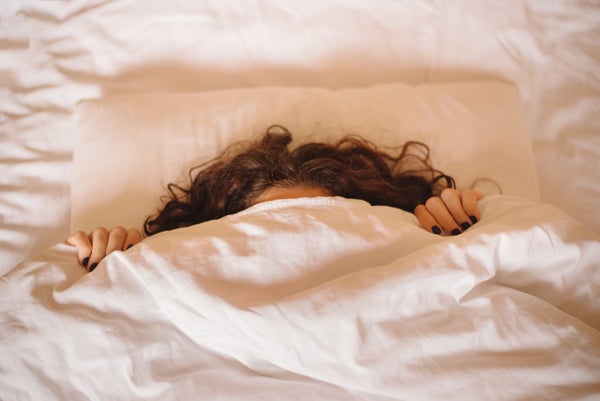
Staying up late to watch a favorite TV show or hang out with friends can be one of life’s simple pleasures. But being a habitual night owl, especially if you’re a woman, can put your heart at risk, new research suggests.
In a study of more than 320,000 adults, researchers found that participants who described themselves as “definitely an ‘evening’ person” were about 16 percent more likely to have a heart attack or stroke compared to those who didn’t report a strong preference for bedtime.
The study was partially funded by the American Heart Association (AHA) and published Wednesday in the Journal of the American Heart Association.
On supporting science journalism
If you enjoy this article, please consider supporting our award-winning journalism by subscription. By purchasing a subscription, you are helping to ensure the future of impactful stories about the discoveries and ideas shaping our world today.
The findings are consistent with existing AHA guidelines that people should strive to get a good night’s sleep to reduce the risk of cardiovascular disease. But it wasn’t clear how “circadian misalignment” — the mismatch between the body’s internal clock and the times people fall asleep and wake up — might affect heart health.
Such a mismatch can disrupt the way our brains respond to reward signals, which could lead people to engage in riskier behaviors, researchers say. “People who come in the evening may be more likely to engage in behaviors that can affect cardiovascular health, such as poor-quality diet, smoking, and insufficient or irregular sleep,” Sina Kianersi, a researcher at Brigham and Women’s Hospital and co-author of the paper, said in a statement.
Kianersi and his colleagues found that night owls were more likely to score poorly on the AHA’s “Life’s Essential 8” questionnaire, which examines a series of eight health and lifestyle parameters, including exercise, smoking, blood pressure and blood sugar. According to the results, “evening people” tended to score low because they were more likely to smoke (or live with a smoker) and not get enough sleep.
If you’re a night owl, take heart: Research points to steps you can take to avoid additional heart risks, Kristen Knutson, an associate professor at Northwestern University’s Feinberg School of Medicine, who was not involved in the study, said in the same release. “These findings show that the higher risks of heart disease among party types are partly due to modifiable behaviors such as smoking and sleeping,” she said.
“Evening people are not inherently less healthy,” Knutson said, “but they face challenges that make it especially important for them to maintain a healthy lifestyle.”
It’s time to defend science
If you enjoyed this article, I would like to ask for your support. Scientific American has been defending science and industry for 180 years, and we are currently experiencing perhaps the most critical moment in these two centuries of history.
I was a Scientific American subscriber since the age of 12, and it helped shape the way I see the world. SciAm always educates and delights me, and inspires a sense of respect for our vast and beautiful universe. I hope this is the case for you too.
If you subscribe to Scientific Americanyou help ensure our coverage centers on meaningful research and discoveries; that we have the resources to account for decisions that threaten laboratories across the United States; and that we support budding and working scientists at a time when the value of science itself too often goes unrecognized.
In exchange, you receive essential information, captivating podcasts, brilliant infographics, newsletters not to be missed, unmissable videos, stimulating games and the best writings and reports from the scientific world. You can even offer a subscription to someone.
There has never been a more important time for us to stand up and show why science matters. I hope you will support us in this mission.


