RFK, Jr.’s New Kids’ Vaccine Guidelines Will Worsen Flu and Other Winter Illnesses, Experts Say


January 14, 2026
4 min reading
 Add us on GoogleAdd SciAm
How the CDC’s Vaccine Withdrawal Will Affect the Winter Respiratory Virus Season
Robert F. Kennedy Jr.’s Centers for Disease Control and Prevention Reduced Childhood Vaccine Recommendations Amid Respiratory Virus Season
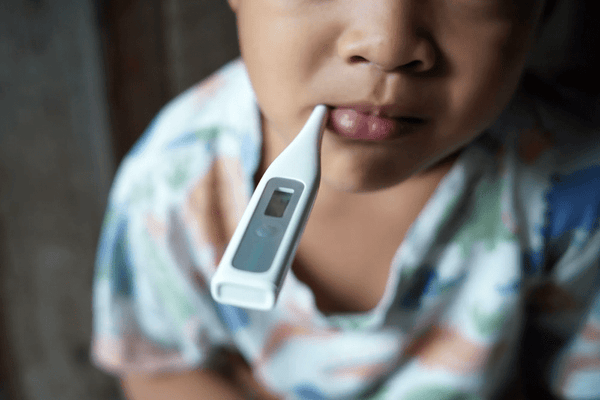
Fajrul Islam/Getty Images
Cases of winter viruses in the United States have exploded in recent months and soon children may be less protected against them, thanks to new vaccine guidelines.
As the respiratory illness season worsens, the Centers for Disease Control and Prevention recently reversed its universal childhood vaccine recommendations, dropping from 17 to just 11 illnesses. The CDC no longer recommends that all children be vaccinated against influenza and rotavirus. Instead, it recommends these vaccines based on one-on-one discussions with doctors only. And the agency recommends that vaccines that protect against meningococcal bacteria and hepatitis A and B be given only to children in high-risk groups.
All of these vaccines remain available to parents who want their children to receive them, and they are fully covered by private and public insurance. Still, public health experts warn the changes will reduce vaccination rates and increase disease rates.
On supporting science journalism
If you enjoy this article, please consider supporting our award-winning journalism by subscription. By purchasing a subscription, you are helping to ensure the future of impactful stories about the discoveries and ideas shaping our world today.
Of concern, these changes primarily affect seasonal illnesses that increase during winter and are known to cause high rates of pediatric hospitalizations and even deaths, including influenza. The timing couldn’t be worse: Nationwide doctor visits for flu symptoms recently reached a record high in nearly 30 years of tracking.
“The speed at which the flu season is accelerating in terms of total cases is quite impressive,” says Andrew Pekosz, a virologist at the Johns Hopkins Bloomberg School of Public Health. And he predicts those numbers will only increase. “We are closer to the start than the end of the flu season,” says Pekosz.
It’s still too early to understand whether certain age groups will be more affected this year than others, he adds, although the CDC has already reported 17 pediatric deaths this season. But the 2024-2025 flu season has been remarkably deadly for children: 289 children are reported to have died from the virus, the highest number of pediatric flu deaths since the CDC began tracking pediatric flu deaths in 2004. Of those who died while having known vaccination status, only one in 10 were fully vaccinated, a testament to the flu vaccine’s protection.
Children are more likely than any other age group to get the flu. Yet in the United States, only a little more than half of two-year-olds were fully vaccinated against influenza in 2023, the latest year for which complete data is available. Until this month, the CDC recommended annual shots starting at six months of age. “Use of the flu vaccine has been relatively low and declining,” says Flor Muñoz, a pediatric infectious disease specialist at Baylor College of Medicine. So far this flu season, childhood vaccination is below 43 percent. More children could still be vaccinated, but for comparison, the pediatric vaccination rate at this point in the 2019-20 season, before COVID really hit, was 54%.
The new CDC policy removes the formal recommendation for flu vaccine for children entirely, leaving vaccine discussions entirely in the hands of parents and healthcare providers. “To me, it doesn’t really make sense to remove this recommendation when we know, scientifically, that it has a benefit,” Pekosz says.
Instead, decisions about flu vaccination will be made through a shared clinical decision-making process: health care providers will discuss the risks and benefits of a medical intervention with the patient or family.
But providers already regularly have these discussions with parents, says Kathryn Edwards, a pediatric infectious disease specialist and vaccinologist now emeritus at Vanderbilt University School of Medicine. “Parents are always part of the decision regarding vaccine administration. »
Shared clinical decision-making now applies to vaccines against three key infections; the COVID vaccine received this designation this summer, and the new guidelines extended it to the rotavirus vaccine, as well as the flu. Rotavirus causes a diarrheal infection that spreads year-round, but is most common in winter and spring. The disease has gone largely unnoticed because vaccines introduced in 2006 significantly reduced hospitalization rates from the virus. This vaccine is administered orally and has seen a relatively high vaccination rate: vaccination rates have hovered between 70 and 75% since the 2010s. Muñoz fears that abandoning a universal recommendation in favor of shared clinical decision-making could lead to an increase in cases and hospitalizations due to rotavirus as early as this year.
Experts worry that the CDC’s new approach to vaccines will also erode other recent victories in children’s health. Respiratory syncytial virus, or RSV, is another “very important” winter infection, alongside the flu, Edwards says. Traditionally, nine out of ten children contract the virus in their first two years, and more than 58,000 children under the age of five are hospitalized each year in the United States. Illness is the leading cause of hospitalization among babies.
An RSV vaccine for pregnant women and a protective antibody shot for babies were both approved for general use in 2023. During the 2024-2025 season, prevention efforts resulted in “a remarkable reduction in the burden of RSV,” Edwards says. The new guidelines do not change RSV vaccinations for pregnant people or babies, but Health and Human Services Secretary Robert F. Kennedy, Jr. has questioned the safety of antibody shots despite evidence from clinical trials.
Other standard childhood vaccines, including polio, measles, whooping cough and chicken pox, remain fully recommended for all children, but experts remain concerned that the broad impact on the immunization schedule could ultimately reduce the use of these vaccines as well.
Additionally, reduced pediatric vaccination coverage for highly contagious infections will lead to an overall increase in the number of cases in the general population, as children spread the disease among their peers and older family members. And for seasonal diseases, the risk is higher in winter. “We really are surrounded by a sea of viral infections,” Edwards says.
It’s time to defend science
If you enjoyed this article, I would like to ask for your support. Scientific American has been defending science and industry for 180 years, and we are currently experiencing perhaps the most critical moment in these two centuries of history.
I was a Scientific American subscriber since the age of 12, and it helped shape the way I see the world. SciAm always educates and delights me, and inspires a sense of respect for our vast and magnificent universe. I hope this is the case for you too.
If you subscribe to Scientific Americanyou help ensure our coverage centers on meaningful research and discoveries; that we have the resources to account for decisions that threaten laboratories across the United States; and that we support budding and working scientists at a time when the value of science itself too often goes unrecognized.
In exchange, you receive essential information, captivating podcasts, brilliant infographics, newsletters not to be missed, unmissable videos, stimulating games and the best writings and reports from the scientific world. You can even offer a subscription to someone.
There has never been a more important time for us to stand up and show why science matters. I hope you will support us in this mission.


