Republicans are trying to raise the bar for voters to amend their state constitutions


An increasing number of states led by the Republicans are progressing with efforts to make the initiatives of the citizens led by citizens more difficult to succeed.
The last decision occurred in the Missouri, where the legislature controlled by the GOP gave final approval on Friday to a bill which would considerably increase the threshold to modify the constitution of the State through this process. The legislation, once signed by the governor, will always have to be approved by voters.
So far this year, legislators have advanced or promulgated bills that would create more obstacles for the voting measure led by citizens in at least seven other states, according to a review by NBC News, including Arkansas, Florida and Oklahoma.
And the equity project, a non -profit organization that helps progressive groups to advance the voting measures, published this month an analysis noting that 148 bills had been introduced in 15 States legislatures this year which proposed weakening the process in one way or another – an almost double increase since 2023.
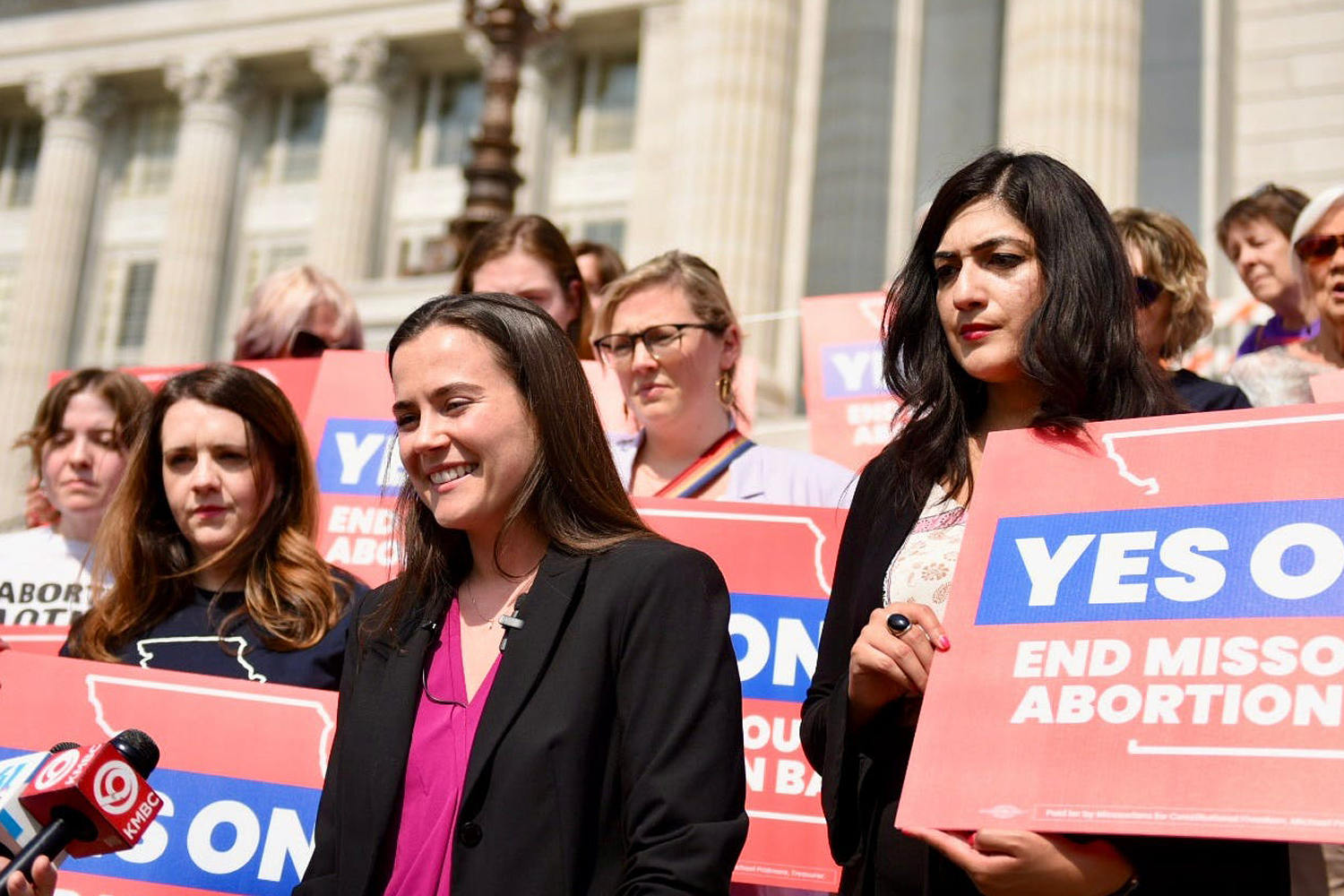
The increase comes when progressives have succeeded with voting measurement campaigns to extend or protect the rights of abortion in the state constitutions following the reversal of the United States Supreme Court on ROE v. Wade in 2022. In 2024, these initiatives were adopted in seven of the 10 states where they were on the ballot, including the Missouri.
“Of course, one of the things that happened is all these high -level voting measures to advance reproductive rights at the level of the state,” said Kelly Hall, executive director of the equity project. “This is not the only reason why legislators come after direct democracy, but it is certainly one of the main factors.”
Within the framework of the Missouri proposal, an initiative to vote by constitutional amendment led by citizens would require majority support of voters on the level of the State and in the eight districts of the Congress. Currently, these voting measures only need a majority at the state level.
The bill does not apply to the proposed constitutional amendments referred to the ballot by the state legislature. Missouri is one of the many states where the two processes exist.
“If we have to change the constitution, there should be a large support,” said Republican State representative Ed Lewis during the debate on the bill this week, adding that any effort should require “significant support in each district of the Congress”.
Other Missouri Republicans, who also adopted a new Congress card this week designed to give their party an additional siege at the American house, seemed to recognize that there was a more partisan ground.
“The card and measures to reform the petitions of the initiative will take a hard blow to the progressives and their efforts to transform the Missouri into California,” the republican president of the Senate Pro Tem Cindy O’laughlin on Facebook last week.
The Governor of Missouri’s Gop, Mike Kehoe, supports the bill to modify the process of measuring the ballot – he summoned the special legislative session specifically so that the legislators addresses this and the effort of redistribution in mid -December – but because it implies changes in the state constitution, it must go to the voting ballot itself to be approved by voters.
The Missouri is only the last state where republican legislators have tried to make the initiative process of the ballot led by the more difficult citizens.
In Florida, the Republican Governor Ron Desantis signed legislation in May which installed a multitude of new requirements for the process. Under this law, voters are now faced with crime charges if they collect more than a certain number of petitions signed or if they are not part of the State as a petition collector. And those who sign petitions will now have to include more personal information, including a driving license number or the last four figures for their social security number. The law also shortens the deadlines for the campaigns to submit their petitions.
The Republicans of Arkansas have promulgated several new laws earlier this year by implementing new strict rules, which makes citizens more difficult to place measures on the ballot. The new measures include the requirements for those who sign petitions to show an identity document and for those who circulate petitions to read the title of the voting problem with each potential signatory. The new laws also allow state representatives to more easily reject the petitions they have deemed invalid. Similar laws were promulgated by the Republicans of Montana at the start of this year.
In UTAH, legislators have proposed to increase the threshold specifically for the ballot measures by citizens who create or increase taxes. Voters will decide in 2026.
And in Oklahoma, republican legislators have promulgated a law which considerably changes the rules governing the collection of signatures, limiting the number of petitions that collectors can obtain from individual counties.
In Northern Dakota and South Dakota, republican legislators have approved several constitutional amendments, including proposals in each state that future amendments will require 60% support to succeed – an increase in the simple majority currently required in both states. The proposal will take place before the voters in 2026 (identical efforts failed in southern Dakota and Arkansas in 2022, and in Ohio in 2023.))
In Missouri, criticisms of the last efforts argue that it is only one of the many who constitute a seizure of power by republican supermajority in the legislative assembly.
The main characteristic of this effort, she said, is the redesigned map of the congress which will cut the siege of Kansas City currently held by the Democratic representative Emanuel Cleaver, giving the Republicans a strong opportunity to take an additional seat in the State.
Earlier this year, the Missouri Republicans also promulgated a measure to cancel the law on paid sick leave which entered into force after the voters approved it with almost 60% support in November.
And the legislators of the Republicans have placed a constitutional amendment on the ballot of voting which would result in a ban on almost total abortion. It would effectively cancel the constitutional amendment that voters approved for voting in November protecting abortion rights until fetal viability. Voters will decide this measure next year.
“What is distinct about what is happening in Missouri is that these are all symptoms of this greater seizure of power,” said Chris Melody Fielded Figueredo, executive director of the Ballot Initiative Strategy Center, who works with progressive organizations to help advance the ballot measures by citizens.
“We see [lawmakers] Save the will of the people and defeat what the voters have approved and making efforts to take the very tool that the voters have, ”she added.


