
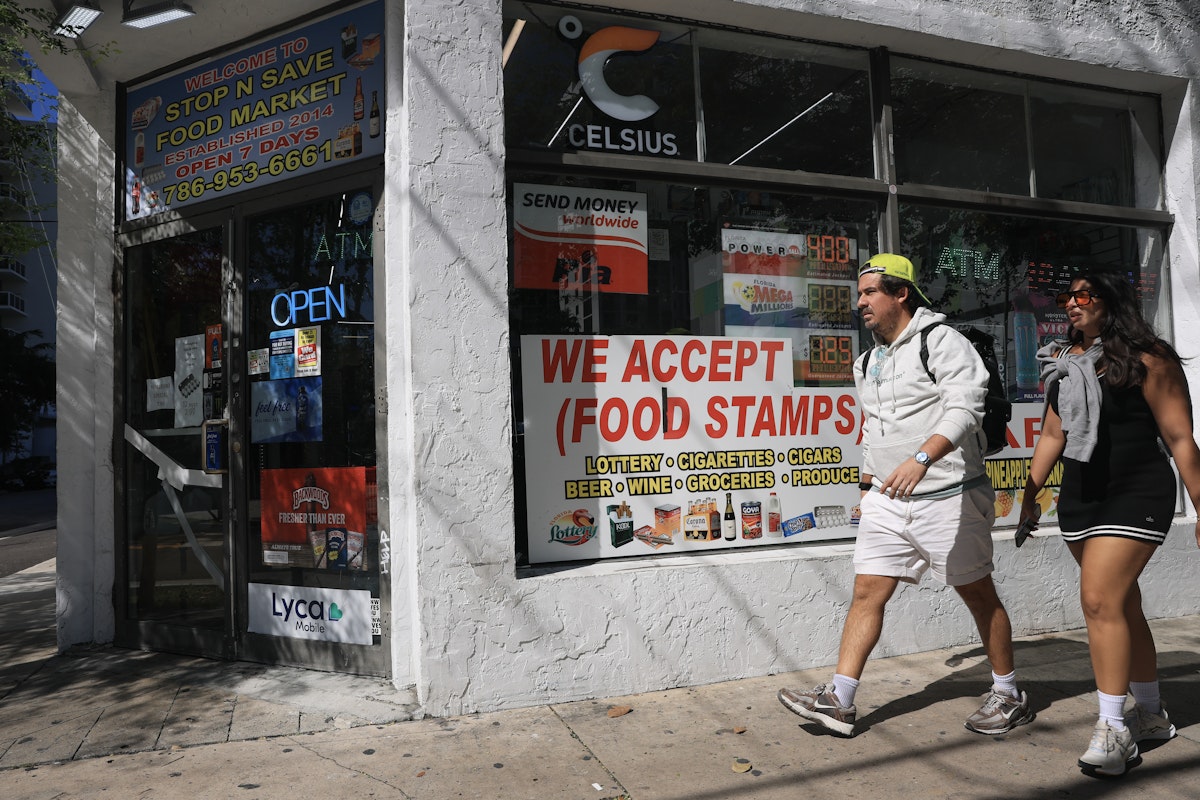
On its face, prohibiting SNAP dollars from being spent on soda and candy might seem unobjectionable. Soda and candy are high in sugar and low in nutrition. But implementing these restrictions is burdensome for states and often difficult for grocery stores to follow. Gina Plata-Nino, the SNAP deputy director at the Food Research and Action Center, an anti-hunger policy advocacy organization, pointed to a food industry study showing that the costs of implementing the changes could be $1.6 billion. “And there’s ongoing costs that will happen,” she said. “The large retailers will figure it out. But the smaller retailers, they just can’t afford this. They would just pull out of the program.”
This is already evident when comparing the numbers of retailers who accept SNAP versus the Women, Infant and Children’s nutrition program, which has stricter rules on how the money can be spent. “We have over 266,000 retailers for SNAP, just less than 40,000 for WIC, and that’s because they have to train their staff,” she said.
Many rural Americans rely on these small local grocers. So if their local store stops accepting SNAP, they’ll have to travel farther for food, costing them time and money. They’ll also buy food less frequently and rely on more shelf-stable goods, which tend to be less nutritious than perishables.


