Research roundup: Six cool science stories we almost missed


Small, 2026. DOI: 10.1002/smll.202507934 (About DOIs).
A missing star has become a black hole
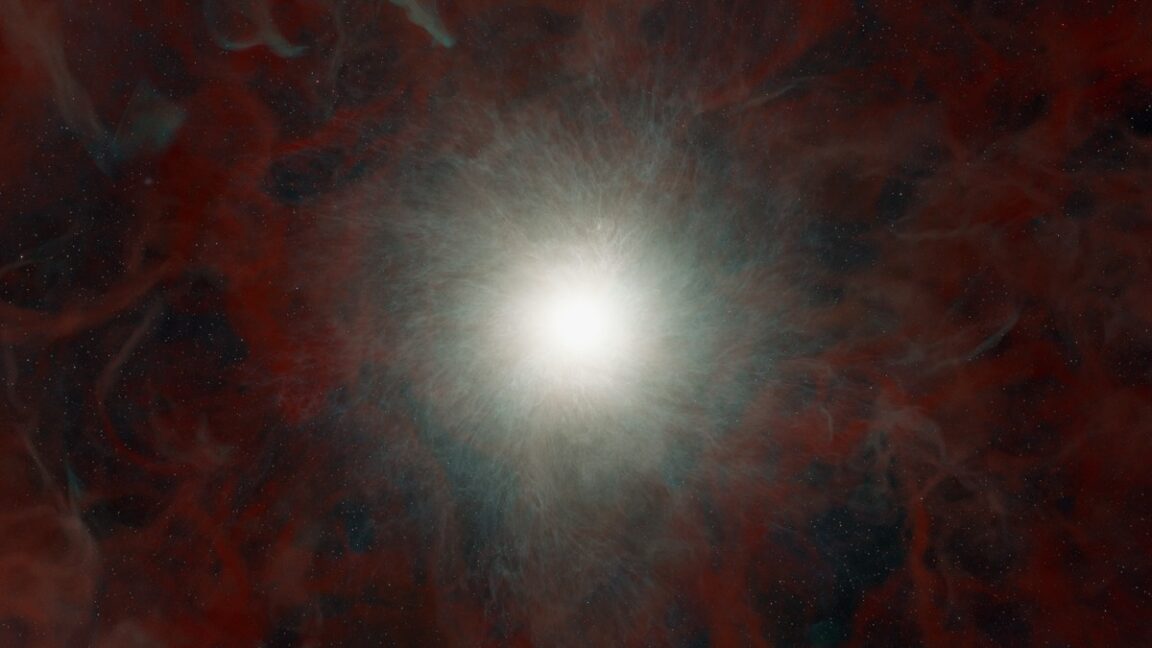
In 2014, NASA’s NEOWISE project detected a gradual brightening of infrared light coming from a massive star in the Andromeda Galaxy, an observation that was confirmed by several other ground-based and space-based telescopes. Astronomers continued to monitor the star and therefore also noticed that it rapidly dimmed in 2016. Once one of the brightest stars in this galaxy, it effectively “disappeared” from view; it would be as if Betelgeuse suddenly disappeared. It is now only detectable in the mid-infrared range.
The obvious explanation was that the star was dying and collapsed into a black hole, but if that was the case, it had not gone through the supernova phase that usually occurs with stars of this size. This makes it an intriguing object for further study. After analyzing archival data from NEOWISE, a team of astronomers concluded that this was indeed a case of direct collapse, according to an article published in the journal Science.
Theoretical work from the 1970s provided a possible explanation. As gravity begins to collapse the star and the core first forms a dense neutron star, the accompanying neutrino explosion typically creates a powerful shock wave strong enough to tear apart the core and outer layers, leading to a supernova. But some theorists have suggested that the shock wave might not always be powerful enough to expel all of this stellar matter, which instead falls inward, and that the baby neutron star collapses directly into a black hole without ever becoming a supernova.
It seems that convection is the key. This happens because the matter near the center of the star is hotter than the outer regions, so gases move from hotter to cooler regions. The authors of the latter paper suggest that when the core collapses, gases in the outer layers move quickly, preventing them from falling into the core. The inner layers orbit outside the new black hole and eject the outer layers, which cool and form dust to hide the hot gas still orbiting the black hole. The dust heats up in response to mid-infrared wavelengths, giving the object a faint glow that should last for decades.


:max_bytes(150000):strip_icc()/Health-GettyImages-1335001029-82f6b24b671d40bc8368bffa52a2935b.jpg?w=390&resize=390,220&ssl=1 "8 Causes of Itchy Bumps on Your Skin That Aren’t Mosquito Bites")