Researchers successfully heal rats’ broken spines


There is currently no way to completely reverse the damage and paralysis that result from a spinal cord lesion. One of the biggest obstacles is that neurons die and cannot repel damage.
Now, the researchers have developed a biomedical structure which gave an impressive functional recovery to laboratory rats with cut spinal cords. The team detailed its success in a study published in the journal Advanced health equipment.
“In the United States, SCI [spinal cord injury] Assigned a large number of individuals … with estimates ranging from 255,000 to 383,000 people, “wrote researchers in the study.” Unfortunately, no treatment is currently available for SCI. »»
It could change everything. The team created a scaffolding with tiny channels, which they then populated with neural vertebral progenitor cells (SNPC) – cells that can multiply and transform into different types of cells.
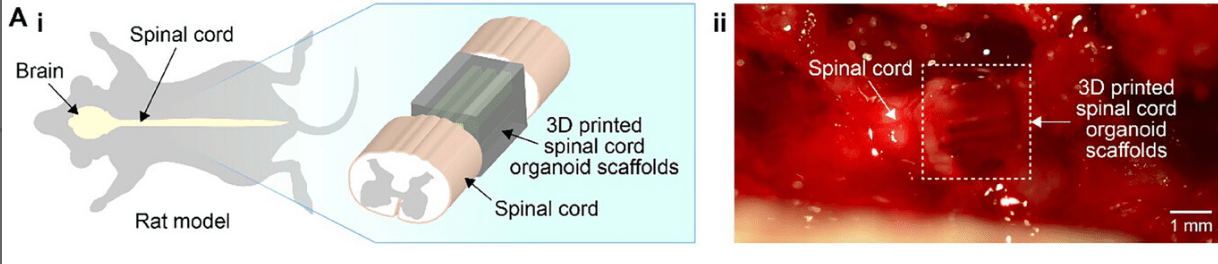
“We use 3D printed channels of the scaffolding to direct the growth of stem cells, which guarantees that new nerve fibers are developing in the desired way,” said Guebum Han, the first author of the article and mechanical engineer at Intel Corporation, in a press release. “This method creates a relay system which, when placed in the spinal cord, bypasses the damaged area.”
Han and his colleagues transplanted the scaffolding into rats with cut vertebral bites. The SNPCs have transformed into neurons (also called nerve cells) and have reached their fibers from top to bottom of the spinal cord to connect to the original neurons of animals. Over time, researchers have observed that new neurons completely merge with the spinal cord fabric.
“Regenerative medicine has caused a new era in research on the spinal cord lesions,” said Ann Parr, co-author of the study and neurosurgeon at the University of Minnesota. “Our laboratory is delighted to explore the future potential of our” spinal mini-boules “for clinical translation.”
Although the realization is far from repairing the broken back in humans, it is a positive development towards the healing of the wounds of the spinal cord.

More offers, reviews and purchasing guides


:max_bytes(150000):strip_icc()/Health-GettyImages-1572910532-fe99532d24974f4dbbb053101e83af2a.jpg?w=390&resize=390,220&ssl=1 "What the Average Waist Size Reveals About Men’s Health")

