Researchers turn coffee and plastic waste into climate solution


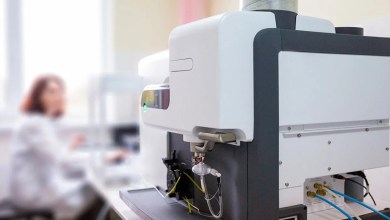
Reactor causing the carbonization of coffee and plastic waste in high performance carbon. Credit: University of Sharjah
Researchers at the University of Sharjah have patented a technology designed to capture carbon dioxide (CO₂) from industrial processes before being released in the atmosphere.
The patent, filed in March 2025 and published in August, describes a new and very detailed method with promising potential to reduce environmental pollution, industrial and anthropogenic CO₂.
This approach uses a mixture of used coffee grounds (SCG), polyethylene (TEP), a common plastic used in the packaging and potassium hydroxide, a strong alkaline chemical. Together, these components form an effective material for the adsorption of CO₂.
Globally, around 8 million tonnes of worn coffee grounds are thrown each year, mainly found in landfills where they emit methane and other greenhouse gases. By reusing this waste, the new method not only captures CO₂ but also contributes to sustainable waste management.
PET, a member of the polyester family, is widely used in consumer packaging, while potassium hydroxide serves as a powerful activation agent in the process, improving the capacity of the material to trap carbon.
This patent marks a significant front step in the development of ecological technologies aimed at alleviating climate change.
Dr. Haif Aljomard, main inventor of the new CO₂ capture technology, pointed out: “What starts with a cup of Starbucks coffee and a bottle of thrown plastic water can become a powerful tool in the fight against climate change by activated carbon production.”
Dr. Aljomard explained that innovation focuses on carbon production activated by co-pyrolysis of used coffee terrains and plastic waste in terephtalate polyethylene, using potassium hydroxide (KOH) as an activating agent.

Coffee waste (SCG), mixed with plastic waste (TEP), is designed in carbon activated for climatic solutions. Credit: Haive Aljomard
The process operates at an ecological activation temperature of 600 ° C, offering a lasting solution which supports the valuation of waste and the attenuation of climate change.
She stressed that the patent presents important results in the synthesis of carbon activated from waste, highlighting the effectiveness of chemical activation, the importance of the surface and the structure of pores and the approach of resource waste that underpins technology.
“This invention reuses two abundant waste currents – cage and plastic – in a high performance adsorbent,” said Dr. Aljomard. “The resulting activated carbon shows a high potential for capturing CO₂ from fossil fuel energy systems, contributing to the reduction of air pollution.”
The inventors report that their method gives carbon activated with a high CO₂ adsorption capacity, which makes it suitable for industrial applications. They also highlight the low production costs, thanks to the affordability and availability of raw materials.

Starbucks coffee waste in Dubai, the United Arab Emirates, co-pyrolys with pets for pets to produce carbon activated for the capture of CO₂. Credit: Haive Aljomard
Professor Co-Inventor Chaouki Ghenai, specialist in sustainable and renewable energies at the University of Sharjah, added: “This invention illustrates the principles of the circular economy by integrating waste flows for double valuation and recycling in precious products.”
“The transformation of the worn coffee field and high-quality activated carbon-activated carbon waste provides economic, social and environmental advantages,” he said. “Thanks to carbonization and chemical activation, we eliminate the need to unload these materials, protecting the environment from their harmful effects.”
Summarizing the importance of newly patented technology, Professor Ghenai stressed its broad potential in various industrial sectors. He highlighted applications in water and air treatment, food transformation, chemical engineering and energy systems, positioning invention as a versatile and durable solution.
Once the patent has increased to industrial deployment, researchers trust its ability to eliminate contaminants and pollutants in many contexts, including in a wide range of water treatment processes.
Inventors have cited a variety of industrial operations that can benefit from their inventions, such as gas purification, drinking water filtration, groundwater sanitation, water service and treatment of boiler, as well as pool, aquarium, wastewater and wastewater treatment systems.
Beyond the purification of water and air, the inventors provide important applications in the energy sector, in particular the recovery of solvents, the purification of natural gases, the cleaning of combustion gases in waste incineration factories, the treatment of exhaust air, the purification of process gases, the elimination of pollutants and the control of emissions.
Together, these capacities position technology as a versatile solution to reduce environmental impact in several industrial fields.
The patent describes carbon dioxide (CO₂) as one of the main greenhouse gases leading to global warming and climate change. He warns that the increase in atmospheric CO₂ levels has serious risks both for the environment and human health.
“There is an urgent need for effective and sustainable technologies to capture and reduce CO₂ emissions from sources such as fossil fuel combustion, industrial processes and electricity production,” said the document.
More information:
patents.google.com/patent/us12391556b1/en
Supplied by the University of Sharjah
Quote: The researchers transform coffee and plastic waste into climatic solution (2025, October 6) recovered on October 7, 2025 from https://phys.org/news/2025-10-Coffee-plastic-climate-solution.html
This document is subject to copyright. In addition to any fair program for private or research purposes, no part can be reproduced without written authorization. The content is provided only for information purposes.