Forest Service overhaul sows confusion and concern


On March 31, the United States Forest Service announced plans to move its headquarters from Washington, D.C., to Salt Lake City, Utah. It will also close or repurpose its nine regional offices, create 15 state offices and close research and development facilities in more than 30 states. According to a press release, the plan aims to make the agency more “agile, efficient, [and] effective.” Forest Service leaders told staff on a call after the announcement that no changes would be made to fire and aviation management programs or operational firefighters in the field.
Since first announcing plans to revamp the agency last July, the Trump administration has touted the plan as a way to streamline Forest Service operations, with a focus on increasing timber production and closer communication with local communities. But during a congressional hearing and public comment period on the subject last summer, more than 80 percent of the 14,000 public comments submitted were negative, with many tribal representatives, conservation groups and former Forest Service employees opposing the move. A summary of public comments from the U.S. Department of Agriculture noted concerns that the relocation of Forest Service personnel and further reductions in its budgets “could compromise ecological management, public access, and employee morale.” The current plan incorporates many elements of the original proposal, including moving to Salt Lake City and closing regional offices.
“No one is asking for this,” said Robert Bonnie, who oversaw the Forest Service as deputy secretary of the Department of Agriculture during the Obama administration. “None of the agricultural groups want this. Nobody in conservation wants this. Nobody.” To Bonnie and other former Forest Service employees, the plan, which will uproot thousands of employees, appears to only worsen the agency’s existing problems, especially given the past year of deep budget cuts and chaos.
“This is not going to strengthen the Forest Service, it’s going to weaken it,” Bonnie said. “It’s not about solving problems, it’s about blowing things up.”
USDA Forest Service
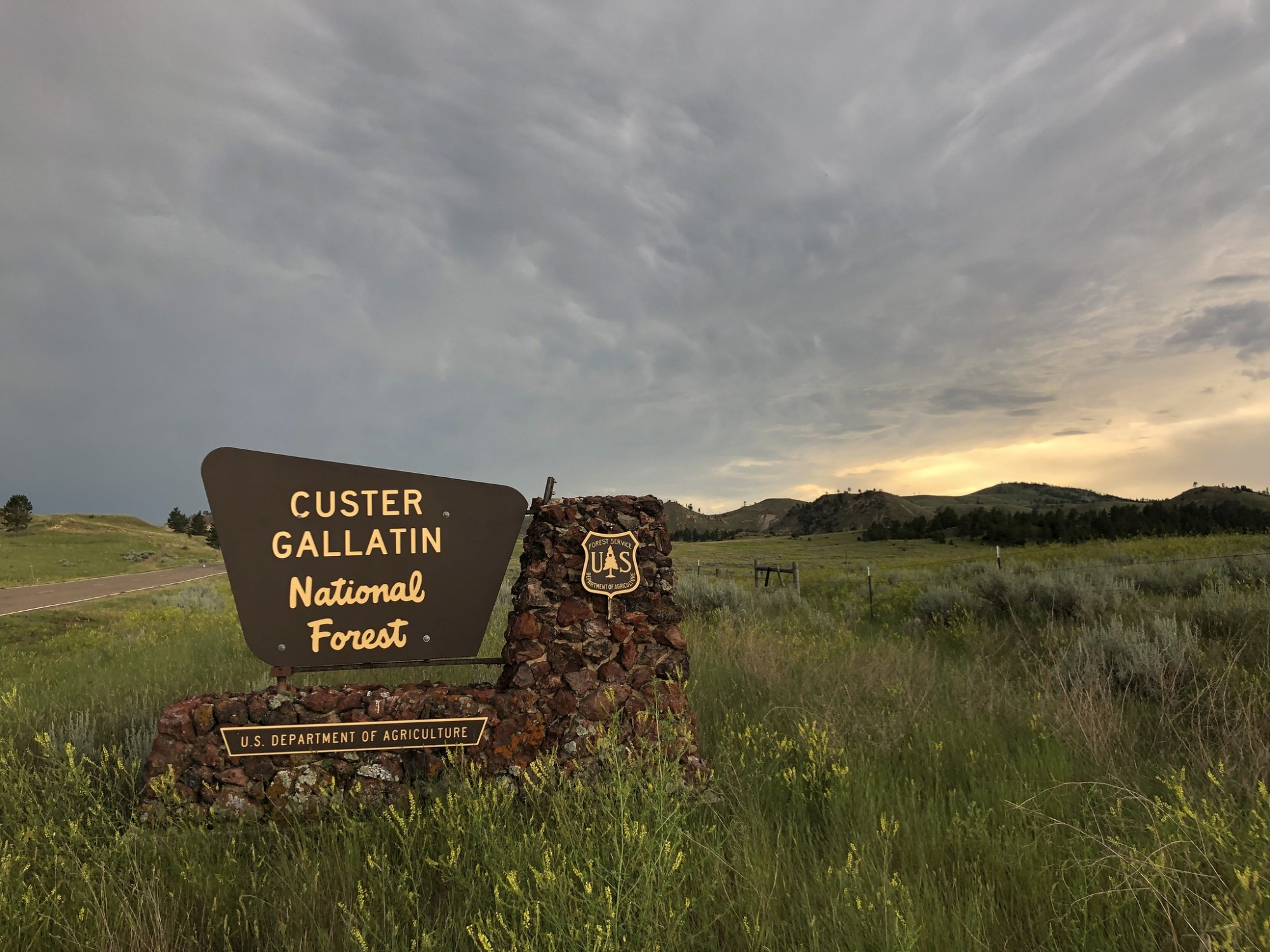
Retired Custer Gallatin National Forest Supervisor Mary Erickson had more questions than answers after the announcement. “I’m not going to say if it’s good or bad at this point,” she said. “This is such a radical change, with no real analysis as to whether there would be any cost savings.”
Under the new proposal, some states will have their own offices and others will be consolidated, similar to the Bureau of Land Management’s organization. It will be a new approach for the country’s 154 national forests, which have long been managed by the nine regional offices that will be closed or reassigned. Now, forests in Washington, Oregon, Montana, Alaska and Idaho will each be managed by their own state bureau. However, the forests of Nevada and Utah will be managed together, as will those of Colorado and Kansas.
Some Forest Service research facilities, including the Rocky Mountain Research Station in Fort Collins, Colorado, will remain open. Others, including the Portland, Oregon, research station responsible for critical work on species like the spotted owl, will be closed. Losing local leadership “is not going to improve the programs,” said Eric Forsman, a former Forest Service wildlife biologist. Forsman, who retired in 2016, studied spotted owls and red tree voles at the agency’s Forest Sciences Laboratory in Corvallis, Oregon, which will remain in operation. “It may help budgets,” he added, “but it will not improve the quality of research or the quantity of research done.”
Erickson and others were also concerned about the plan to move top bureaucrats out of Washington, where the nation’s lawmakers and policymakers reside. “I would push back against the idea that leaving Washington is getting closer to the people you serve. That’s not the role of national office,” Erickson said. The national office, she added, is supposed to coordinate and create guidance based on national policy. “Forests and districts have always been at the heart of local communities and local deliveries. »
How the Trump Administration is Ramping Up Logging in Illinois’ Only National Forest
Having spoken with current and former members of the Forest Service after Tuesday’s announcement, she also fears that, at least in the short term, the disarray created by the reorganization will hamper the agency’s ability to address the complex and increasingly serious challenges modern forests face. These include outbreaks of tree diseases, the growing interface between wild areas and urban areas, and climate change-induced drought. The Forest Service is already reeling from the loss of thousands of employees over the last year, due to layoffs and delayed resignations made by the now-defunct Department of Government Effectiveness, or DOGE.
The reorganization could also lead to states taking an even bigger role in forest management, said Kevin Hood, executive director of Forest Service Employees for Environmental Ethics, who retired in 2025 after decades of working with the Forest Service across the West. While local coordination isn’t bad in theory, he said, he worries the new structure is a step toward ceding management of national forests and other public lands to the states.
Tribal representatives, several of whom declined to comment for this story, expressed concerns during the July public comment process that the reorganization would result in losses of expertise and fractured relationships. Mass staff moves, one representative wrote, “would destroy irreplaceable knowledge about treaty rights, forest conditions, and working relationships established over decades, and new staff unfamiliar with the territory would make mistakes.”
For many conservationists, the reorganization of the Forest Service feels like déjà vu, if not a recurring nightmare.
In 2019, during Trump’s first term, his administration announced a plan to move almost the entire Bureau of Land Management staff from the agency’s headquarters in Washington to Grand Junction, Colorado — then a city of 66,000 located hundreds of miles from a major airport. As with the Forest Service’s March 31 announcement, the administration said the change would bring high-level staff closer to the primarily western lands they manage. Instead, many of those employees left the agency altogether, said Tracy Stone-Manning, who led the BLM under President Joe Biden and is now president of the Wilderness Society.

The ambitious plan to protect Northern California’s Plumas National Forest from wildfires
In fact, by the time the Grand Junction office opened in 2020, only 41 of the 328 BLM employees expected to move west chose to do so, according to a High Country News investigation. For many, moving meant uprooting their entire family and requiring a spouse to find a new job in a much smaller market.
The reorganization cost taxpayers $28 million. And the Biden administration ended up moving many high-level positions to Washington, although it kept some agency leaders in the Grand Junction office, which it renamed the agency’s “western headquarters.” John Gale, who led the office for two years under Biden, believes there is value in looking for ways to improve the management of public lands. But restructuring and offshoring must be done thoughtfully and carefully to be effective, he said.
That’s because agencies lose irreplaceable institutional knowledge when people with decades of experience are forced to leave, Stone-Manning said. And while this may not have been the intention of the first Trump administration, it was indeed the result of the BLM reorganization. She and others expect the Forest Service to suffer the same fate, with even more dire consequences for the public.
“Our public lands are not maintained the way they should be,” she said. “And that means ultimately people will raise their hands and say the federal government can’t handle them, let’s sell them.”
This story is part of High Country News’ Conservation beyond borders project, supported by the BAND Foundation and the Mighty Arrow Family Foundation.


