Rocket Lab’s ‘Hungry Hippo’ Neutron fairing arrives at spaceport in Virginia

When you purchase through links on our articles, Future and its syndication partners may earn a commission.

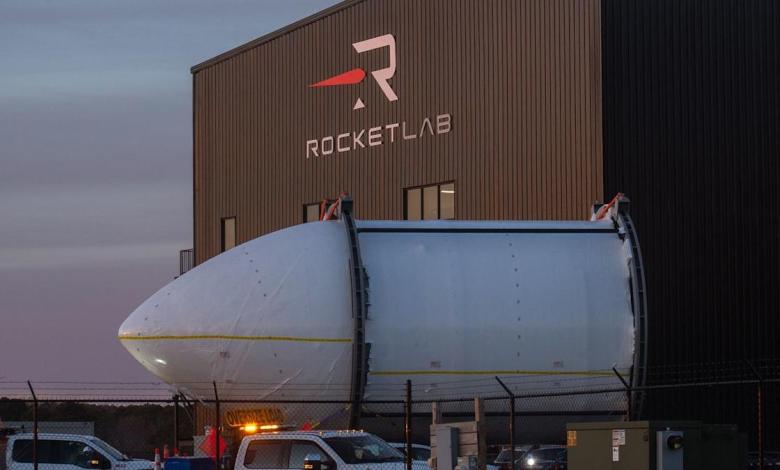
The “hungry hippo” fairing of Rocket Lab’s new Neutron launcher at the company’s Virginia spaceport facility. . | Credit: Rocket Lab
Rocket Lab’s new “Hungry Hippo” payload fairing has been safely delivered to the company’s integration facility at the Mid-Atlantic Regional Spaceport (MARS), Virginia.
The new rocket will top Rocket Lab’s Neutron launcher, which is still under development. The company had already progressed towards a launch of the new medium-range rocket in the first quarter of 2026, but a rocket main stage failure In a recent pressure test, Neutron finds itself in a more uncertain period.
As the next Neutron stage is being prepared for its maiden flight, its Hungry Hippo fairing is undergoing post-delivery inspections before transport to MARS’ Rocket Lab Launch Copmlex-3 (LC-3) for further testing.
Neutron is Rocket Lab’s answer to the venerable SpaceX Falcon 9. The 141-foot-tall (43-meter) carbon-composite launch vehicle will be capable of carrying up to 28,700 pounds (13,000 kilograms) to low-Earth orbit, compared to the Falcon 9’s 50,265 pounds (22,800 kilograms). Like Falcon 9, Neutron is designed for partial reuse.
The rocket’s Hungry Hippo fairing is a unique element of this reuse architecture because, unlike other payload fairings, it remains attached to the launch vehicle rather than detaching to return to the atmosphere.


The jaw-like mechanism opens like a clamshell to release the upper stage and Neutron payload for continued flight, then closes after deployment while the rocket’s first stage decelerates and maneuvers to land either at its launch zone or on a Rocket Lab transport ship parked at sea.
The 46-foot (14-meter) fairing was transported by barge and truck to Rocket Lab’s facility in MARS, after from the company’s testing facilities in California in December. Now that it has arrived at the LC-3, the fairing will undergo pre-launch qualification testing while awaiting the Neutron first stage.
“The arrival of Hungry Hippo marks another milestone toward the debut of Neutron that will usher in a new era of commercial access to space,” Rocket Lab said in an update on January 26.