Dry-Season Floods Drench Northern Colombia


February is one of the driest months of the year in northern Colombia’s Córdoba department, an important agricultural and cattle region. This is the time of year when farmers normally prepare fields for planting and ranchers graze their livestock on dry floodplains. In 2026, however, unusually heavy rains in early February disrupted seasonal rhythms and submerged a large part of the department under floodwaters.
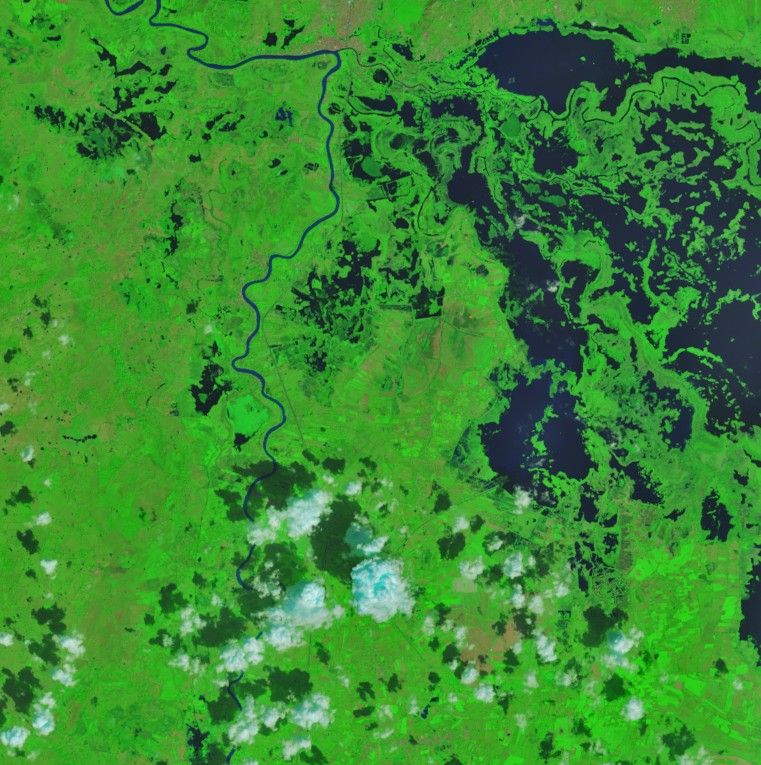
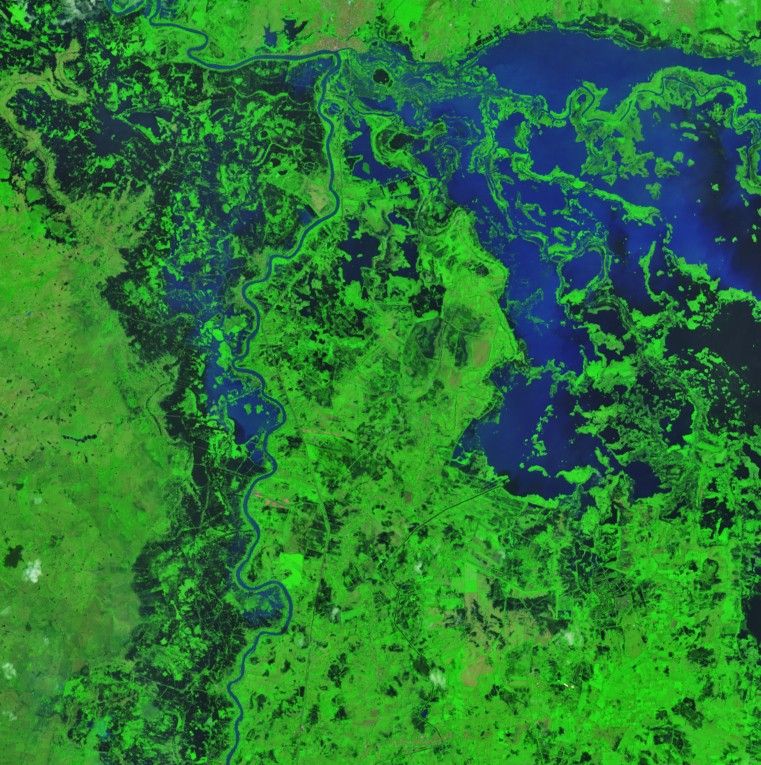
Landsat 9’s Operational Land Imager (OLI) captured this false color image (bands 7-5-4) of flooding along the Sinú River on February 9, 2026 (right). Dark floodwaters cover farmland, pastures and several communities, particularly west of the river. To the east, water levels in a wetland complex are unseasonably high. Lorica, a town of around 90,000 inhabitants, is visible in the upper part of the image. The OLI image on the left shows the same area on January 23, before the floodwaters arrived.
After an already wet January, precipitation intensified in early February when an unusual cold front in the Caribbean moved south on February 1-2, forcing moisture-laden air toward northern Colombia and over the Andes. This led to several days of intense downpours in Córdoba, with some areas receiving more than 4 to 7 centimeters (2 to 3 inches) of rain per day, according to an analysis of the event.
NASA’s IMERG (Integrated Multi-satellite Retrievals for Global Precipitation Measurement) estimated rain rates of 1.7 centimeters per hour near Lorica on February 1, the day of the heaviest rain. In the following weeks, storms continued to flood the region. On February 25, images from NASA’s Terra satellite indicated that flooding remained widespread.
The floods were widespread and destructive. More than 80 percent of Córdoba was flooded, according to the United Nations Office for the Coordination of Humanitarian Affairs. Preliminary estimates cited by media and government sources suggest that thousands of homes have been destroyed, more than 11,000 families displaced and more than 150,000 hectares of farmland flooded.
NASA Earth Observatory images by Michala Garrison, using Landsat data from United States Geological Survey. Story by Adam Voiland.
- The municipal newspaper of Bogotá (February 10, 2026) Extreme flooding in northern Colombia triggers a humanitarian crisis. Accessed February 25, 2026.
- ClimaMeter (February 2026) February 2026 floods in northern Colombia. Accessed February 25, 2026.
- Colombia Reports (February 12, 2026) Colombia declares state of emergency in response to widespread flooding. Accessed February 25, 2026.
- El País (February 10, 2026) Carlos Carrillo: “The flooding in Córdoba is much more serious than expected in the most pesimistic scenarios. » Accessed February 25, 2026.
- IDÉAM (2026) News. Accessed February 25, 2026.
- IDEAM (February 3, 2026) Boletín de conditions hidrometeorológicas y alertas No. 100. Accessed February 25, 2026.
- International Space Charter and major disasters (2026) Floods in Colombia. Accessed February 25, 2026.
- ReliefWeb (February 25, 2026) Colombia: Floods. Accessed February 25, 2026.
- Unidad Nacional para la Gestión del Riesgo de Disastres (February 15, 2026) With satellite technology, the UNGRD identifies the flood sleeve in Córdoba. Accessed February 25, 2026.


