Science Bleeds When It’s Cut


November 18, 2025
3 min reading
Science bleeds when you cut it
As funding dries up, researchers face setbacks that threaten innovation and public progress
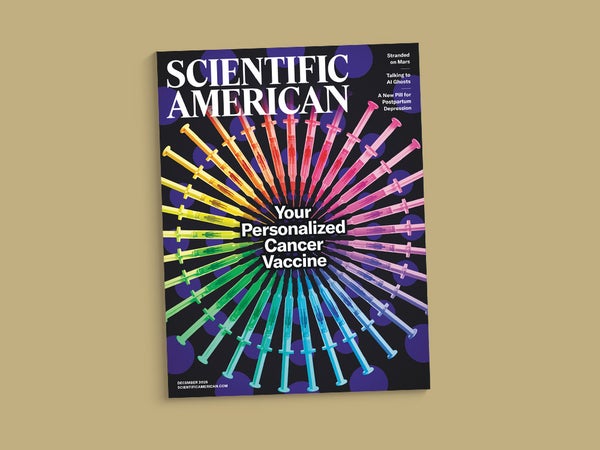
Scientific AmericanDecember 2025
In June, Department of Health and Human Services Secretary Robert F. Kennedy, Jr., fired all 17 members of the Centers for Disease Control and Prevention’s Advisory Committee on Immunization Practices, a committee that develops recommendations for safe and effective immunization standards. His chosen replacements include ideological allies who have been openly skeptical of vaccine safety.
In August, Kennedy announced the cancellation of approximately $500 million in federal funding for the development of messenger RNA (mRNA) vaccines against respiratory viruses, saying that “mRNA technology poses more risks than benefits.” A month later, he told a Senate hearing that he believed mRNA vaccines caused serious and widespread harm and even death.
The data shows the opposite. People who received COVID-19 mRNA vaccines were significantly less likely to visit the emergency room, be hospitalized, or die from the disease; Experts say serious side effects from these vaccines are very rare. The fact is that mRNA COVID vaccines have saved millions of lives and their use by hundreds of millions of people has repeatedly demonstrated their safety.
On supporting science journalism
If you enjoy this article, please consider supporting our award-winning journalism by subscription. By purchasing a subscription, you are helping to ensure the future of impactful stories about the discoveries and ideas shaping our world today.
Not only could Kennedy’s campaign against mRNA research dissuade people from getting updated COVID vaccines, but it is also delaying the development of new mRNA technologies for other diseases and disorders.
Our cover story, reported by journalist Rowan Moore Gerety, highlights one of the most exciting of these new applications: tailor-made mRNA therapies tailored to the genetic makeup of a person’s cancer that can help that patient’s immune system tackle unique mutant proteins in tumor cells. In other words, it is a personalized cancer vaccine.
The first tests of these vaccines are extremely promising. But the federal government is by far the largest source of funding for cancer research in the United States, so Kennedy’s ill-informed attack on mRNA technology threatens to halt medical progress. Other countries, including the United Kingdom, are poised to advance mRNA cancer vaccine research, but the United States, which has many more cancer research centers, plays a critical role in the success of this field.
Unfortunately, Kennedy’s factually shaky campaign is just the latest example of the U.S. government’s retreat from groundbreaking research. Right now, NASA’s Perseverance rover is crawling across the surface of Mars to answer some of science’s biggest questions: Was Mars once habitable? Has he already welcomed life? But further funding cuts also threaten to ruin this experiment.
Perseverance spent nearly five years collecting Martian rock and soil samples from more than 20 miles of the planet’s surface. And he stored dozens of small vials containing material that could contain evidence of life. Unfortunately, we may never be able to test them; the proposed 2026 budget for NASA kills the mission to collect Perseverance’s samples and deliver them to Earth. Science writer Jonathan O’Callaghan tells the story.
It’s hard to read articles like these without becoming frustrated with the state of American science. Our researchers are dedicated to advancing knowledge, saving lives and making the world a better place; Meanwhile, our leaders get in their way.
An internet meme stuck in my head as I write: The three-panel cartoon begins with a man riding a bicycle down a road while holding a stick in his hand. In the second panel, he jabs the stick into the spokes of his front wheel. In the third, he is curled up on the ground, dying, nursing a self-inflicted wound.
I hope this unlikely wisdom inspires you to contact your legislators and others in leadership positions to remind them of the importance of funding scientific efforts. Over the past 180 years, this magazine has chronicled some of the greatest discoveries in human history and the epic successes of government-funded research. I think we would all like to see more of these stories over the next couple of centuries.
It’s time to defend science
If you enjoyed this article, I would like to ask for your support. Scientific American has been defending science and industry for 180 years, and we are currently experiencing perhaps the most critical moment in these two centuries of history.
I was a Scientific American subscriber since the age of 12, and it helped shape the way I see the world. SciAm always educates and delights me, and inspires a sense of respect for our vast and beautiful universe. I hope this is the case for you too.
If you subscribe to Scientific Americanyou help ensure our coverage centers on meaningful research and discoveries; that we have the resources to account for decisions that threaten laboratories across the United States; and that we support budding and working scientists at a time when the value of science itself too often goes unrecognized.
In exchange, you receive essential information, captivating podcasts, brilliant infographics, newsletters not to be missed, unmissable videos, stimulating games and the best writings and reports from the scientific world. You can even offer a subscription to someone.
There has never been a more important time for us to stand up and show why science matters. I hope you will support us in this mission.


