Scientists achieve ‘magic state’ breakthrough 20 years in the making — quantum computers could never be truly useful without it


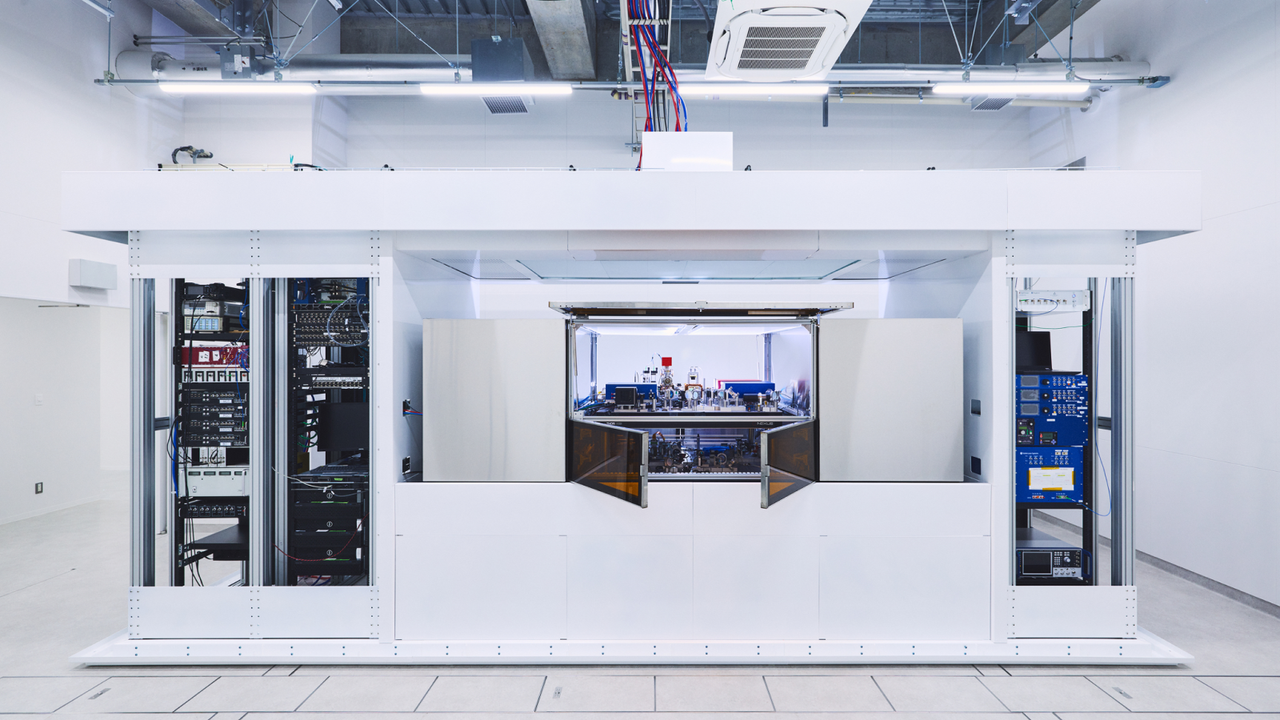
In a world first, scientists have demonstrated an enigmatic phenomenon quantum calculation This could open the way for faults to the breakdowns which are much more powerful than any supercomputer.
The process, called “distillation of the magic state”, was the first offered 20 years agoBut its use in logical qubits has escaped scientists since then. It has long been considered crucial to produce high quality resources, called “magic states”, necessary to carry out the full potential of quantum computers.
Magic states are quantum states prepared in advance, which are then consumed as resources by the most complex quantum algorithms. Without these resources, quantum computers cannot exploit the strange laws of quantum mechanics To process information in parallel.
The distillation of the magic state, on the other hand, is a filtering process by which the highest quality magic states are “purified” so that they can be used by the most complex quantum algorithms.
This process has so far been possible on simple physical qubits and subjects to errors but not on logical qubits – groups of physical qubits which share the same data and are configured to detect and correct errors which frequently disturb quantum calculation operations.
Because the distillation of the magic state in logical qubits has not been possible so far, quantum computers that use logical qubits have not been theoretically capable of exceeding conventional machines.
In relation: What is quantum overlapping and what does that mean for quantum IT?
Now, however, scientists with Quera say they have demonstrated for the first time the distillation of the magic state in practice on logical qubits. They described their results in a new study published on July 14 in the journal Nature.
“Quantum computers would not be able to make their promise without this process of distillation of the magic state. This is a required step.” Yuval BogerQuera’s commercial director told Live Science in an interview. Boger was not personally involved in research.
The path to quantum computer tolerant to breakdowns
Quantum computers use quit As construction blocks, and they use quantum logic – all rules and operations that govern the way quantum information is processed – to execute algorithms and process data. But the challenge is to execute incredibly complex algorithms while retaining incredibly low error rates.
The problem is that physical qubits are intrinsically “noisy”, which means that calculations are often disturbed by factors such as temperature changes and electromagnetic radiation. This is why so much research focused on Quantum error correction (QEC).
The reduction of errors – which occur at a rate of 1 in 1000 in qubits against 1 in 1 million, millions of conventional bits – prevents disturbances and allows calculations to occur at the rate. This is where logical qubits come into play.
“For quantum computers to be useful, they must operate fairly long and sophisticated calculations. If the error rate is too high, this calculation quickly turns into unnecessary or useless data”, the main author of the study of the study of the study of the study of the study of the study of the study of the study of the study study Sergio CantuVice-president of Quantum Quera systems, Live Science told an interview. “The whole objective of correction of errors is to reduce this error rate so that you can make a million calculations safely.”
Logical qubits are collections of tangled physical qubits which share the same information and is based on the principle of redundancy. If one or more physical qubits in a logical qubit fail, the calculation is not disturbed because the information exists elsewhere.
But logical qubits are extremely limited, scientists said, because the error correction codes applied to them can only execute “clifford doors” – basic operations in quantum circuits. These operations are fundamental quantum circuits, but they are so basic that they can be simulated on any supercomputer.
It is only by exploiting high-quality magic states that scientists can execute “non-cliff doors” and engage in a real parallel treatment. But generating them are extremely intensive in resources and costly, and has so far been unrealizable in logical qubits.
Essentially, rely on the distillation of the magic state in physical qubits alone would never lead to quantum advantage. For this, we must directly distill magic states in logical qubits.
Magic states pave the way to capacities beyond supercaluing
“Magic states allow us to extend the number and type of operations that we can do. So, practically, any quantum algorithm that has value would require magic states,” said Cantu.
Generating magic states in physical qubits, as we have done, is a mixed bag – there are low quality and high quality magic states – and they must be refined. It is only then that they can fuel the most powerful programs and quantum algorithms.
In the study, using the Quantum computer with neutral atoms geminiScientists distilled five imperfect magical states in a single cleaner magic state. They carried out it separately over a distance-3 and a logical QUIBIT-5, demonstrating that it evolves with the quality of the logical qubit.
“A greater distance means better logical qubits. A distance-2, for example, means that you can detect an error but not correct it. Distance-3 means that you can detect and correct a single error. Distance-5 would mean that you can detect and correct up to two errors, etc.,” said Boger. “Thus, the greater the distance, the greater the fidelity of the qubit – and we compare it to the distillation of crude oil in a jet fuel.”
Following the distillation process, the fidelity of the final magic state has exceeded that of any entry. This has proven that the distillation of the magic state tolerant to defects worked in practice, scientists said. This means that a quantum computer that uses both logical qubits and high quality magic states to execute non -clifford doors is now possible.
“We see a kind of passage from a few years ago,” said Boger. “Can the challenge: Can quantum computers be constructed at all? Then, can it be detected and corrected from errors? We and Google and others have shown that, yes, which can be done. Now, it is: can we make these computers really useful? And to make a computer really useful that enlarge them, you want them to execute programs that cannot be simulated on conventional computers.”


