Scientists predict wildfire smoke will be the most costly climate-related health hazard


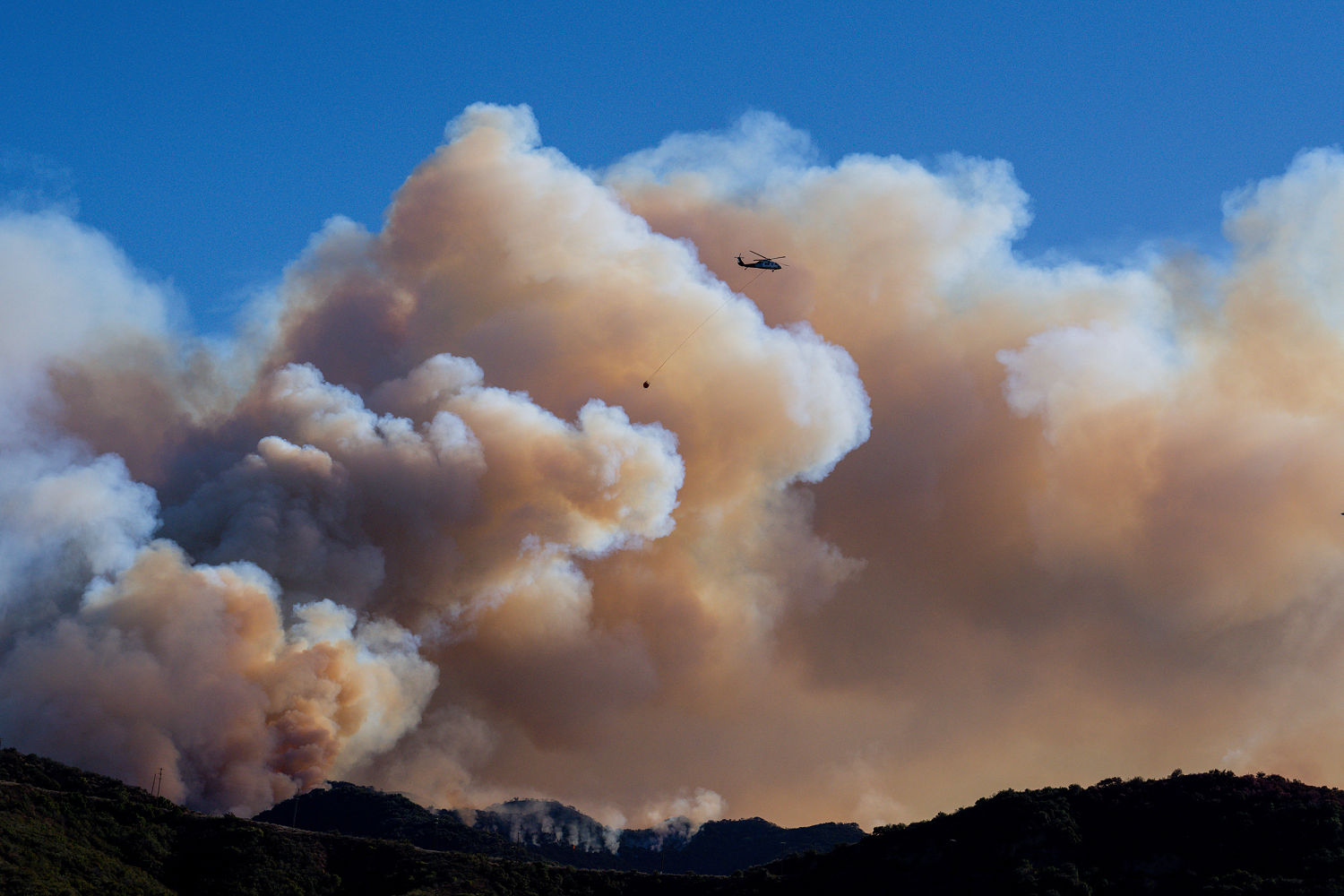
Forest fires are responsible for tens of thousands of deaths each year and will harm American residents by the middle of the century than any other threat motivated by climate change, including extreme heat.
This is the conclusion of a new research document that provides one of the most extensive modeling of the growing health of forest fires on public health in the United States
The study, which was published in the journal Nature Thursday, revealed that each year, on average, forest smoke provokes more than 41,400 excess deaths, or more than what would normally be expected smoked given the demography of the United States than this figure is more than double what was previously recognized in other studies.
In the middle of the century, the authors of the study expect this number to increase by 26,500 to 30,000 additional deaths, the climate change caused by humans, and the risk of triggering forest fires increased.
“Forest Fire smoke is a much greater health risk that we could have previously understood,” said Marshall Burke, professor of environmental social sciences at the University of Stanford and study author.
When they are quantified in economic terms, Burke said that he and his collaborators were surprised to note that the cost of smoke deaths exceeded all other monetary damage attributable to climate change in previous research, such as agricultural losses, thermal deaths and energy costs.
An growing set of research suggests that exposure to forest smoke causes significant health problems. Small particles in forest fire smoke penetrate into the lungs and can circulate in the blood circulation. Smoke can increase the risk of asthma, lung cancer and other chronic pulmonary problems. Forest fire smoke is also associated with premature births and miscarriage.
The study offers a striking vision of a nation increasingly pulled by smoke. Decades of work to clean the pollution of the American industrial air through the clean Air Act are canceled while fires in the west of the United States and Canada send plumes of smoke to the atmosphere which then spread through the landscape.
“Forest fire smoke is starting to turn around at our levels of air pollution, at least in Western states and New York,” said Dr. Joel Kaufman, professor of medicine, epidemiology and environmental health sciences who studies air pollution, but has not worked on this study. “It is an emerging danger and it is one of the few things that can probably be posed realistically at the foot of climate change. It’s the hook here. “
And it is only a lot to do: the study suggests that the number of deaths of forest smoke will increase by 64% to 73%, or more, in the middle of the century, depending on the rate of emissions.
“No matter what we do on the side of attenuation, by 2050, we will probably see much more smoke,” said Burke, adding that efforts to reduce emissions will be paid in the long term.
Kaufman said that in the last five to 10 years, there has been a “proof drum” which suggests that forest smoke is at least as harmful as other forms of air pollution.
“There was the hypothesis that burns wood was less toxic,” said Kaufman. “These results imply, if anything, the smoke of forest fires can be more toxic”, especially when a forest fire burns through buildings, cars and other human product materials.
Kaufman noted that Los Angeles fires earlier this year began as a brush fire, but it was above all the houses of people and human plastics that have burned, emitting “a different toxic soup”. The new study does not make the difference between the source of future smoke smoke.
The new research could have implications for public policy.
The environmental protection agency is trying to cancel a key legal provision known as “endangering conclusion” within the framework of a wide decline in environmental regulations. This legal decision of 2009 indicates that greenhouse gases such as carbon dioxide and methane warm up the land and that warming presents a threat to public health and well-being. It serves as a Lynchpin for agency regulations concerning greenhouse gases under the clean Air Act.
The new study could be part of a “decline” against this measure, said Dr. John Balmes, spokesperson for the American Lung Association and Professor at the University of California of San Francisco School of Medicine.
The measure to cancel the conclusion undergoes a long regulatory process, which now accepts public comments. Balmes said that he had cited the study in a letter opposing the change in EPA.
“This strengthens what we say about forest fires linked to climate change and subsequent impacts on public health,” said Balmes.
On Wednesday, the National Academies of Sciences, Engineering and Medicine published a report according to which the warming caused by man causes damages and will continue to do so in the future. The evidence is “beyond the scientific dispute”, according to the report committee.
The White House did not respond to a request for comments. The EPA said that Trump administration was “determined to reduce the probability of devastating forest disasters” and favor efforts such as prescribed combustion, fuel treatment and debris cleaning to prevent them.
“The EPA welcomes all public comments on the proposal to cancel the conclusion of the endangerment from 2009 to September 22, 2025, and the agency is anxious to answer a diverse fan of prospects on this issue,” said a spokesperson in an email.
In the study of nature, the researchers estimated the number of deaths in excess forest smoke each year by comparing three models: the one who estimates the influence of climate change on the overall activity of fires, another which models expected changes in the activity of fire and where smoke will travel, and a third party which quantifies the results for the health that result from long -term exposure to smoke.
The researchers used 2011-2020 as a reference and predicted future conditions in several climatic scenarios. They had access to each American death during this period, satellite data and at ground level on smoke trips and global climate models, among other data sets.
The study assumes that people would take the same measures to avoid exposure to smoke as today.
The study has limits – mainly that it is based on a series of models to draw conclusions nationally. The study does not follow each individual death of smoke, the tracing of exposure to the smoke of the person, then the cataloging of effects on health.
The results of the study were published alongside a second study in the wild which used similar methods and adopted a global view of the problem. The separate research group estimated that the premature deaths caused by the smoke of forest fires could reach around 1.4 million per year by the end of this century, which is about six times higher than today.


