Scientists prepare for the next Carrington Event


Government disaster preparedness is not limited to crises that occur here on Earth. In fact, experts know that some of the most disruptive and unpredictable events begin on the surface of the Sun. For weeks, emergency planners at the European Space Agency (ESA) in Darmstadt, Germany, have been carrying out tests to improve response capabilities in the event of a cataclysmic solar storm. And while today’s digitally interconnected world means that such an event would inevitably disrupt global systems, researchers are working to ensure humanity has as much time as possible to avoid a worst-case scenario.
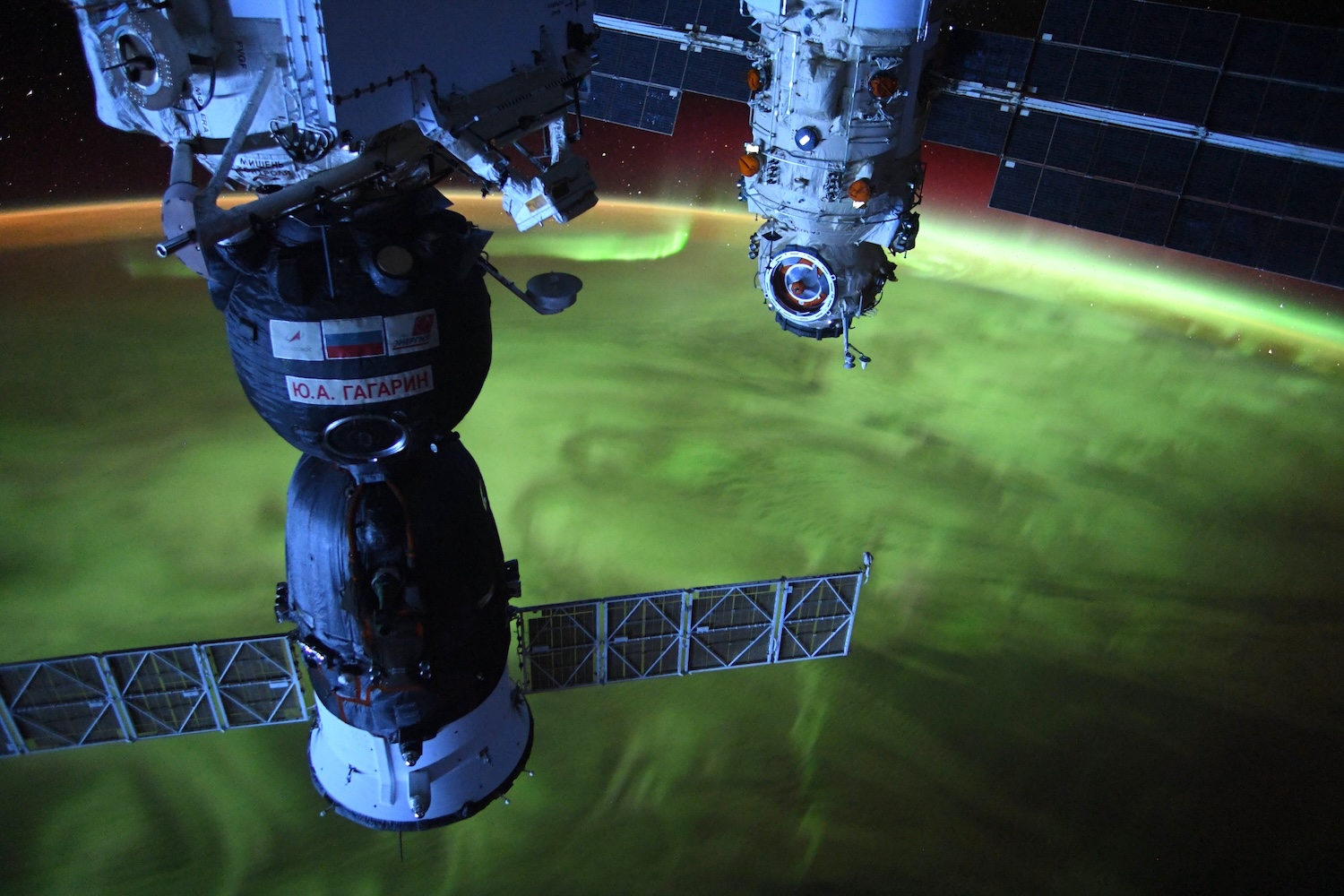
Solar storms are semi-regular events in which the sun spews gargantuan plumes of energized dust and gas toward the planet at speeds as fast as 2 million miles per hour. These waves can disrupt the Earth’s magnetosphere and generate the majestic hues observed during auroras. The consequences go far beyond a dazzling spectacle in the night sky. Geomagnetic storms can easily jam satellite constellations, power grids, communications networks, and essentially any other electronic or geospatial infrastructure.
Another Carrington event
Although a violent solar storm made headlines last year, the 166-year-old event remains the most powerful bombardment on record. In August 1859, what is now known as the Carrington Event hit Earth with enough cosmic force to produce northern lights as far away as Central America, while also frying the first telegraph systems. The Carrington event was bad enough nearly two centuries ago, but such a powerful solar storm today could hamper a society dependent on electronics, global positioning systems and telecommunications.
One of the biggest problems would be how the tens of thousands of satellites overhead would react. Currently, ESA is preparing for the November 4 launch of Sentinel-1D, the first of two orbital payloads intended to provide a constant stream of images of the Earth’s surface. According to Thomas Ormston, Sentinel-1D’s deputy director of spacecraft operations, there is currently little experts can do to protect this type of multimillion-dollar project.
“If such an event occurs, there are no good solutions. The goal would be to ensure the safety of the satellite and limit the damage as much as possible,” Ormston said in a statement.
The planners of the training scenario did not hesitate during their execution. According to the ESA, the workshop focused on a simulated X45-class flare, a Carrington-level situation featuring X-rays and ultraviolet rays that would disrupt radar data, communications and GPS approximately eight minutes after launch from the sun.
Three waves of energy
Unfortunately, such an emergency would not include a single burst of cosmic energy. About 10 to 20 minutes later, a second wave of high-energy particles including protons, electrons, and alpha particles would hit Earth at near the speed of light, frying Sentinel-1D’s onboard electronics and causing possibly permanent damage. Gustavo Baldo Carvalho, head of the simulation, explained that although the first explosion was likely to surprise observers, they knew what awaited them.
“Once they calmed down, they knew a countdown had begun. In the next 10 to 18 hours, a coronal mass ejection was going to happen and they had to prepare for it,” he said.
It is the third strike that would prove the most costly. This is the time when a coronal mass ejection (CME) reaches Earth at a speed of around 2,000 km/h and triggers a giant geomagnetic storm. Similar to the Carrington event or last year’s bursts, observers on the ground would be treated to a colorful aurora show. But that would likely be little compensation compared to collapsing power grids, surging power lines, and knocking satellites out of orbit.
“If such a storm occurred, satellite drag could increase by 400 percent with local peaks in atmospheric density,” explained Jorge Amaya, coordinator of space weather modeling at ESA. “This not only affects collision risks, but also reduces satellite lifespan due to increased fuel consumption to compensate for orbit degradation.”
Amaya added that while satellites in low Earth orbit may have some atmospheric protection, a Carrington-level situation “would not leave any spacecraft safe.”
He compared the ESA training scenario to planning for a pandemic.
“We will only feel its true effects on our society after the event, but we must be ready and have plans in place to respond as quickly as possible,” Amaya said.

Plan for the future
But it’s far from hopeless. Sentinel-1D training offered the first chance to weather a disastrous event in collaboration with ESA’s Space Weather Office. Meanwhile, ESA is continuing its Distributed Space Weather Sensor System (D3S), which will deploy a new network of satellites providing up-to-date data sources. Meanwhile, the agency is preparing for the Virgil mission scheduled to launch in 2031. Once completed, Virgil will monitor dangerous solar events on the “side” of the sun. From this angle, the system can alert teams on Earth to solar events faster than ever before, giving engineers time to prepare vulnerable systems with a larger window than ever before.
“The scale and variety of impacts pushed us and our systems to the limit, but the team rose to the challenge and it taught us that if we can handle this, we can handle any real eventuality,” Ormston said.

House of the Future Prize 2025


