Scientists recover the oldest wooden tools from a site in Greece

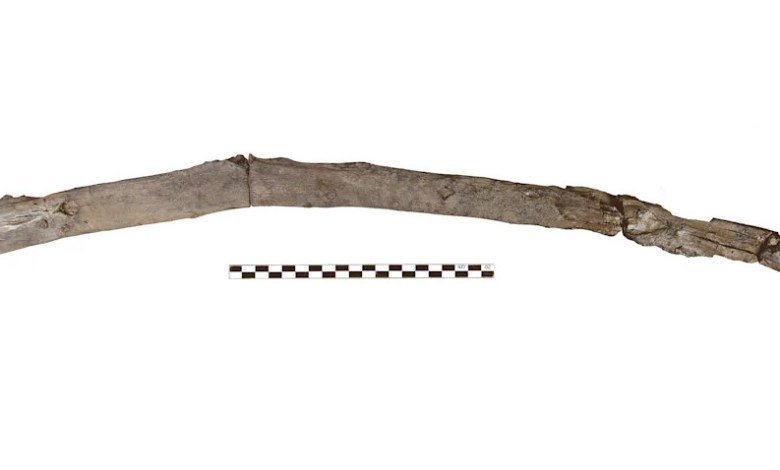
NEW YORK (AP) — Two artifacts found at a lake in Greece are the oldest wooden tools discovered so far, dating back 430,000 years.
One is a spindly stick about 80 centimeters long that could have been used for digging in mud. The other is a smaller, more mysterious piece of willow or poplar wood that may have been used to fashion stone tools, according to a study published Monday in the journal Proceedings of the National Academy of Sciences.
Scientists believe that ancient humans used a litany of tools made from stone, bone, and wood. But today it is particularly difficult to find traces of wooden tools, because wood rots very quickly. These tools are only preserved in specific environments like in ice, in caves or underwater.
The most recent tools, found in the Greek megacities basin, were probably quickly buried in sediments and preserved over time by a humid environment. For years, researchers have found other remains at the site, including stone tools and cut-marked elephant bones. Although scientists have not directly dated the wooden tools, the site is approximately 430,000 years old, providing insight into the age of the objects.
“I’ve always been excited to be able to touch these objects,” said study author Annemieke Milks of the University of Reading.
Human remains have not yet been found at the site, so it is not yet clear who used these tools. The owners could have been Neanderthals, early human ancestors, or someone else.
The site in Greece likely contains other gems from the past waiting to be discovered, said archaeologist Jarod Hutson of the Smithsonian National Museum of Natural History. But the modest appearance of these two new tools makes them more difficult to interpret.
“It’s hard to get excited about these tools because they don’t immediately appear to you as wooden tools. And we don’t know what they were used for,” said Hutson, who was not involved in the new study.
Other examples of ancient wooden tools include a set of spears from Germany and 300,000-year-old Chinese digging sticks that may have been used to harvest plants.
The new discovery offers a rare glimpse into the diverse collection of tools used to survive — a glimpse into a “little-known aspect of early human technology,” study author Katerina Harvati of the University of Tübingen said in an email.
—-
The Associated Press Health and Science Department receives support from the Howard Hughes Medical Institute’s Department of Science Education and the Robert Wood Johnson Foundation. The AP is solely responsible for all content.


