SCOTUS Justices Should Skip Trump’s State of the Union

The Supreme Court ruled Friday that President Donald Trump’s global tariffs were illegal. Tariffs are taxes imposed and collected from the American people, and the Constitution gives the power to tax to Congress, not the president. Congress can delegate this power to the president, and it has done so in a multitude of laws. But, as Chief Justice John Roberts explained, writing for the six-justice majority, these laws come with constraints; they do not give the president “extraordinary power to unilaterally impose tariffs of unlimited amount, duration, and scope.”
Furthermore, the “emergency” law the president relied on does not expressly say that the president any power – much less unlimited power: impose customs tariffs. And recognizing such power would not only pose a threat to American businesses, consumers, and market stability. As my organization, Protect Democracy, explained in an amicus brief filed with the appeals court, “the sweeping and unprecedented executive orders” at issue in this case “raise virtually every red flag that legal scholars and scholars have identified to warn of the ways in which emergency powers can be abused to undermine democracy and the rule of law.”
The Court’s decision did not break new ground. Last year, lower federal courts issued three rulings on the legality of Trump’s tariffs, and all three rejected the president’s claim that he had unlimited authority to impose “emergency” tariffs.
The main question is no longer whether the Court’s legal conclusion is correct. It is about whether the Trump administration will respect the Court’s role in our constitutional republic and its authority as head of a co-equal branch of government.
Share
President Trump’s statements following Friday’s decision fail to clear this low bar. His first major Truth Social article on the decision attacked the character and competence of the six justices who ruled against him, including two he himself appointed. He calls them “FOOLS and “LAPDOGS” for RINOS and radical left-wing Democrats”, calls them “very unpatriotic” and “disloyal to the Constitution”, and criticizes them “for not having the courage to do what is right for our country”. As if all this wasn’t enough, Trump accuses the judges – without offering a shred of evidence – of being “influenced by foreign interests.”
This kind of rhetoric is not only crude; it does real harm and is also deeply dangerous. As cross-partisan pundits and lower court judges have warned for some time, the administration’s relentless vilification of judges and individual justices fuels extremism and conspiracy theories, and can lead to threats of violence — or worse. And, much like the insults heaped on the judges who rejected Trump and his allies’ sixty legal challenges to the 2020 election in the months leading up to the January 6 insurrection, this lays the groundwork for continued defiance of court orders or ignorance of the court decisions on which they are based. It’s not hard to see why: If judges are subhuman “lapdogs” who serve “foreign interests” through corruption (as Trump said) and engage in “anarchy…plain and simple” (as Vice President JD Vance said), why should executive branch officials follow their decisions?
We should not sit back just because we have not yet seen a mob like the one on January 6 attack the Supreme Court – or because the Administration has not yet taken steps to directly violate the Court’s tariff ruling. (The day after the decision, the president announced that the tariffs would be removed. upbut would be based on purported authorities not at issue in the case decided last week.) Instead, now – before attacks on the Court or disregard for its rulings worsen – is the time to send a message to the President and his allies that attacks on our independent judiciary will not be tolerated.
Register now
SO WHAT TO DO? There is no silver bullet, but three immediate steps come to mind.
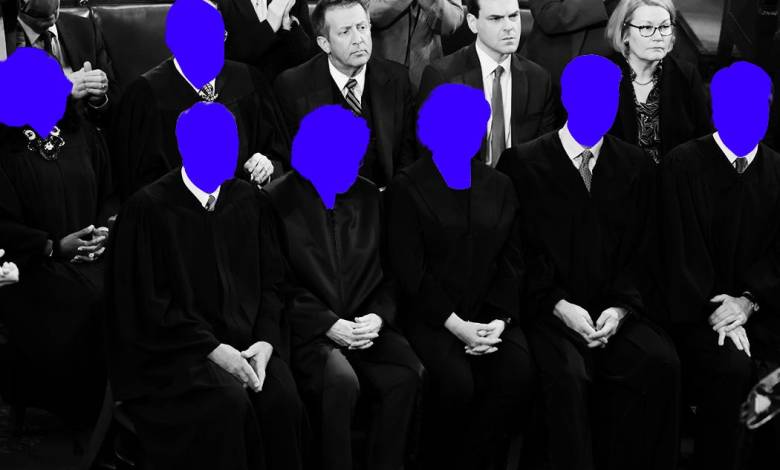
First, all nine justices should refuse to attend tonight’s State of the Union address. No law requires their presence. No standards either; it is common for judges to skip the event, and some do so naturally. In recent years, at least some judges would normally be present. But the president has already broken norms of interprofessional civility; and the most important norms would be subverted, not strengthened, by pretending that his attack on the Court is acceptable and resorting to the status quo. On the other hand, not attending would discreetly demonstrate self-respect and the institutional dignity of the Court; and it would avoid the intolerable spectacle of judges being subjected to abuse or used as props in a tirade directed against their colleagues.
Second, Congress should show that it will not stand idly by when the president attacks a coequal branch of government, especially when that branch claims central congressional power. The House and Senate should pass resolutions condemning attacks on judges and expressing continued support for our independent judiciary. This recommendation is less likely to come to fruition, as the president’s own party controls each chamber. Still, it’s not impossible to imagine a bipartisan majority of Republicans and Democrats coming together to signal that they don’t want to see Trump’s attacks escalate or escalate into more troubling forms of defiance.
Finally – although this may also be difficult to imagine – at least one senior executive branch official should resign in protest of President Trump’s assault on the Supreme Court. Such a resignation would help highlight the grave and growing risk to our independent judiciary, and help strengthen the resolve of junior officers and career employees.
These first measures, largely symbolic, will not be enough to remedy the situation. But they would be a step in the right direction and could help alert our fellow Americans to the reality of the threat we face today. We must all do our part to reaffirm our collective commitment to the rule of law. A great democracy is at stake, and the time to act is now.
Share
Amit Agarwalspecial counsel for Protect Democracy, served as law clerk to Justice Samuel Alito, then Justice Brett Kavanaugh, and served as Solicitor General of Florida (2016-2021).


