Seattle, San Francisco rethink harm reduction drug policies amid crisis


NEWYou can now listen to Fox News articles!
At least two major West Coast cities are rethinking so-called harm reduction policies that sought to combat drug addiction, an indication that these regions are rethinking their strategy to combat the drug crisis as addiction problems persist.
While cities like San Francisco and Seattle have already adopted policies to distribute “safer” pharmaceutical products like clean aluminum foil and pipes that could be used to smoke fentanyl or other substances, these cities are now implementing a new approach that places new limitations on the distribution of these products.
The Seattle City Council passed its 2026 budget in November and included a provision that will “prevent any city support for the purchase or distribution of illegal drug supplies, with the exception of needles.”
That provision was defended by City Council member Sara Nelson, who said that while she supports needle exchange programs because they reduce the spread of diseases like HIV and hepatitis C, she said she doesn’t see the benefit of using public resources to “help people get high” by handing out certain drugs.
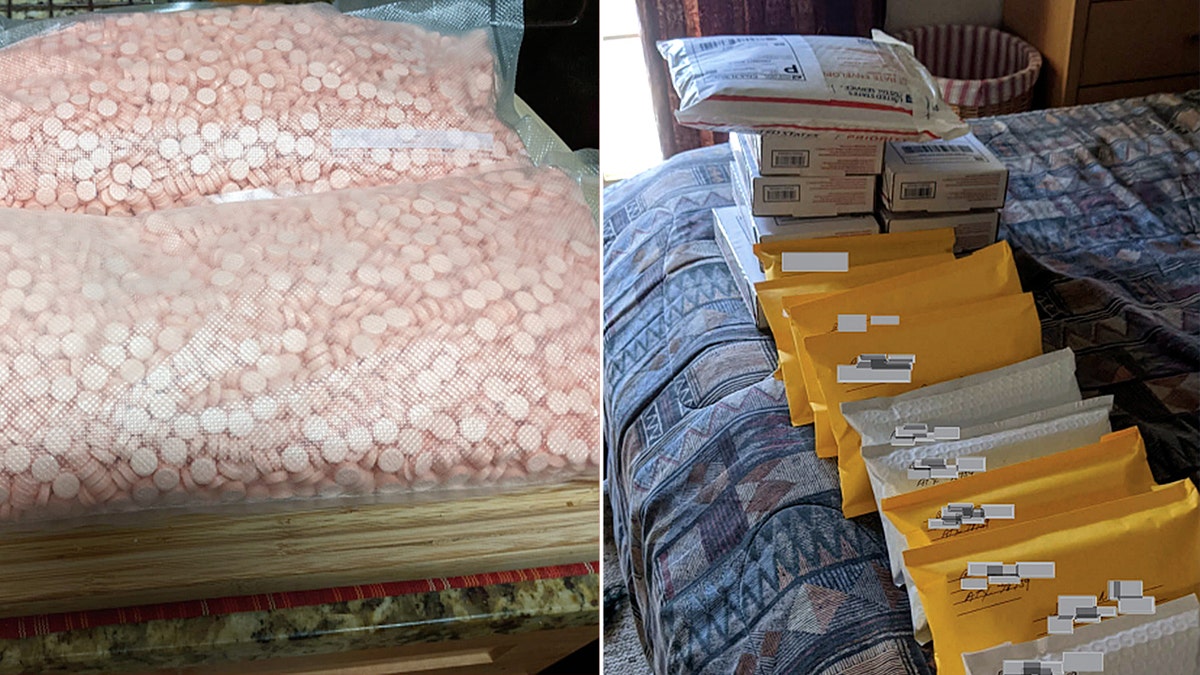
Several packages containing drugs, possibly containing fentanyl, displayed on a bed. (U.S. District Court of Rhode Island)
BLUE CITY DA SAYS repeat drug offenders ‘won’t follow the law’ under current system
“I do not, however, see the harm that is reduced by distributing supplies such as pipes and aluminum foil that are used to consume deadly drugs like methamphetamine and fentanyl,” Nelson said during a Nov. 16 budget committee meeting. “To me, it’s like giving a loaded gun to someone who is suicidal.”
Seattle is not the only city taking such steps to reduce how it distributes “safe” medications to its community.
Earlier in 2025, San Francisco unveiled a new policy that would require individuals to receive treatment counseling – or be connected to such services to receive treatment options – before receiving drug supplies from the city or city-funded programs. Additionally, the new policy prohibits the provision of these supplies in public spaces.

San Francisco unveiled a new policy that would require individuals to receive treatment counseling before receiving drug supplies from the city or city-funded programs. (Jeff Chiu, File/Associated Press)
TRUMP LAUNCHES “LONGEST FENTANYL Crackdown IN HISTORY” AS GOP CAUSES “CONSEQUENCES” FOR CHINESE PRODUCERS
The policy took effect April 30 and applied to any city-funded public health program that provided drug use supplies like sterile syringes and smoking kits.
“We can no longer accept the reality of two people dying every day from overdoses. The status quo has failed to ensure the health and safety of our entire community, as well as those struggling with addiction. Fentanyl was a game-changer, and we built on the strategies that preceded this new drug epidemic, which is ending today,” San Francisco Mayor Daniel Lurie said in a statement in April. “Our new policy will quickly connect individuals to treatment, and it’s a big step toward reclaiming our public spaces.”
The Seattle City Council elections and San Francisco mayoral elections are officially nonpartisan. However, both cities strongly supported Democrats in state and local elections.
TRUMP POSTPONES DEPLOYMENT OF FEDERAL TROOPS TO SAN FRANCISCO
Meanwhile, these drug policy changes are not popular with supporters of “harm reduction” policies. For example, Laura Guzman, executive director of the National Harm Reduction Coalition, said there may not be enough resources to comply with San Francisco’s new rule.
“It puts the onus on people to receive life-saving supplies or have long conversations about treatments that might not be available,” Guzman said in April, according to CBS News. “People who know the area – researchers, doctors – say it’s not good policy. In fact, we’re going against the grain because what we’re trying to do is make it seem like there’s no drug use on the streets. But it’s not a public health issue, it’s not based on science. It’s the exact opposite of what we know works.”

The Seattle skyline is photographed from a Washington State Ferry in Seattle, Washington. (Jason Redmond/Reuters)
CLICK HERE TO DOWNLOAD THE FOX NEWS APP
Although King County, Washington, which includes Seattle, and San Francisco saw fewer drug overdose deaths in 2024 than in 2023, the numbers for both cities are higher than in 2019, before the COVID-19 pandemic.
For example, 635 people died from accidental drug overdoses in 2024 in San Francisco — up from 810 who died in 2023, but up from the 441 who died in 2019, according to the San Francisco Office of the Chief Medical Examiner.
Drug overdose deaths are also declining nationally. The Centers for Disease Control and Prevention reported in February a nearly 24% drop in drug overdose deaths in fiscal year 2024, compared to the previous fiscal year.
At the same time, the Trump administration has taken an aggressive approach to combating the flow of drugs into the United States. For example, President Donald Trump signed an executive order in December designating illicit fentanyl a “weapon of mass destruction.”


