Gas prices drop below $3 a gallon for first time in years

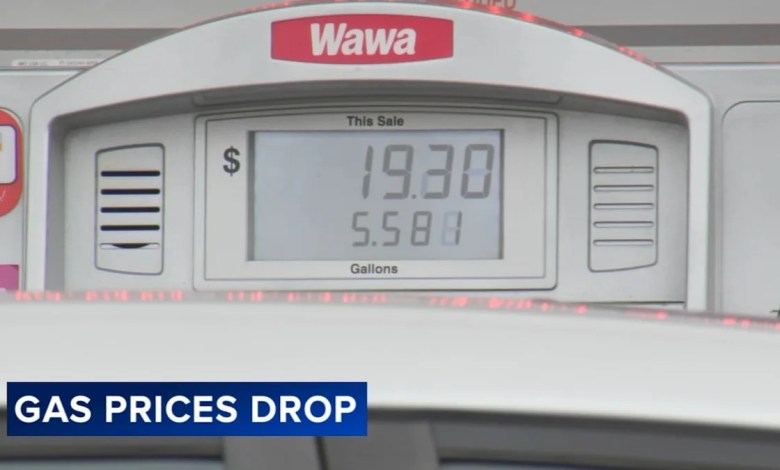
Consider it an early Christmas present: lower gas prices for drivers across the country.
For the first time in years, the national average for a gallon of regular gasoline fell below $3 per gallon.
The $2.99/gallon price posted at a Wawa in Pennsauken was good news for long-distance drivers like Tamiko Carpenter.
“I traveled to Detroit, Michigan, to go to college with my son,” she said. “When you’re traveling on the highway, it’s important that the gas prices are good. So I’m happy with the gas prices.”
According to Gas Buddy, the national average for a gallon of regular gasoline has dropped five cents to $2.90. They say that’s more than seven cents less than a year ago and more than 17 cents less than a month ago.
AAA says this is the first time in four years that the national average has dropped below $3 a gallon, but Pennsylvania still ranks among the top ten most expensive gas markets in the country, according to AAA.
They say the price of a gallon of regular gasoline in Pennsylvania is $3.14. New Jersey, however, is $2.93 per gallon. In Delaware, the average price for a gallon of regular gasoline is $2.89.
“All the costs we have, the regular costs, not going up are going to help us in the long run,” Joe Deangelis said as he stopped at the pump.
For Rodney Weaver, lower gas prices are literally a blessing.
“It’s amazing because I travel a lot as a pastor, I travel a lot as a hospice chaplain – going from house to house, patient to patient. It means a lot to me to not spend so much on gas so I can do the ministry that I’m supposed to do,” he said.
Gas Buddy says oil market dynamics and other factors could be responsible for the price decline. Drivers say whatever the cause, they just hope it continues.
“We just hope that they’re here to stay, and that they’re not short-lived and that we’ll pay for it later,” Deangelis said.
Although New Jersey is experiencing a drop in gas prices, it is still in the upper range when it comes to electric vehicle charging. AAA ranks it among the ten most expensive states in the country for public charging per kilowatt hour.